1. Home
  2. Emerging Tech
  3. Legacy Archives

Nielsen: Video Yet to Score with iPod Users

Add as a preferred source on Google

Last summer, Nielsen Media Research announced its Anywhere Anytime Media Measurement (A2M2) service, which aims to begin tracking media usage on cell phones, the Internet, and devices like iPods alongside its famous “People Meter” ratings of television viewership. It hoped to have preliminary data from a panel of 400 iPod users by the end of 2006…well, the numbers are in, and even though Nielsen is declining to release the complete figures and findings, the reported results are making the industry blink…and perhaps scratch its head.

Nielsen Media Research tracked the usage habits of 400 iPod owners in the U.S. from October 1 to 27, and found that while almost 16 percent of iPod users have played a video on their iPod or via iTimes, less than 1 percent of the content items played by iPod users on the device itself were videos. And among owners of video iPods, the percentage nudges up to 2.2 percent.

Recommended Videos

Of course, where music tracks might have average lengths of three to five minutes, television and movie programming are likely to range from (say) just over 20 minutes for a half-hour sitcom to perhaps 80 to 120 minutes for a movie. It stands to reason that one could play several (or dozens) of music “content items” in the span of time a user might require to view one video “content item.”

However, when measured by duration of consumption—how much time users spend on various forms of content—video still loses out, making up just 2 percent of the total time spent using iPods or Apple’s iTunes software. But having a video-capable iPod is an advantage: video iPod owners consume video 11 percent of the time.

If representative of the behavior of iPod users as a whole—and with a sample size of just 400, that might be a difficult claim—it seems iPod users are primarily interested in using the device for music and audio, and Apple’s online video offerings—introduced roughly a year ago—have yet to really catch on. Nielsen apparently plans to expand its panel to include people who don’t own iPods but who do use iTunes software.

In conjunction with its recent quarterly earnings report, Apple noted that film partner Disney has sold over 500,000 movies via iTunes in just two months. Apple has been offering short films and a wide selection of television programming for far longer, and claims to have sold more than 45 million videos overall.

Geoff Duncan
Former Contributor
Geoff Duncan writes, programs, edits, plays music, and delights in making software misbehave. He's probably the only member…
Google just canceled its AI Studio mobile app, and it’s not all bad news
Logo, Symbol, Disk

Google AI Studio was on track to make its way to Android and iPhone, giving developers and AI enthusiasts a dedicated place to build prompts and experiment with Google's latest models from their phones.

That's no longer happening. In a post shared by the official Google AI Studio account on X, Google confirmed that it's canceling the standalone AI Studio mobile app before launch. The announcement comes despite the company saying nearly 800,000 people had already pre-ordered the app across iOS and Android.

Read more
Google Earth’s AI misadventure lasted only a day. It was a tale of dangerous ignorance.
Nuclear reactors, tanks, and historical destruction on a life-like satellite map? Yeah, that's bad.
Nano Banana AI image generator representation.

Technology behemoths are clearly not reading the room, or they are just moving faster than they should when it comes to AI deployment. Google has already stuffed its Gemini AI in every corner of its software stack, from Android to daily productivity tools like Gmail that are used by hundreds of millions of users every day. AI is everywhere. Not all of it is bad, mind you. But in a few places, it just feels forced.

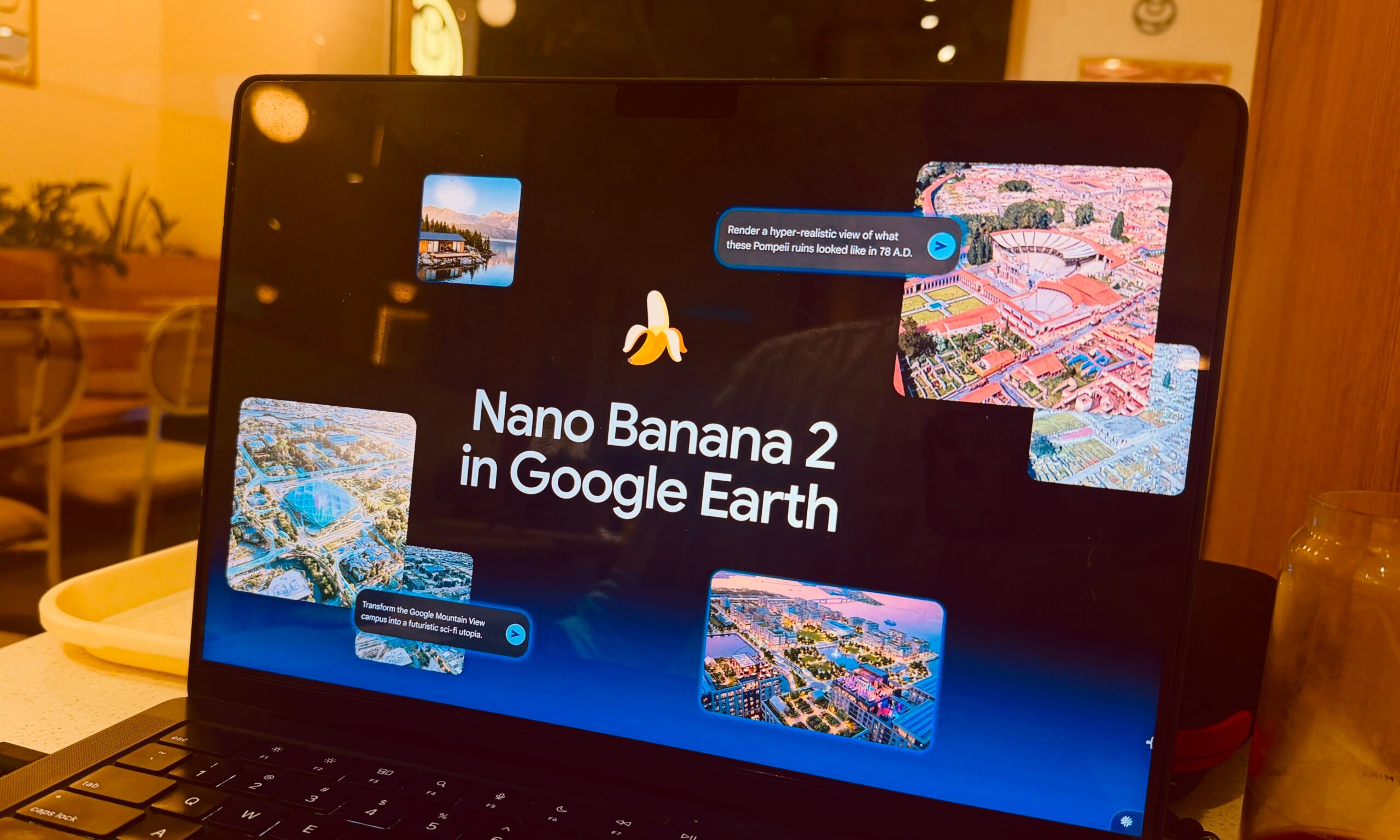
In its latest AI-fication experiment, the company targeted Google Earth. The idea was to let the audience use its Nano Banana 2 AI image generator and make images that can be placed on the map view. On paper, it's a cool idea. What would the Colosseum of Rome look like in your urban neighborhood? Yeah, fun stuff like that.

Read more
Google’s new AI gives robots better balance, smarter hands, and teamwork capabilities
Google just made robots a lot less clumsy and a lot more helpful.
Gemini robotics 2.0

Google DeepMind just brought sci-fi robots closer to reality, and it is very exciting. Building on its original Gemini Robotics model, the company has introduced Gemini Robotics 2, an AI system designed to help robots think, move, and even work together. Unlike most robots today, which rely on pre-programmed routines or someone controlling them remotely, this new system lets robots figure things out on their own when situations get unpredictable.

Can robots finally handle whole-body tasks?

Read more