1. Home
  2. Computing
  3. Legacy Archives

SanDisk Launches 32 GB Solid-State Drive

Add as a preferred source on Google

SanDisk has announced a new entry in its line-up of flash-based solid-state drives (SSDs), the SSD SATA 5000, a 32 GB 2.5-inch hard drive designed to function as a drop-in replacement for traditional 2.5-inch hard drives in notebooks and other computer systems.

"The SanDisk 2.5-inch SSD brings the extreme durability, outstanding performance and low power consumption of solid-state flash memory to the entire notebook computer market," said Amos Marom, VP and general manager of SanDisk’s Computing Systems division, in a release. "As SanDisk continues to drive innovation in flash memory, the per-gigabyte price of SSD storage will come down and SSD capacity will go up. PC manufacturers and consumers will find it easier and easier to move away from rotating hard disks to the superior experience of SSDs."

Recommended Videos

In January, SanDisk introduced a 32 GB 1.8-inch SSD hard drive intended for ultraportable systems, media players, and hand-held devices.

The idea behind the 2.5-inch model is to offer computer manufacturers an easy drop-in replacement for traditional hard drives. Why would someone go with a comparatively small-capacity 32 GB flash drive rather than a traditional hard disk, commonly available at capacities of 120 GB today? The main reasons are performance and reliability. The SanDisk SSDs can push 67 MB/sec in sustained reads, and have much faster random read speeds than traditional hard drives. According to SanDisk, an SSD drive can boot Windows Vista in as little as 30 seconds, and access files at an average speed just over a tenth of a millisecond. Conversely, booting from a traditional notebook hard drive takes an average of 48 second, and the drives need 17 ms to access a file. (Think if all those milliseconds you’ll never see again!) Perhaps more importantly, the SSDs are cooler, quieter, and have far lower power requirements than traditional hard drives, using use 0.9 Watts during active use compared to 1.9 Watts of a traditional hard drive. That means your notebook’s battery lasts longer.

And let’s not forget the big selling point: no moving parts. Solid-state drives are far less likely to fail due to bumps, drops, shocks, or temperature changes.

SanDisk’s 2.5-inch 32 GB SSD is available now to computer makers, with an initial price of $350 per unit for volume orders. No word on when they’ll be directly available to consumers or what their price might be—but we expect the answers are "soon" and "higher."

Geoff Duncan
Former Contributor
Geoff Duncan writes, programs, edits, plays music, and delights in making software misbehave. He's probably the only member…
How to install macOS 27 Golden Gate public beta on your Mac?
From a smarter Siri to a more reliable Spotlight, here's your full walkthrough for installing macOS 27 Golden Gate's public beta today.
macOS 27 Golden Gate

Along with iOS 27’s public beta, Apple has also released macOS 27 Golden Gate’s public beta build, so that early adopters can get their hands on the new features, including Siri AI, and provide timely feedback to help ensure a stable iOS launch in September. 

If you’re sold on all the new features but don’t want to put your faithful MacBook through developer beta duty, a public beta offers a much more refined experience. To install macOS 27’s public beta, follow the steps given below. 

Read more
Microsoft is finally fixing the worst thing about Windows Search, but you can’t try it just yet
Windows Insiders in the Experimental channel are getting a Search experience that finally feels less of a billboard and more of what users actually need.
Page, Text, Person

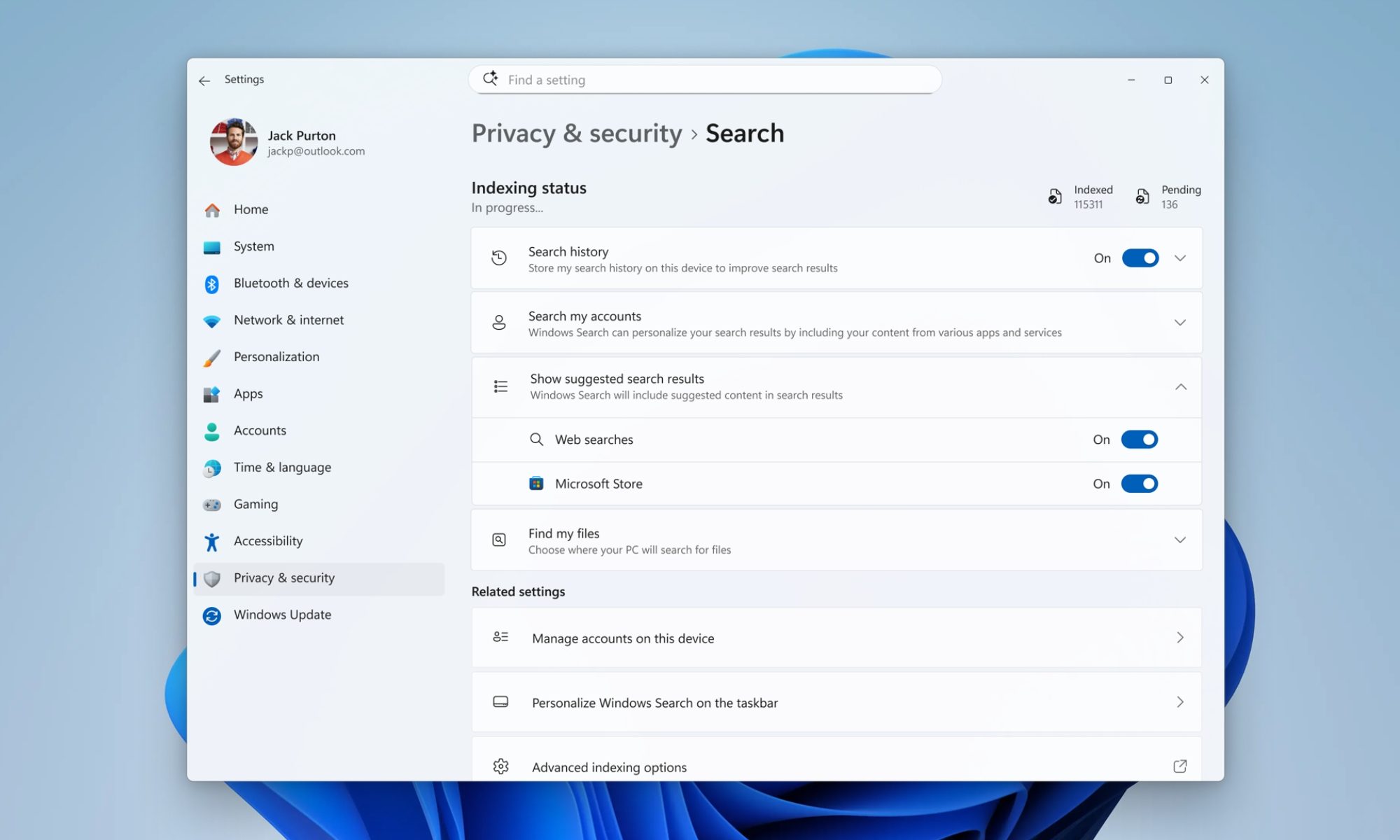
Windows Search has been a mess for years, and I do not use that word lightly. Open it to find a file, and you get trending Bing topics, Microsoft Store promotions, and an AI tools tile that just opens a browser. 

That is changing, but not immediately for all users. Microsoft is rolling out a batch of Windows Search improvements to Insiders in the Experimental channel, and for once, this isn't just a fresh coat of paint.

Read more
Apple doesn’t want to share this AirPods feature with Meta, but the EU may force its hand
Spring 2027, EU only, built under DMA pressure.
The front of the Ray-Ban Meta smartglasses.

I’ve been an AirPods user for the last four years, and one of the things that makes it genuinely hard to leave behind is the seamless, almost magical pairing experience across devices. Open an AirPods case near your iPhone, and a pop-up appears within seconds. Switch to your Mac and the audio follows. 

However, the experience is limited only to Apple devices. Doesn’t matter whether you have one of the coolest pieces of tech on the market right now; if it’s not Apple, it won’t get the same treatment. However, that might change for the Meta Quest or the Ray-Ban Meta glasses, thanks to pressure from the EU. 

Read more