  1. Home
  2. Mobile
  3. Android
  4. Photo Galleries
  5. Legacy Archives

Can you tell this is a Google Glass competitor? That’s the idea

Add as a preferred source on Google

Talking about wearable tech at the moment usually means a device for your wrist, but as the year goes on, we’ll talk more about smart devices which you wear on your face. Google Glass is top dog, but it’s not the only pair of smart specs around. The latest challenger is called Icis from a company called Laforge Optical (who we like already, thanks to the name), and the Indiegogo crowd-funding campaign begins today.

Instead of showing a smartphone-like display in front of your eyes, Icis presents its information around the wearer’s field of vision. It’s less intrusive, and potentially more inclusive. Laforge CEO Corey Mack says the idea behind Icis is to “blur the line between virtual lives and real lives,” and combining this unusual view with a pair of smart glasses is the result.

To help Icis become part of your life, it has three modes: Normal, Active, and Drive. The accompanying SocialFlo app installed on your smartphone – Icis works with iOS, Android and Windows Phone – establishes what you’re doing, then changes the mode accordingly. It connects to your phone using Bluetooth, but also has NFC so the mode can be altered using QuickTags.

The SocialFlo app reworks existing apps into little widgets for use through Icis, and will display the usual email, social networking notifications, and navigational information, but also includes weather updates, calendar alerts, and information from apps such as Nike and FitBit. Icis has a set of touch panels on its arms, along with a volume up and down key for controlling a media player.

There are two versions of Icis planned. If you want to get a pair this year, the basic beta edition will ship in December, and has a 640 x 480 pixel resolution screen. It’s powered by a 1GHz TI processor with 512MB of RAM, and runs Linux. Next year, Icis Bold will be available, and it comes with an 800 x 600 pixel resolution display, 1GB of RAM, plus a 5-megapixel camera with a 720p video recording mode.

While the tech and software is a big part of Icis, Laforge Optical also wanted to create stylish and fashionable frames. Unlike Google Glass, Icis’ optics are blended into the lens, and the hardware is hidden away by an all-encompassing chassis with 50/50 weight distribution, designed to make the glasses look and feel like regular glasses. Laforge hasn’t revealed all the designs at the moment, but does say a variety of styles and colors will be available should the project meet its funding goal, and adds that prescription lenses are also coming.

So what is the goal? It’s $80,000. A basic beta version of Icis costs $420, but the slightly higher-specced Icis Bold needs you to dig a little deeper, and is priced at $620. The campaign is underway now, and ends next month.

Andy Boxall
Andy has written about mobile technology for almost a decade. From 2G to 5G and smartphone to smartwatch, Andy knows tech.
The best note-taking apps for iOS and Android
I tested these apps for months so your notes never have to switch homes again.
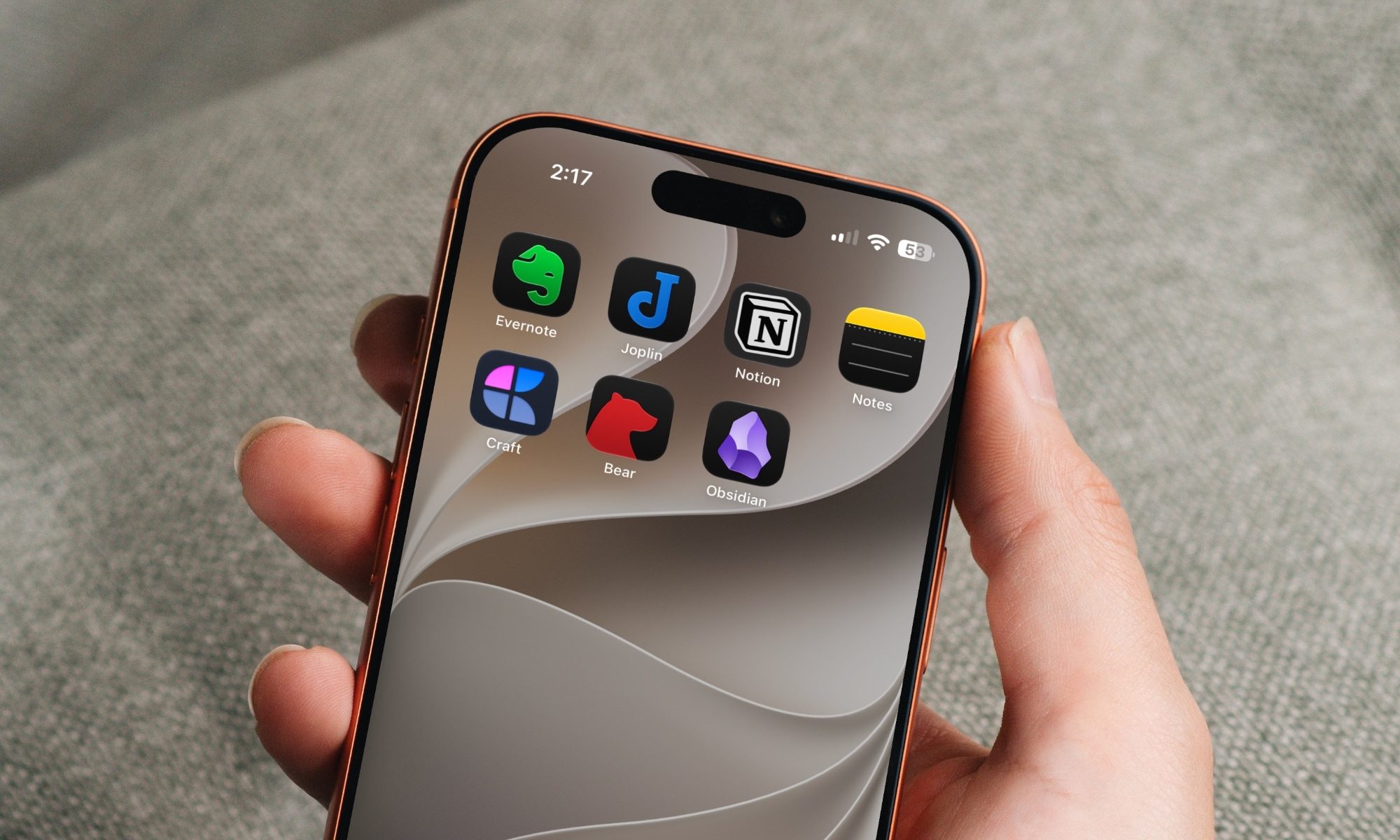
iPhone showing note-taking apps

Choosing a note-taking app is not easy. What note-taking app you choose depends on your needs, the platform you use, and of course, the cost. The process becomes even more complicated as it seems that there’s a new shiny app released every other week. 

That’s why I always suggest choosing a note-taking app that has all the features you need and can last you for a long time. Also, don’t chase new apps. The real power of a note-taking app comes when all your notes live in one place, making it easy to spot connections between them.

Read more
The best phones in 2026: our 14 favorite smartphones right now
We tested phones across all price brackets so that you can make the best pick based on your needs and budget.
Google Pixel 10 Pro Fold vs Galaxy Z Fold 7 cameras

Choosing the right smartphone in 2026 is no easy task. Apple and Android manufacturers now have strong options at almost every price, while better cameras, longer battery life, improved software support, new AI features, and more refined foldable designs have made the market more competitive than ever. But picking one is not easy, especially if your budget is tight, or you are just legitimately concerned about getting the best value for your money and need a reliable daily driver for long-term usage.

We have tested and compared the leading smartphones available today, looking beyond the spec sheet to see how they actually perform in daily use. Camera quality, battery life, performance, display quality, software, design, and long-term value all play a part in our recommendations. Whether you are looking for a powerful flagship, a dependable budget phone, a compact device, or a foldable, this guide should help narrow down your choices.

Read more
Snapchat Planets Meaning: Order, Rankings, and How Friend Solar System Works
Snapchat Planets turns your best friends list into a solar system, and yes, your orbit says a lot
Snapchat Planets being shown on the Snapchat app on iPhone.

Snapchat+ includes several exclusive features, but few have generated as much curiosity as Snapchat Planets. Part of the app's Friend Solar System, it transforms your Best Friends list into a planetary ranking, assigning each of your top eight friends a planet based on how often you interact.

From Mercury, which represents your closest friend, to Neptune, which represents your eighth closest, the system offers a quick visual snapshot of your interactions. But what do the different planets actually mean, and how does Snapchat decide who gets which one?

Read more