1. Home
  2. Audio / Video
  3. Legacy Archives

NuForce drops the quad-driver hammer with new Primo 8 in-ears

Add as a preferred source on Google

Check out our full written review of the NuForce Primo 8 headphones.

The Primo 8 may sound a bit like your local Italian eatery’s combination pizza, but it’s actually the moniker for a top-tier pair of balanced-armature in-ear headphones from the folks at NuForce. The flagship model for the company’s expansive headphone lineup, the Primo 8 leverage a mound of technologies, including four individual armature drivers per earpiece to create what NuForce is calling an “extraordinarily natural, lifelike sound.”

Recommended Videos

For those unfamiliar, balanced armature drivers differ from the dynamic drivers most in-ear headphones employ in that they are extremely tiny, and also don’t require external air to operate. Their design often allows them to create  more precise upper register sounds than dynamic drivers, but often hampers their ability to reproduce convincing bass. To combat this obstacle, each Primo 8 earpiece employs a 3-way crossover design, with two drivers for the bass register, and one each for the midrange and treble.

While NuForce calls the design “unique,” we’ve seen the process employed before – specifically in the Westone W40 – with brilliant results. However, NuForce has put its own perfectionist spin on the process, creating a patented “three-way phase-coherent crossover design” to combat frequency overlapping. The design promises linear phase performance for superior clarity and accuracy up top, while maintaining smooth and powerful bass response down below.

If we weren’t burning to go ears-on with these uber-engineered buds already, a walk-through of the Primo 8’s cable design struck our gearhead funny bone even harder. According to NuForce, the Primo 8’s Litz cable design uses a Kevlar Silk core, surrounded by seven strands of silver wire in a star pattern (and gratuitous alliteration), that’s then wrapped with seven-stranded OFC (oxygen free copper) wiring. So yeah, NuForce wasn’t kidding around when it came to the Primo 8’s cable design.

All of those pretty pieces of tech are wrapped into a sleek frame, matching rippled earpieces with a rubberized, wrap-around design for a smart fit, and a futuristic look. At $500, the Primo 8 are priced exactly where we thought they’d be, positioning them head-to-head and dollar-for-dollar against the previously mentioned W40, and other competitors in the slim field of premium in-ears. We can’t wait to find out where they stand.

It’s certainly imprudent to to judge a book by its cover, and we’ll have to spend some ample time with the Primo 8 before we’ll know if NuForce’s new gems deliver, but with comparisons to “the most costly over-ear dynamic and electrostatic designs,” and multiple promises of lifelike sound, we have to admit we’re excited to see what these new headphones can do.

The $500 Primo 8s are available starting today. Stay tuned for our full review to see if all of those enticing promises ring true.

Ryan Waniata
Former Home Theater & Entertainment Editor
Ryan Waniata is a multi-year veteran of the digital media industry, a lover of all things tech, audio, and TV, and a…
Stop joining group projects with a blurry laptop webcam and buy one of these instead
Your laptop webcam is sabotaging your first impression. These five can fix it
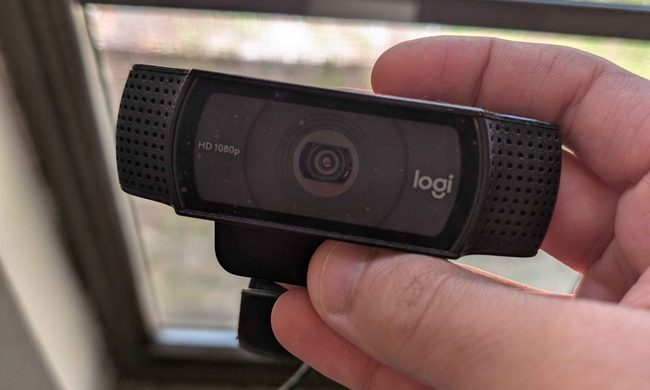
I'm holding my Logitech C920 1080p webcam in my hands.

The webcam built into your laptop might be good enough for a quick call with friends and family. But its shortcomings become much harder to ignore when you are presenting a semester project, interviewing for an internship, or maybe if you're planning to stream for fun.

Laptop cameras also tend to sit far too low, especially when the computer is placed directly on a desk. Meanwhile, a dedicated webcam lets you position the camera closer to eye level. This improves the framing and brings larger sensors, better microphones, and more effective low-light processing.

Read more
I desperately want a new classic Walkman, but Sony probably can’t give me one
Tech minimalism is begging for a new Walkman. Though rebuilding it may be close to impossible
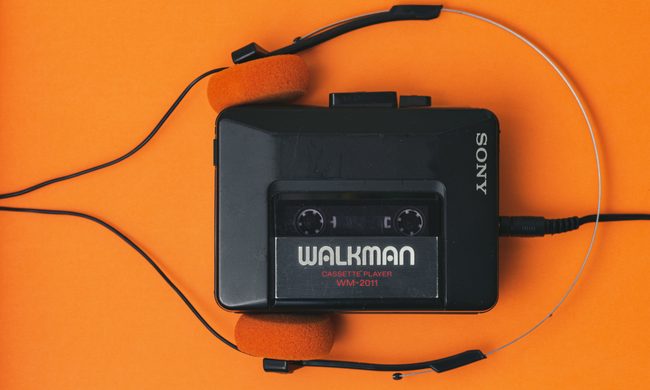
Sony Walkman WM2011

Every few months, another piece of tech that seems obsolete crawls out of a drawer and becomes cool again. The age of minimalism has revived the popularity of iPods among younger buyers. Dumbphones have become an escape hatch from endless notifications. Similarly, digital cameras are dangling from bags again. Physical media keeps attracting people who want something they can actually hold instead of another frustrating subscription.

All of this makes it the perfect time for Sony to bring back the classic Walkman, which was a phenomenon during the 80s and 90s. I would love one. Give me a compact cassette player, physical buttons, and wired headphones. Keep the apps, notifications, and algorithms that shape your taste of music. No more AI assistants or personalzied feeds, just you and your Walkman. There is only one problem though. Recreating the Walkman that people love and remember, would be far harder than putting an old design back into production.

Read more
Proton reveals how smart TVs track you and the escape situation is pretty grim 
Modern smart TVs fingerprint your screen content at the chipset level.
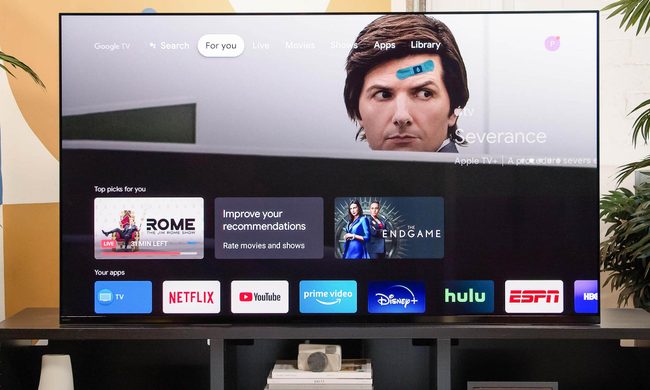
Google TV applications on the Sony A95K TV.

Your smart TV may know far more about your viewing habits than you realize, even if you rarely use its smart features. In a new privacy explainer, Proton warns that many modern TVs quietly collect data about everything displayed on the screen and share it with manufacturers, advertisers, and analytics companies.

The worrying part is that escaping this tracking is becoming increasingly difficult because many privacy controls are buried deep in settings or enabled by default. Proton argues that buying a smart TV today often means accepting a level of surveillance that most people never knowingly signed up for.

Read more