We know what you’re thinking, and the answer is no — this isn’t the first consumer product designed and manufactured by the NSA.
Instead, Conversnitch is a strange, experimental surveillance project from NYC artists Kyle McDonald and Brian House. It’s designed to raise questions about the nature of public and private space in an era where practically anything can be recorded and broadcast by the ubiquitous web-connected listening devices we carry around in our pockets and wear on our faces.
“What does it mean to deploy one of these in a library, a public square, someone’s bedroom? What kind of power relationship does it set up?” House asked in an interview with Wired, “And what does this stream of tweets mean if it’s not set up by an artist but by the U.S. government?”
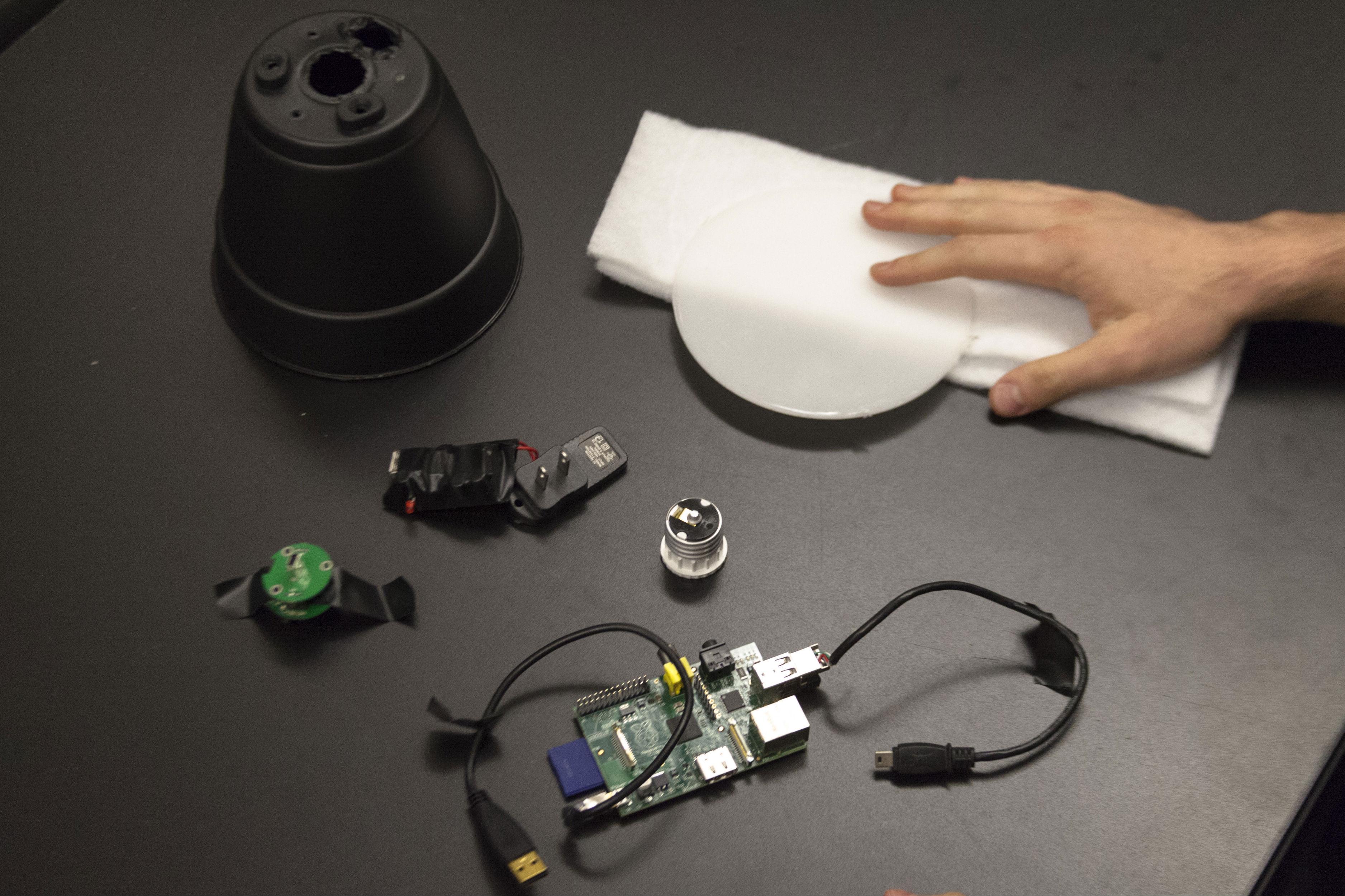 The device (which costs less than $100 to build) is constructed from little more than a Raspberry Pi computer module, a microphone, a small LED array, and a lightly-modified plastic flower pot. It screws in to any standard light bulb socket, and once connected to a steady power supply, will constantly record audio from the surrounding environment.
As if secretly recording you wasn’t creepy and invasive enough; once Conversnitch captures a snippet of conversation, it uses the nearest open WiFi network to upload the audio to Amazon’s Mechanical Turk crowdsourcing platform, where the audio is transcribed and then posted publicly on Twitter.
House and McDonald first deployed the device at the “Prism Break Up” Eyebeam art exhibition in Manhattan last October, but due to potential legal issues, they wouldn’t reveal where else they’ve planted them since then. In what was surely a purposefully vague statement, McDonald told Wired that Conversnitch “has potentially been deployed in various places.”
Despite this secrecy however, the duo has posted a video online (embedded below) that reveals two blurry-faced individuals planting the device in various spots around New York; including McDonald’s, the lobby of a bank, in a public library, and even inside a lamp post in Manhattan’s Washington Square Park.
Paranoid yet? You should be. Check out Conversnitch’s Twitter account to see some of the revealing conversations it’s picked up so far.
[images via Kyle McDonald/Wired]