1. Home
  2. Computing
  3. Emerging Tech
  4. News

This new technique can generate AI videos in just a few seconds

TurboDiffusion can generate AI videos upto 200 times faster without losing quality

Add as a preferred source on Google
ai-video-generation
This is an AI generated image Adobe Firefly

Researchers have unveiled a new AI video generation technique called TurboDiffusion that can create synthetic videos at near-instant speed. It can generate AI video up to 200 times faster than with existing methods, without sacrificing visual quality.

The work is a joint effort between ShengShu Technology, Tsinghua University, and researchers affiliated with the University of California, Berkeley. According to its developers, the system is designed to dramatically cut the time it takes to generate video, a process that has traditionally been slow and computationally expensive.

TurboDiffusion sets a new speed benchmark

When tested on a consumer PC equipped with Nvidia’s RTX 5090 graphics card, TurboDiffusion reduced the time required to generate a 5-second standard-definition video clip from more than three minutes to just 1.9 seconds. For high-definition clips of the same length, the time dropped from nearly 80 minutes to just 24 seconds, representing a roughly 200x improvement.

Recommended Videos

Current tools like Shengshu’s Vidu and OpenAI’s Sora still take several minutes to generate short video clips. Instead of waiting hours to render short clips, creators could generate usable video in seconds or minutes.

TurboDiffusion can tackle a major bottleneck in AI video generation by sharply reducing compute time. This speedup could unlock faster workflows across animation, filmmaking, and content creation, without compromising on quality.

What near-instant AI video means next

This breakthrough also suggests that the era of real-time or near-instant AI video creation may be closer than many expected. But it also raises familiar concerns. Faster video generation can also increase the onslaught of deepfake-style content.

As AI-generated video becomes quicker and cheaper to produce, questions around verification, misuse, and safeguards are likely to intensify, especially on platforms that are already struggling with AI slop.

TurboDiffusion arrives as other AI video tools are evolving. Google’s Flow video creator adding deeper creative controls, and Adobe’s Firefly expanding into text-based video editing and native video generation inside Premiere Pro, underscore how fast the space is moving.


Manisha Priyadarshini
Manisha Priyadarshini is a tech and entertainment writer with over nine years of editorial experience.
Claude’s Sonnet 5 is built to do more on its own and cost you less
Better than its predecessor, nearly as good as the flagship, and meaningfully cheaper than both.
Art, Floral Design, Graphics

Every major AI lab is racing to prove its models can work autonomously with minimal hand-holding; we’re now seeing pricing emerge as the next battleground. 

Anthropic just fired its latest shot, Claude Sonnet 5, a model the company says performs nearly as well as its flagship Opus 4.8 at a fraction of the cost.

Read more
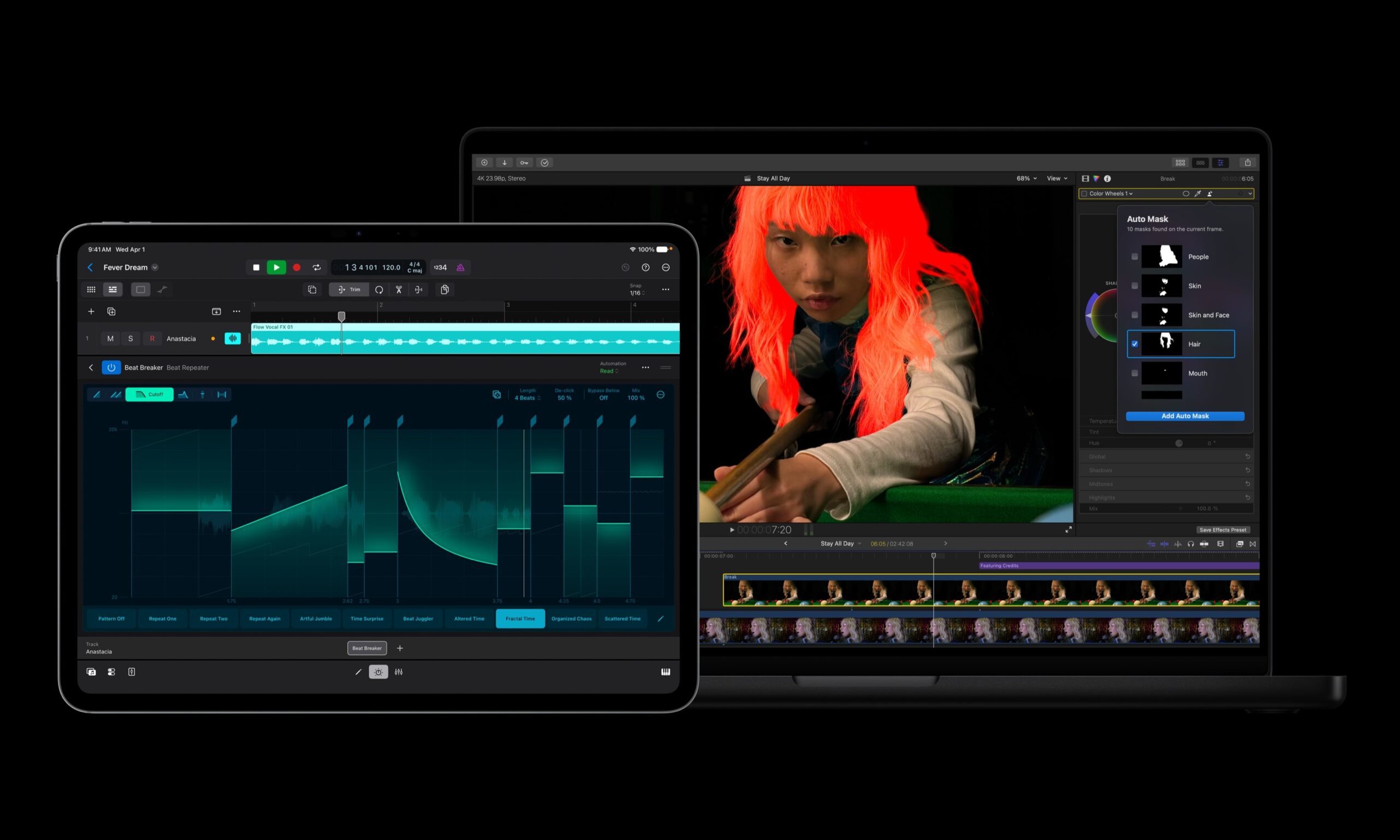
Apple Creator Studio adds AI tools across Final Cut Pro, Logic Pro and Pixelmator Pro
Final Cut Pro gets AI captions, Auto Mask and better Pixelmator Pro workflows in Creator Studio update
Computer Hardware, Electronics, Hardware

Apple has introduced a major update to Apple Creator Studio, adding new AI features, deeper Pixelmator Pro integration, and workflow upgrades across Final Cut Pro, Logic Pro, Keynote, Pages, Numbers, Motion, Compressor, Freeform, and Final Cut Camera.

The update makes Creator Studio more useful across Mac, iPad, and iPhone, especially for people who move between video editing, image editing, presentations, documents, spreadsheets, and music production.

Read more
AI browsers like Perplexity Comet can be tricked into spilling your password through BioShocking exploit
Six AI browsers were found leaking saved passwords and many of them haven't fixed it yet.
MacBook Air in hand, Comet browser loaded—let’s see what Perplexity’s AI can really do

Security researchers just found a strange way to trick AI browsers into handing over your passwords. They managed to trick AI browser agents into exposing sensitive data like saved passwords, session cookies, and private tokens by disguising the theft as part of a harmless "game."

The technique is called BioShocking, named after the popular video game BioShock, where a brainwashed character is manipulated into believing a false reality. Once an AI browser falls for the same trick, it stops following its own safety rules entirely.

Read more