1. Home
  2. Computing
  3. Emerging Tech
  4. News

Love autocomplete in your texts? Research says its quietly changing your thoughts

A major new study found biased autocomplete shifts how users actually think — and even explicit warnings couldn't stop it from happening.

Add as a preferred source on Google
RCS-messaging-on-iOS
Bryan M. Wolfe / Digital Trends

We’ve all been there — thumbs mid-air, staring at a suggested word that somehow nailed what we were trying to say. So we tap it. Obviously. But a new study suggests those little taps might be doing more than saving us a few seconds.

Research out of Cornell Tech, published this week in Science Advances, found that AI-powered autocomplete suggestions don’t just change how you write — they nudge how you actually think. And you won’t even notice it happening.

What did the research actually find?

Researchers ran two large-scale experiments with over 2,500 participants, asking them to write short essays on spicy societal topics — think death penalty, fracking, GMOs, voting rights for felons.

Recommended Videos

Some participants got autocomplete suggestions secretly engineered to lean a certain direction, generated using a large language model from the GPT-3 and GPT-4 families. Others got nothing.

The result? People who wrote with the biased AI gradually warmed up to the AI’s positions. Not because they were convinced by arguments. Not because they read anything persuasive. Just because their phone kept finishing their thoughts for them.

Knowing the trick didn’t break the spell either

Now here’s the part that should make you put your phone down for a second. Researchers told some participants upfront the AI had a bias problem — a sort of “don’t say we didn’t warn you” disclaimer. Then they tried debriefing others afterward. In most misinformation studies, these approaches work like mental vaccines. This time, neither did a thing.

“Their attitudes about the issues still shifted,” said senior author Mor Naaman, who also noted autocomplete has exploded in scope — Gmail now offers to write entire emails on your behalf.

So next time your phone suggests you “totally support” something, maybe give that little blue word a second look. Your opinion might be one tap away from becoming someone else’s.


Shikhar Mehrotra
For more than five years, Shikhar has consistently simplified developments in the field of consumer tech and presented them…
Apple’s new Upgrade program lets you lease an iPhone, Mac, Watch, and iPad
Launched in partnership with Klarna, the new program gets you an iPhone for as little as $17.99 a month.
Apple Upgrade site on a MacBook Neo

Apple has officially launched Apple Upgrade, a leasing program that lets customers pay monthly for an iPhone, iPad, Mac, or Apple Watch instead of buying the device outright. The program went live today on Apple's website in partnership with Klarna, replacing the iPhone Upgrade Program that Apple has offered since 2015.

What you can lease and what it costs

Read more
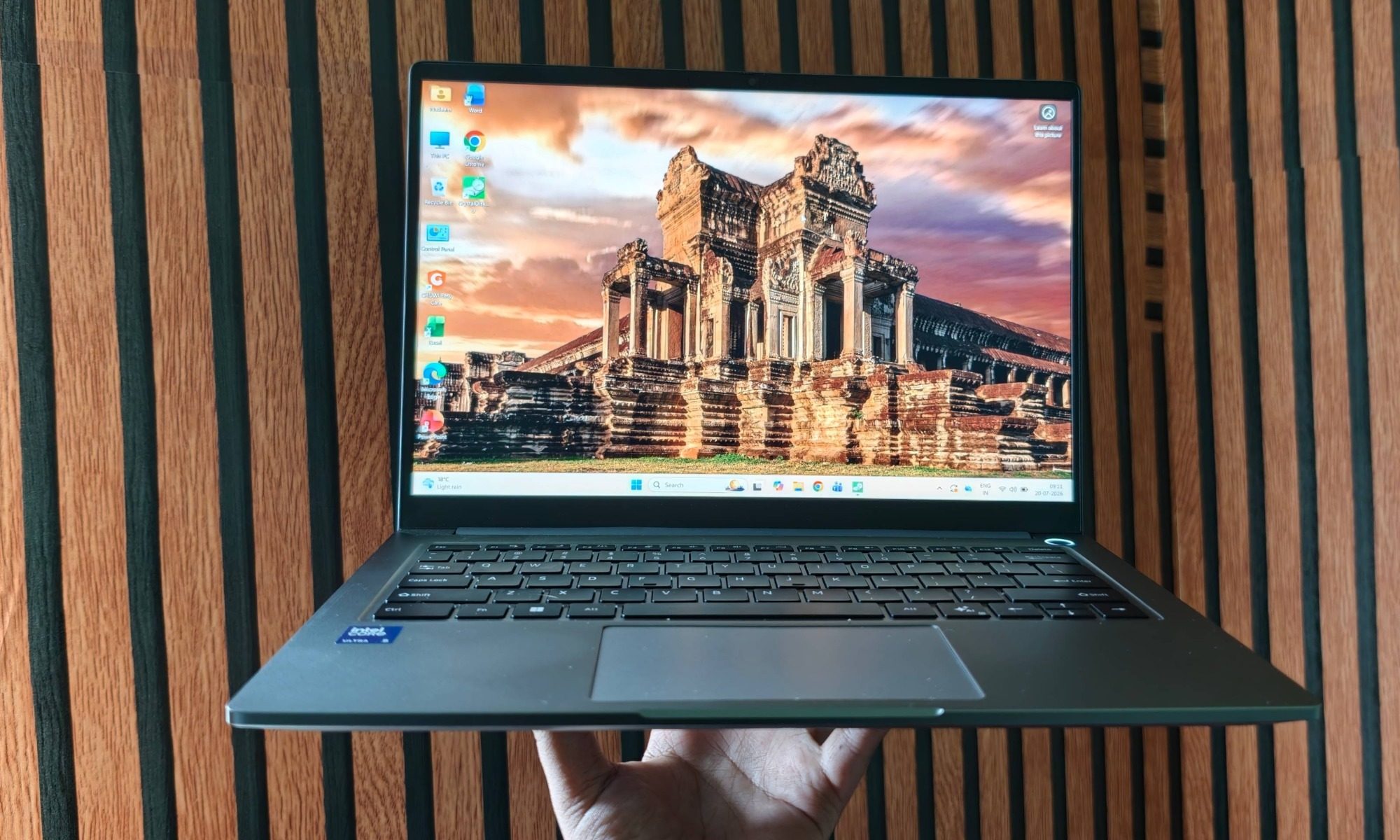
Chuwi CoreBook Air review: A rewarding budget laptop that wants you to cross the brand boundary
Chuwi's CoreBook Air is a relatively unknown, but a heavy-hitting budget machine for the AI-first computing era.
Computer, Electronics, Laptop

View at Chuwi

Quick verdict

Read more
AI’s latest problem is deepfake disaster content for farming engagement
Fake and recycled videos from disasters in Venezuela and China are making social media feeds harder to trust when people need accurate updates quickly
Electronics, Screen, Adult

Social feeds around the earthquakes in Venezuela filled with recycled footage and AI-generated destruction. Severe weather in China attracted its own wave of AI disaster videos, including fabricated flood scenes and false reports of power outages.

It creates an ugly race. People want immediate evidence of what happened, and AI slop can deliver something dramatic before reliable information catches up. Authentic updates are left competing with fiction precisely when confusion can send people scrambling for answers.

Read more