  1. Home
  2. Cars
  3. News

Rivian is partnering with Uber to put thousands of robotaxis on the road

Uber's $1.25 billion bet on Rivian's R2 robotaxi could reshape how millions of people hail a ride across 25 cities by 2031.

Add as a preferred source on Google
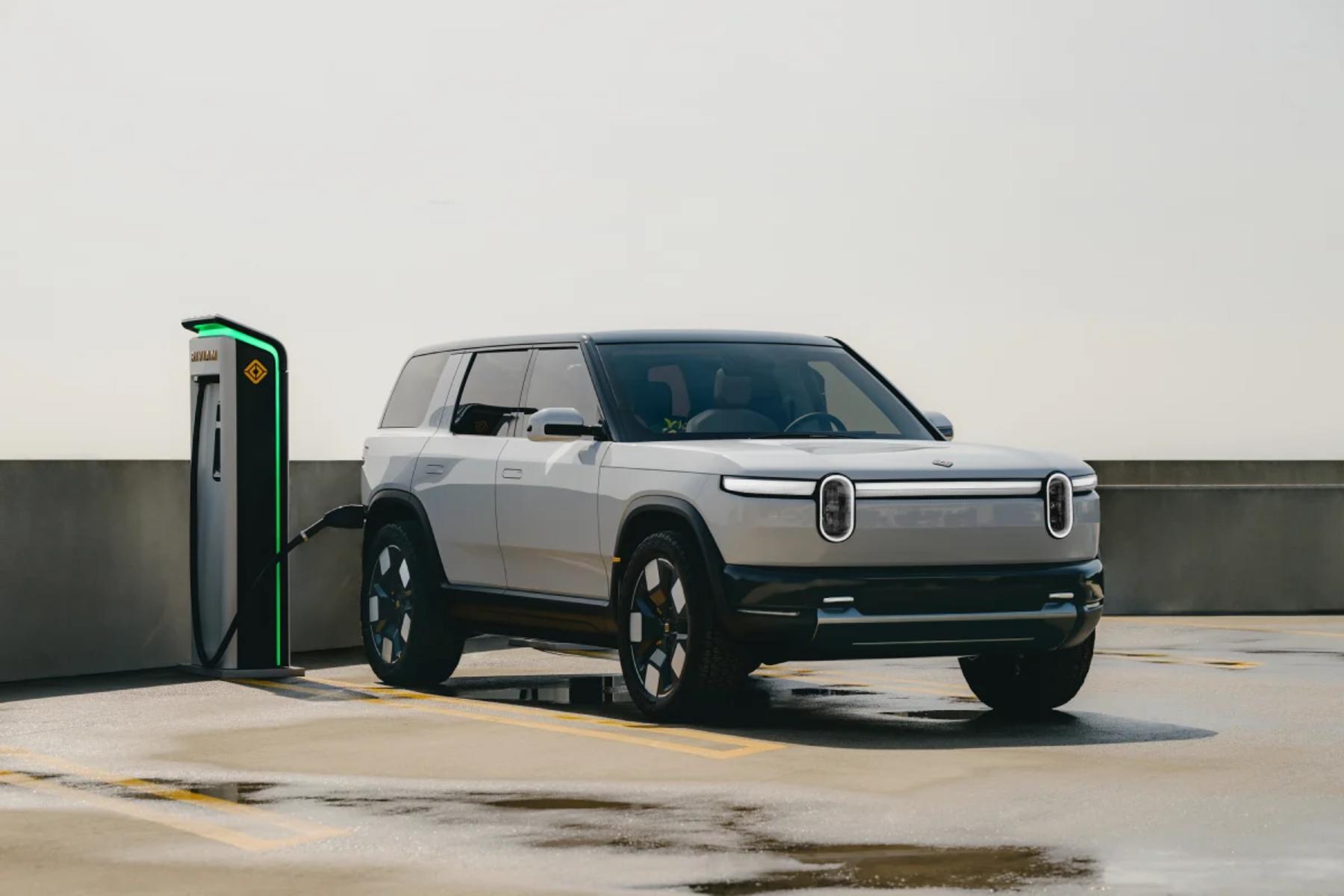
Rivian R2 featured image.
Rivian

Uber and Rivian have announced a strategic deal that could deploy up to 50,000 robotaxis (fully autonomous vehicles) on the road by 2031. 

As part of the partnership, Uber will invest $300 million in Rivian (equivalent to about 19.55 million Rivian shares), with the investment committed immediately upon signing. 

What will passengers experience on the ground?

In the first phase, Uber or its fleet partners could purchase the first 10,000 fully autonomous Rivian R2 EVs. From 2028, passengers in San Francisco and Miami could be hailing fully driverless Rivian R2s directly through the Uber app. 

Recommended Videos

Thereafter, Uber will have the option to purchase an additional 40,000 units from the automaker through 2031, to be deployed across 25 cities in the United States, Canada, and Europe. However, the bulk of the investment is tied to Rivian meeting the agreed-upon performance milestones. 

Uber has also agreed to pay licensing fees for Rivian’s autonomous driving software. For those catching up, the automaker’s third-generation autonomy platform combines 11 cameras, five radars, and one LiDAR, all powered by two in-house RAP1 chips (capable of delivering up to 1,600 TOPS of AI compute). 

The deal improves Rivian’s position as an autonomous technology provider 

It’s worth mentioning that Rivian is beginning consumer R2 sales this spring. Once that happens, the real-world driving data should help further improve the autonomous systems. It is Rivian’s stronghold over its hardware (the car) and the platform (the software) that convinced Uber to enter the deal. 

Following the announcement, Rivian’s stock jumped roughly 10%, signalling strong investor confidence in the partnership. The deal adds to Rivian’s existing $5.8 billion software partnership with Volkswagen, solidifying its position as an autonomous technology provider. 

For Uber, it is the most substantial robotaxi commitment the company has made, following earlier tie-ups with Lucid, Amazon’s Zoox, Stellantis, and Nvidia.

Shikhar Mehrotra
For more than five years, Shikhar has consistently simplified developments in the field of consumer tech and presented them…
Volkswagen’s smartest EVs are launching in China while the US and Europe wait
China-only models already have the software, charging, and driving technology VW’s Western cars are still waiting to receive
Volkswagen ID UNYX 08

Volkswagen’s newest EVs in China are making its American and European models look unusually conservative.

With Xpeng’s help, VW has introduced 800-volt charging and advanced urban driving assistance. The new VEGA technology package brings its locally developed vehicle platforms and CEA electronic architecture under one umbrella. Bloomberg reports that Volkswagen intends to update VEGA every three months. Western buyers can find pieces of that package, but not the whole thing in a Volkswagen.

Read more
BYD’s $12,000 Qin Plus DM-i shows how much US buyers are overpaying for their cars
A cheap commuter car that could take you from New York to Miami without refueling? Yes, please.
BYD Qin Plus DM-i feature

BYD has launched the third-generation Qin Plus DM-i in China, and the first thing that caught my eye is its price. According to CarNewsChina, the plug-in hybrid sedan starts at 79,900 yuan, which is about $11,980. That’s an incredibly low price for a brand-new car, especially by US standards.

What’s even more impressive is the range. The Qin Plus DM-i can drive up to 137 miles on electricity alone, which should cover most people’s daily commutes without using a drop of gas. Once the battery runs out, the 1.5-liter engine takes over. Thanks to its 17-gallon tank and roughly 91 mpg with a drained battery, the combined range reaches up to 1,423 miles. 

Read more
Apple edges out a win in the PC market’s worst quarter by stumbling less than everyone else
Apple basically has a bigger share of a shrinking pie.
Computer, Electronics, Laptop

Apple won the PC market’s worst quarter, but that’s not the entire story. It won the race by stumbling less than everyone else.

PC makers shipped just 57 million computers worldwide in Q3, which might look good, but it’s a 21% year-over-year plunge (via Counterpoint Research). And despite Apple’s Mac shipments falling by 11%, to 5.6 million, its market share rose from 8.7% to 9.8%. How did that happen?

Read more