1. Home
  2. Space
  3. News

What’s on the menu for NASA’s Artemis II moon astronauts?

Four astronauts are about to spend 10 days flying to the moon and back in a small spacecraft. So what will they eat during their epic voyage?

Add as a preferred source on Google
How To Eat In Space

NASA’s Reid Wiseman, Victor Glover, and Christina Koch, together with the Canadian Space Agency’s Jeremy Hansen, are less than 24 hours away from flying to the moon.

The Artemis II mission is on target to blast off from the Kennedy Space Center on Wednesday, April 1. Once NASA’s powerful SLS rocket has lifted the crew to space, they’ll spend about a day in Earth orbit checking the Orion spacecraft’s systems before changing trajectory and heading for the moon.

The mission doesn’t involve a lunar touchdown. Instead, the astronauts will fly around the moon before heading back home in a voyage expected to last about 10 days.

So, what kind of food will keep the crew fueled over the course of their epic trip?

The menu items are designed to support crew health and performance, and with no resupply or refrigeration, all of the food must be shelf-stable as well as easy to prepare and consume within the confines of the spacecraft.

“Food selections are developed in coordination with space food experts and the crew to balance calorie needs, hydration, and nutrient intake while accommodating individual crew preferences,” NASA said in a post about meals on the Artemis II mission.

Menu items include everything from tortillas, vegetable quiche, and mango salad, to nuts, macaroni and cheese, and tropical fruit salad. As they travel to and from the moon, the astronauts will also be able to enjoy things like granola with blueberries, barbecued beef brisket, and spicy green beans.

Drink options include coffee, green tea, mango-peach smoothie, lemonade, and cocoa. While it might feel appropriate to celebrate a lunar flyaround with a glass of champagne, no alcohol will be loaded onto the Orion.

The consumables are certainly a step up from what the last set of Apollo astronauts enjoyed — or endured — during their moon missions more than five decades ago.

Then, astronaut food was limited and often unappealing, comprising mainly bite-sized cubes, freeze-dried powders, and tube-packaged meals with little variety or texture. In contrast, the Artemis II crew members are benefitting from decades of advancements — thanks in part to experiences on the International Space Station — enabling them to enjoy food that’s both tastier and more nutritious.

NASA will use what it learns on the Artemis II mission to better understand how astronauts eat and manage food effectively in a small spacecraft, with the findings helping to guide preparations for future and much longer crewed missions to deep space.

Interested to watch a livestream of the Artemis II crew launching on their historic mission from Florida’s Space Coast on Wednesday? Digital Trends has you covered.

Trevor Mogg
Contributing Editor
Not so many moons ago, Trevor moved from one tea-loving island nation that drives on the left (Britain) to another (Japan)…
Space is becoming Bezos and Musk’s next data center site, and we have every reason to worry
The AI boom is coming for the night sky
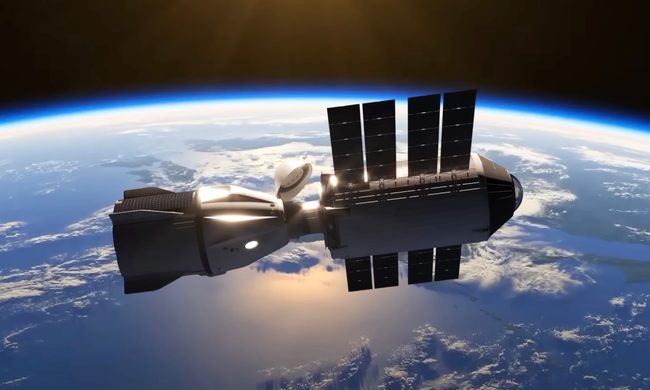
How Vast's space station will look in orbit.

AI data centers already consume vast amounts of electricity and water on Earth, so Silicon Valley has begun looking somewhere considerably more spacious... literally.

Elon Musk's SpaceX and Jeff Bezos' Blue Origin, along with several other companies, have proposed enormous constellations of satellites designed to operate as orbital data centers. However, environmental groups and former space officials are now warning that putting them into orbit at the proposed scale could have severe consequences for Earth's atmosphere and the night sky.

Read more
The first possible exomoon is here, and it makes our Moon look hilariously tiny
Scientists may have found the first exomoon, except this one is the size of Jupiter
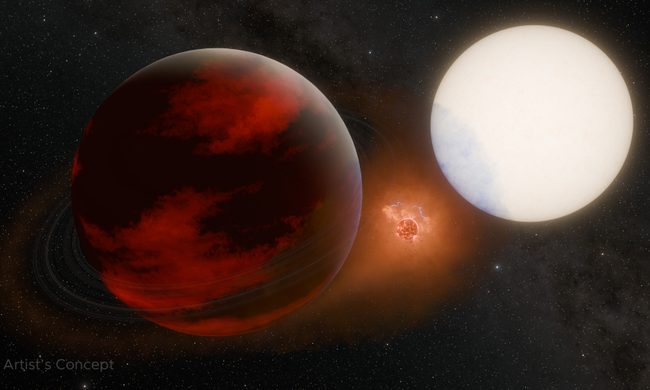
This artist’s concept depicts a potential volcanic moon between the exoplanet WASP-49 b, left, and its parent star. New evidence indicating that a massive sodium cloud observed near WASP-49 b is produced by neither the planet nor the star has prompted researchers to ask if its origin could be an exomoon.

We have already discovered more than 6,000 planets outside of our immediate neighborhood. Yet, finding a moon orbiting one of those distant worlds has proved considerably harder. Astronomers may finally have something close to the real deal, but this particular object stretches the word “moon” almost beyond recognition.

Using the European Southern Observatory’s Very Large Telescope in Chile, researchers detected strong evidence for a moon-like object in the CD-35 2722 system. Further observations are still necessary to confirm the discovery, but it could become the first confidently detected natural satellite outside our solar system. There is still one tiny complication though. This moon is apparently massive.

Read more
China’s answer to SpaceX’s reusable rockets literally catches boosters in a net
SpaceX catches boosters on legs. China just used a net.
Ammunition, Missile, Weapon

SpaceX's playbook for recovering a rocket booster generally involves legs, a precisely controlled vertical landing, and either a concrete pad or a drone ship. 

China just managed to pull off something similar, but in a slightly different way, and on July 10, it tested the method as well.

Read more