1. Home
  2. Space
  3. News

The Artemis II moon mission is special, and so is the astronauts’ toilet

Artemis 2 is finally flying astronauts back to the moon, and it’s a huge deal

Add as a preferred source on Google
Artemis II NASA astronauts (left to right) Reid Wiseman, Victor Glover, and Christina Koch, and CSA (Canadian Space Agency) astronaut Jeremy Hansen
Artemis II NASA astronauts (left to right) Reid Wiseman, Victor Glover, and Christina Koch, and CSA (Canadian Space Agency) astronaut Jeremy Hansen. NASA

NASA’s Artemis II mission is already pretty historic as the agency’s first crewed journey around the moon in more than half a century. But tucked inside all the big-picture lunar ambition is a much more grounded milestone, with astronauts finally getting a toilet that does not sound like a hassle.

This may not be the most glamorous part of the mission, but it is still a meaningful one. Decades ago, the Apollo astronauts went to the moon using a waste system based on plastic bags and funnels, and NASA’s own later assessment described it as “objectionable” and “distasteful”.

But no longer.

Why this is actually a big deal

The old Apollo’s plumbing setup was messy, awkward, and prone to failure. Crew members had to manually use adhesive-rimmed plastic bags and tubes in microgravity, then mix in germicide by hand to stop bacteria and gas buildup. The system also had a bad reputation for leaks, including famously gross moments like floating waste during Apollo 10.

Recommended Videos

NASA later admitted that this whole arrangement earned poor marks for crew satisfaction. So the new upgrade on Atermis II is more than just a quality-of-life upgrade; it is NASA finally solving a problem that has been hanging around since the first moonshots.

A working toilet is a real milestone

NASA’s Artemis II uses the new Universal Waste Management System, or UWMS. It includes handles to help astronauts stay steady in microgravity, supports simultaneous urine and feces collection, and works for both male and female astronauts. Another big thing is a door for at least the illusion of privacy inside Orion’s cramped crew capsule.

The design has been in the works for more than a decade, with Collins Aerospace first contracted in 2015. A different version of the UWMS was tested on the ISS (International Space Station) in 2020, with final installation being complete in 2021. Artemis II will carry a modified lunar version inside Orion, where it will face its first real test on a crewed moon mission.

The toilet for the future in space

There is a reason NASA cares so much about this, since it believes waste management is considered mission-critical. So the system failing can put the whole mission at risk. Since Artemis II is supposed to help define the systems NASA will rely on for future lunar campaign missions and eventually Mars missions, this is a big moment for the advanced space-grade toilet.

Vikhyaat Vivek
Vikhyaat Vivek is a tech journalist and reviewer with seven years of experience covering consumer hardware, with a focus on…
Space is becoming Bezos and Musk’s next data center site, and we have every reason to worry
The AI boom is coming for the night sky
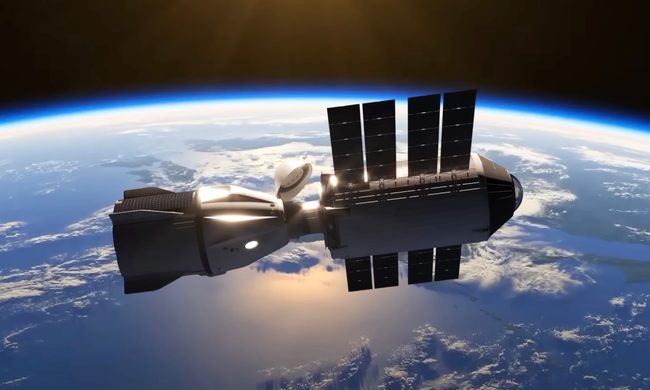
How Vast's space station will look in orbit.

AI data centers already consume vast amounts of electricity and water on Earth, so Silicon Valley has begun looking somewhere considerably more spacious... literally.

Elon Musk's SpaceX and Jeff Bezos' Blue Origin, along with several other companies, have proposed enormous constellations of satellites designed to operate as orbital data centers. However, environmental groups and former space officials are now warning that putting them into orbit at the proposed scale could have severe consequences for Earth's atmosphere and the night sky.

Read more
The first possible exomoon is here, and it makes our Moon look hilariously tiny
Scientists may have found the first exomoon, except this one is the size of Jupiter
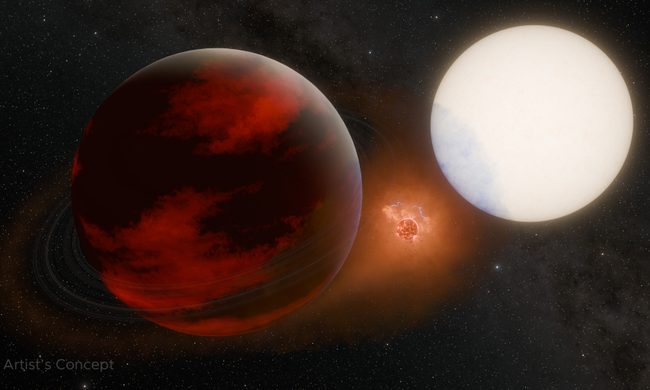
This artist’s concept depicts a potential volcanic moon between the exoplanet WASP-49 b, left, and its parent star. New evidence indicating that a massive sodium cloud observed near WASP-49 b is produced by neither the planet nor the star has prompted researchers to ask if its origin could be an exomoon.

We have already discovered more than 6,000 planets outside of our immediate neighborhood. Yet, finding a moon orbiting one of those distant worlds has proved considerably harder. Astronomers may finally have something close to the real deal, but this particular object stretches the word ā€œmoonā€ almost beyond recognition.

Using the European Southern Observatory’s Very Large Telescope in Chile, researchers detected strong evidence for a moon-like object in the CD-35 2722 system. Further observations are still necessary to confirm the discovery, but it could become the first confidently detected natural satellite outside our solar system. There is still one tiny complication though. This moon is apparently massive.

Read more
China’s answer to SpaceX’s reusable rockets literally catches boosters in a net
SpaceX catches boosters on legs. China just used a net.
Ammunition, Missile, Weapon

SpaceX's playbook for recovering a rocket booster generally involves legs, a precisely controlled vertical landing, and either a concrete pad or a drone ship.Ā 

China just managed to pull off something similar, but in a slightly different way, and on July 10, it tested the method as well.

Read more