Most people who use AI daily, including me, have already found their preferences. I use a paid Claude subscription to help with my editorial chores (headline brainstorming, fine-tuning the tone, etc.), while Gemini is my go-to AI model for image generation and background research, especially when I want to go deep on a topic.
Maybe you use Perplexity for search or ChatGPT for code, and that’s absolutely fine, as it only boosts your productivity and gets you the right information faster. The problem is, the operating system on your phone or laptop isn’t aware of your choice, and until now, it didn’t even care before imposing its own choice of AI.
In the corporate world, we call this partnerships. Most Android manufacturers, including Samsung and OnePlus, have partnered with Google to integrate Gemini on their devices. Windows, on the other hand, gives you Copilot, whether you take it or leave it.
Apple, reportedly, is about to do something neither of them has bothered to ask, much less execute: which AI do you actually want to use, and where?
The days of your phone choosing an AI for you are almost over
The moment you look at what Android and Windows are doing, the contrast gets stark fast.
According to Bloomberg’s Mark Gurman, iOS 27 will introduce a new feature that Apple internally calls “Extensions.” It will let you select your preferred AI model for a specific Apple Intelligence tool without simply surrendering to whatever AI model the company decides to install.
When iOS 27 arrives, you should be able to head into Settings, assign your preferred third-party AI model to an Apple Intelligence feature (Writing Tools, Image Playground, etc.), and iOS 27 takes it from there. Siri also gets the same treatment, letting you select the AI model that handles your requests at the backend.
The moment iOS 27 lands on my iPhone 17, I am going to select Claude as the AI model of my choice for Writing Tools and Gemini for Image Playground.
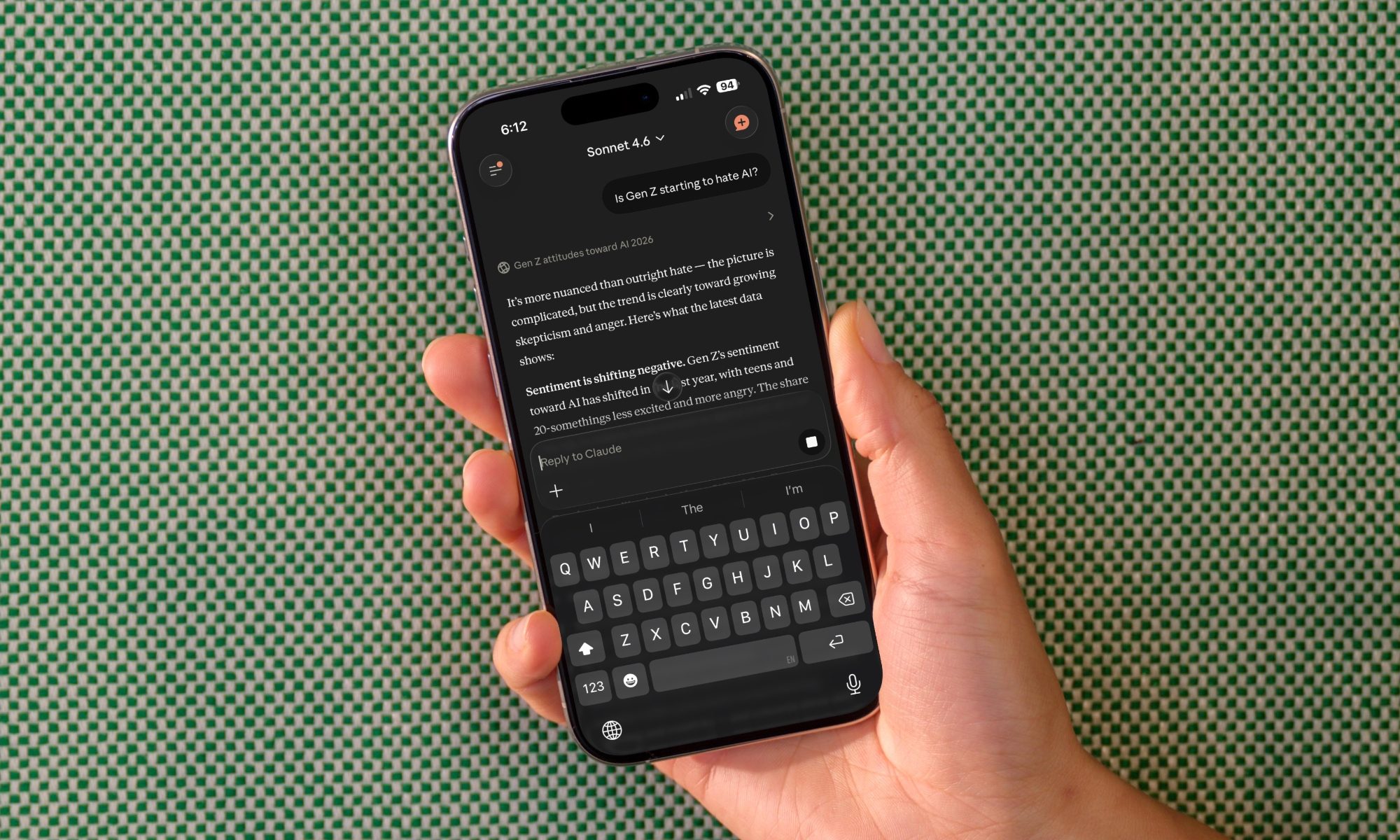
This isn’t just a regular choice, but a frictionless, system-level choice. You set it once, and every time you invoke the Apple Intelligence tool, your preferred AI model shows up. No switching of apps or copy-pasting prompts and outputs across windows required.
That’s what true model portability looks like in practice, and in my frank opinion, it’s a more coherent solution than anything Android or Windows has ever implemented.
On Android and Windows, my favorite AI is always one detour away
Let’s say that you’re using the AI-powered text processing tools on a Samsung Galaxy smartphone. Galaxy AI offers you quite a lot of them, including Writing Assist, Note Assist, and Call Assist, but all of them are powered by Google’s Gemini.
What if I want to use Claude in Samsung Messages to write a message? I have to exit the app, open Claude’s app or web version, paste the text, type in a prompt, copy the output, return to the Messages app, paste it, and send it. Want a different model to summarize your meeting notes in Samsung Notes? I’ve to take the same detour.
I know, it’s tiring to even read that. Imagine millions of users doing this every single day, just to use their preferred AI model. On Windows, Copilot is baked into Notepad and Paint, and there’s absolutely no other choice for everyday users.

Motorola deserves some credit for going further than most Android OEMs, as it allows users to access Gemini, Copilot, Perplexity, and Meta’s Llama AI via Moto AI. However, the company has already decided and tied each AI model to a specific use case. For instance, Llama powers Catch Me Up, and Copilot handles quick questions and answers, while Gemini handles photo analysis. Exciting, right? But I didn’t choose any one of those.
The platforms hand you an AI ecosystem to ease your digital pain, but what they’ve actually built is a walled garden.
Apple isn’t winning the AI race: It’s building the track
Apple’s approach, on the other hand, treats your AI preference the way iOS already treats default browsers or email apps: as a user setting. That, in my opinion, is real democratization at work here. It is the right to choose which AI is genuinely useful to me, not whichever scores highest on a benchmark.
To understand how Extensions could actually materialize in practice, any AI company could opt in and add support through their App Store app, which then becomes available as an engine inside Apple Intelligence. Once we install the app, it surfaces as an option inside Settings.
From there, you can route an Apple Intelligence tool to whichever model you trust the most for that specific task. While the company’s in-house models stay intact, the option to outsource a query to third-party models sits as a layer on top. Further, we could also get a dedicated App Store section, which will highlight the compatible AI apps.

Here’s where it gets even more interesting for Apple as a business. So far, the company has been fairly criticized for lagging in the AI race. However, opening up its platform of over 2.5 billion active devices, including iPhones, iPads, and MacBooks, to Claude, Gemini, and whoever qualifies may turn that weakness into its most lucrative strength.
The iPhone-maker already takes its standard 30% cut on App Store subscriptions, but if you extend this to every Claude Pro or Gemini Advanced subscription processed through iOS, suddenly, Apple doesn’t really need to win the AI race. It just needs to own the racetrack.
Remember, none of it is officially confirmed by Apple. But we’re pretty close to WWDC 2026, and that’s when Apple could officially announce the transition from becoming an AI-first company to an AI-agnostic platform, one that profits from all of them.