  1. Home
  2. Space
  3. News

Amazon’s Starlink rival is set to launch satellite internet later this year

After launching nearly 400 satellites, Amazon says its Leo broadband service will go live later this year.

Add as a preferred source on Google
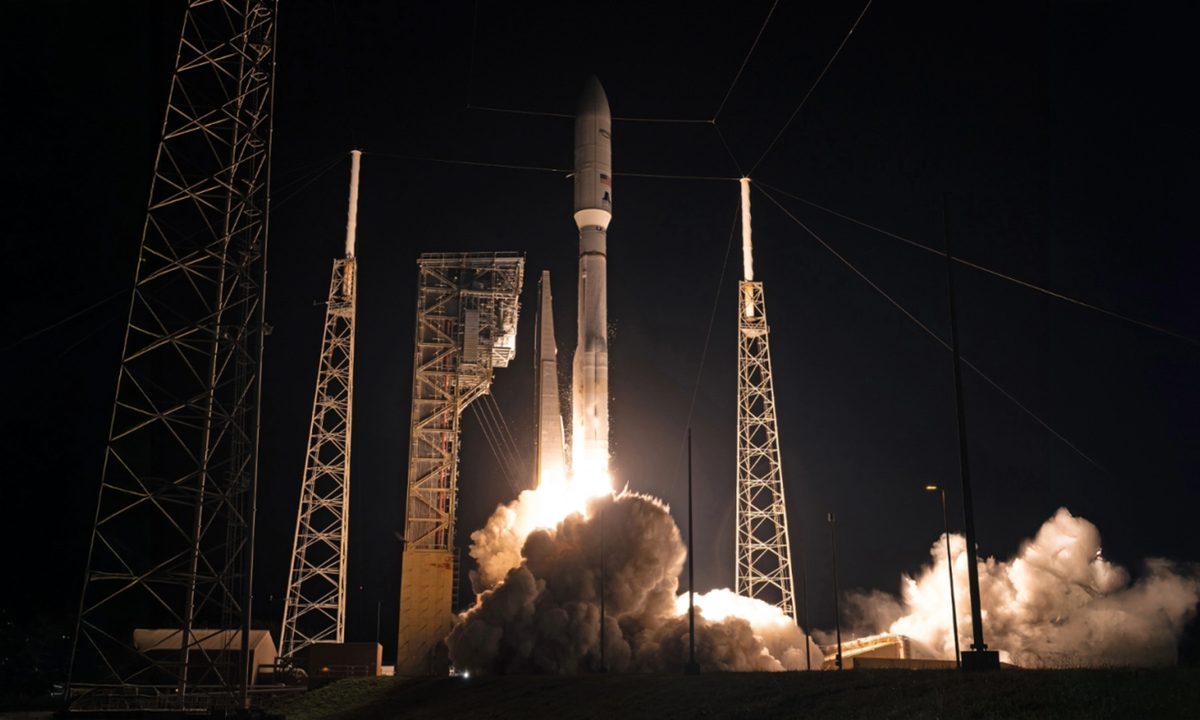
Atlas V launches 29 Amazon Leo satellites from Cape Canaveral, Florida
ULA

Amazon’s long-awaited answer to SpaceX’s Starlink is finally nearing liftoff. According to an exclusive report from Reuters, the company plans to begin offering its Leo satellite internet service later this year, after its latest rocket launch pushed the constellation to 394 satellites in orbit.

The pieces are finally falling into place for Project Kuiper

The milestone came after Amazon’s latest mission deployed 29 additional satellites aboard a United Launch Alliance (ULA) Atlas V rocket. According to Chris Weber, vice president of Amazon Leo (formerly known as Project Kuiper), there’s still work to do before the satellites reach their final operating positions. Still, Amazon has now completed enough launches to begin its initial rollout this year.

Last few launches were big for @AmazonLeo – bringing us to 390+ satellites deployed, enough to support continuous service across initial latitudes.

Still lots of work ahead – including raising all these new satellites to their assigned altitude – but we’ve completed enough… pic.twitter.com/UZb404fXRq

— Chris Weber (@Weber44Chris) July 2, 2026

Amazon hasn’t revealed which countries or regions will receive service first. However, Reuters reports that coverage is expected to begin near the Earth’s north and south poles before gradually expanding toward the equator as more satellites are added to the network. Eventually, Leo aims to deploy more than 3,200 satellites to provide global broadband coverage.

A serious new rival to Starlink

Unlike traditional satellite internet services that rely on a handful of satellites positioned far above Earth, Low Earth Orbit (LEO) constellations place thousands of satellites much closer to the planet. That significantly reduces latency while improving speeds, making the technology far more practical for everything from streaming and video calls to online gaming and remote work.
That’s exactly the market Amazon wants to tap into. Like Starlink, the company plans to sell internet service to households using dedicated user terminals, while also targeting businesses, governments, and industries such as airlines. With Starlink already operating roughly 10,000 satellites, Amazon still has plenty of catching up to do. But having another major player enter the LEO internet race could ultimately mean more competition, better coverage, and potentially lower prices for customers in the years ahead.

Varun Mirchandani
Varun is an experienced technology journalist and editor with over eight years in consumer tech media. His work spans…
NASA is investing $590 million in private contractors to build humanity’s first Moon outpost
NASA is counting on private companies to land its Moon Base dream.
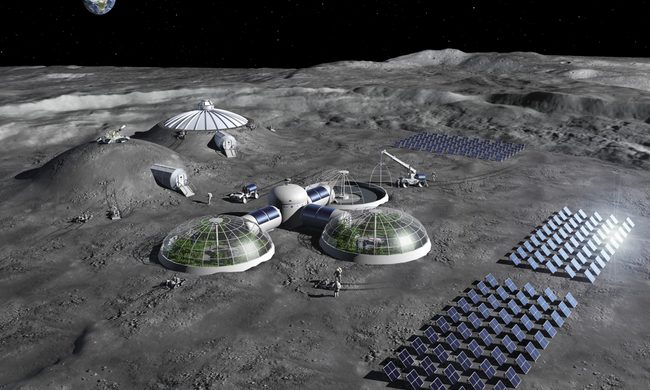
Artist impression of a Moon Base concept, with solar arrays for energy generation, greenhouses for food production, and habitats shielded with regolith.

Building a permanent base on the Moon sounds like science fiction, but NASA is making it feel a lot more real. The agency just handed $590 million in contracts to three private companies for four uncrewed lunar lander missions launching in late 2028.

These missions are part of Phase 1 of NASA's broader $30 billion Moon Base program, which needs to deliver landers, rovers, and scientific cargo up there before astronauts eventually move in. These efforts are closely tied NASA's Artemis program, which sent humans on a lunar flyby in April for the first time since the Apollo era.

Read more
Getting to Mars may require a pit stop in orbit, and NASA just tested the nozzle to make that happen
A gas pump nozzle for spacecraft sounds simple. It is not, and that's what makes this test worth paying attention to.
Architecture, Building, Factory

Getting a spacecraft to Mars or beyond requires an enormous amount of fuel, most of which has to be hauled from Earth, adding to the overall cost and weight of the spacecraft. NASA has been working on a different approach, one that could be more efficient and effective.

It wants to refuel a spacecraft in orbit before heading out for the mission. What’s even more interesting is that the space agency just finished testing a component that could make that possible: a cryocoupler.

Read more
Elon Musk’ Starlink could soon offer mobile services as a US carrier
Showcase of T-Mobile Starlink service on an iPhone.

Elon Musk’s Starlink has already changed how millions of people access the internet, especially in places where traditional broadband struggles to reach. Now, the satellite internet service could be preparing for an even bigger leap — becoming your mobile carrier.

According to a Financial Times report, SpaceX has told investors it’s considering launching a retail Starlink mobile service in the US. Instead of simply partnering with wireless carriers, the company could begin selling mobile plans directly to consumers, putting it in direct competition with Verizon, AT&T, and T-Mobile.

Read more