  1. Home
  2. Emerging Tech
  3. News

Robots can now ‘see’ touch thanks to a new color-changing tactile sensor

Researchers have developed a color-changing tactile sensor that turns pressure into visible information.

Add as a preferred source on Google
Robot Touch Human Finger
Katja Ano / Unsplash

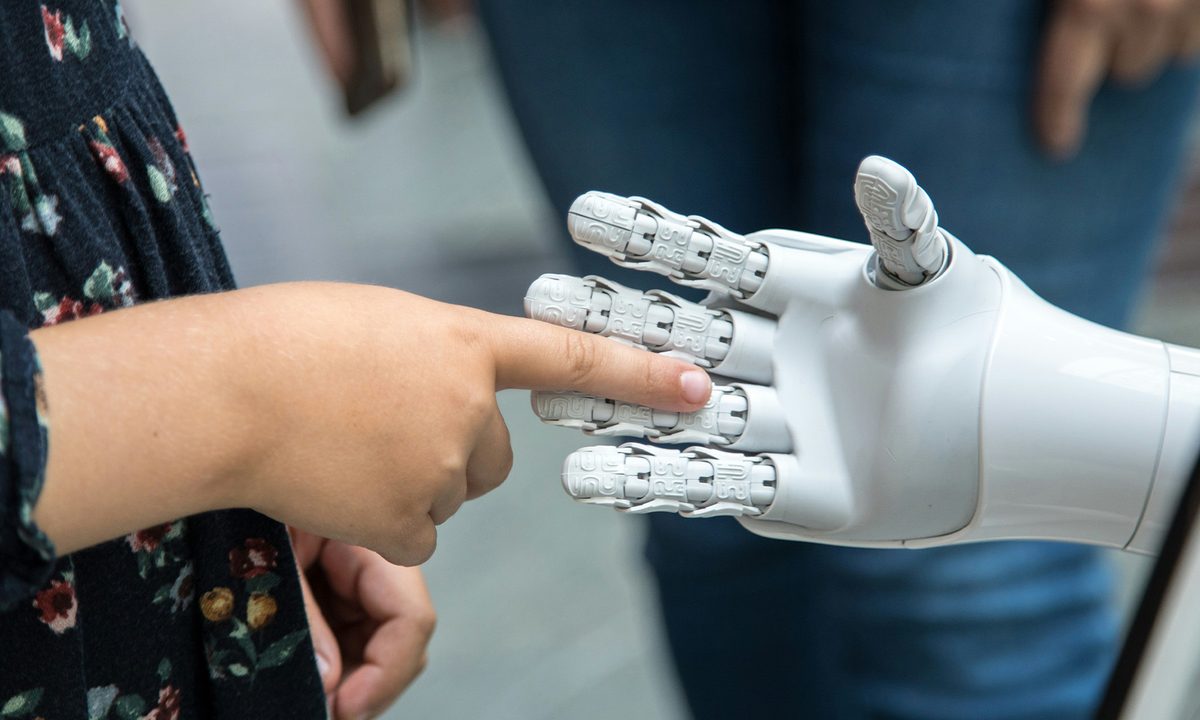
Most robots are pretty good at seeing, but touching? That’s been a much tougher problem. While humans instinctively know how hard they’re gripping a coffee mug or pressing a button, robots have traditionally relied on complex arrays of tiny sensors to estimate the same thing. Now, researchers at Queen Mary University of London believe they’ve found a much simpler solution: make touch visible.

A sensor that turns touch into color

As per the study published in Science Advances, their new tactile sensor changes color whenever pressure is applied, allowing a standard camera to “see” exactly how an object is being touched in real time.
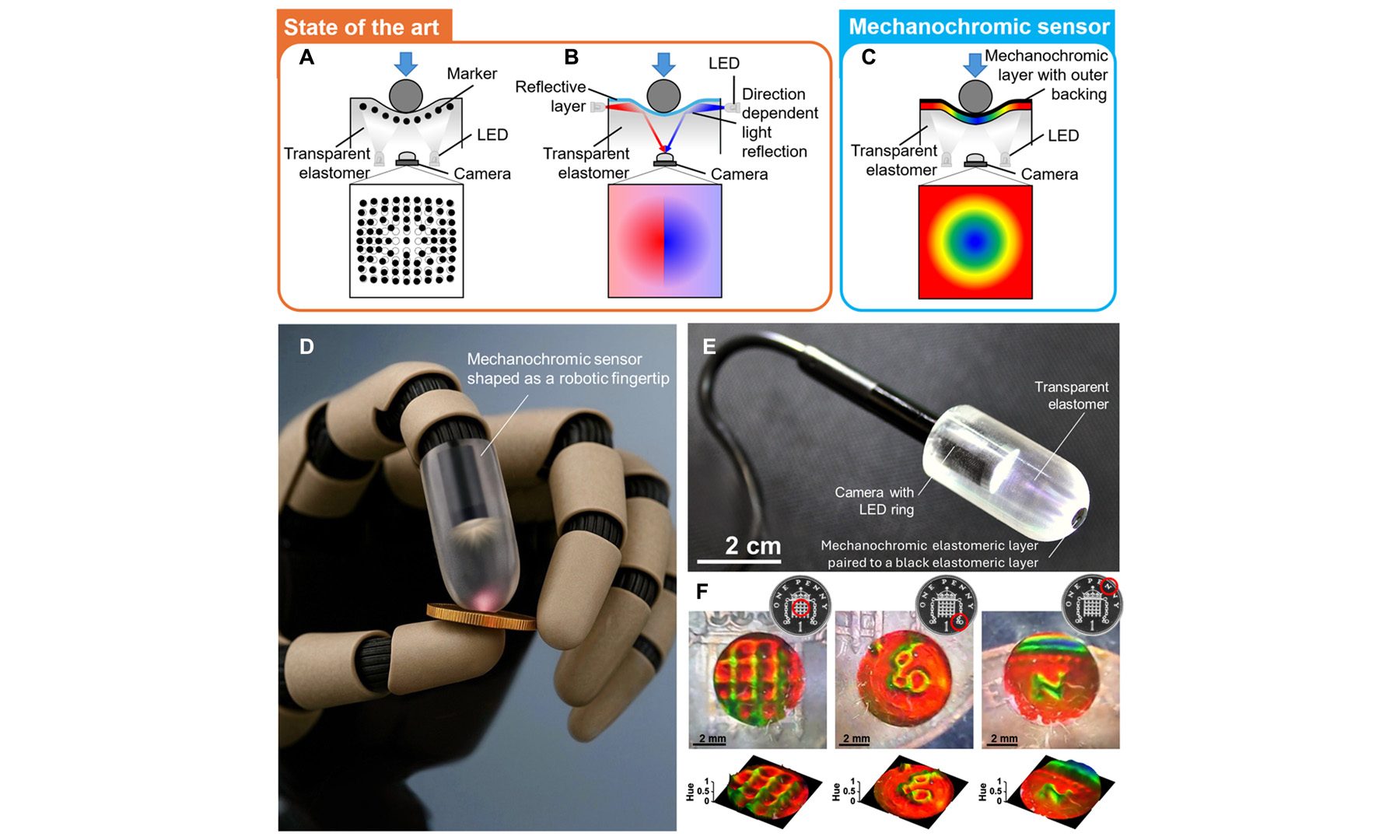
Instead of embedding thousands of electronic pressure sensors into a robotic fingertip, the new system builds the sensing directly into the material itself. When the soft surface is pressed, it produces vivid color patterns that instantly reveal where pressure is being applied, how much force is being used, and even how the material is deforming.
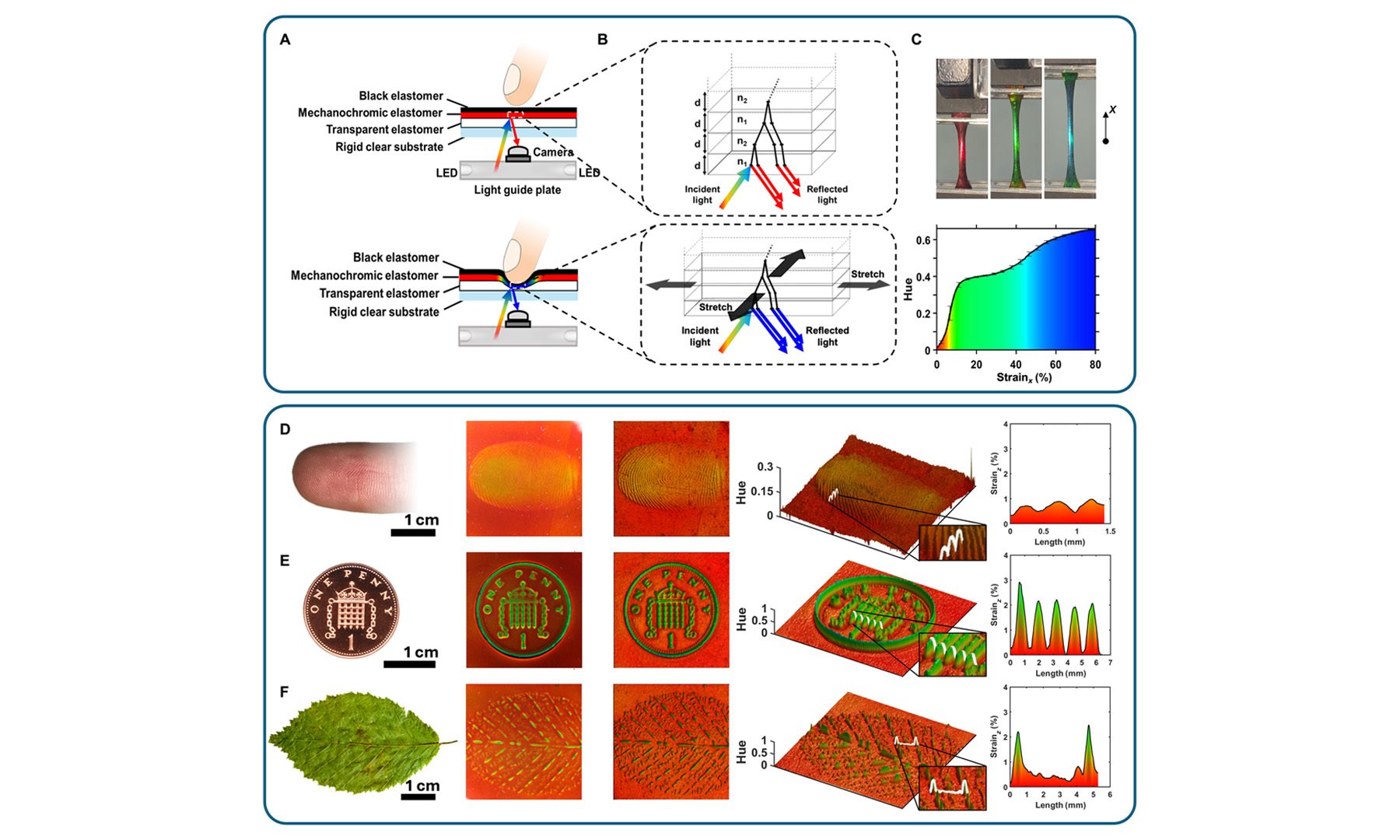
The clever bit is that those colors can be captured using an ordinary low-cost USB camera. That means robots no longer need computationally intensive software to reconstruct touch from sensor data. They can simply “look” at the color patterns and immediately understand what they’re feeling. According to the researchers, this produces high-resolution pressure maps while dramatically simplifying the overall hardware.

Why this matters beyond the lab

The impact goes well beyond giving robots a better sense of touch. Researchers believe the technology could help factory robots assemble tiny components more precisely, enable prosthetic limbs to feel more naturally, and even help surgical robots distinguish healthy tissue from abnormal tissue during delicate procedures.
More importantly, the new sensor could solve one of robotics’ biggest headaches. Traditional tactile systems often force engineers to choose between speed and accuracy. By turning pressure directly into visible color patterns that a simple camera can read, the new approach delivers both: allowing robots to “see” touch in real time instead of relying on complex computations.

Varun Mirchandani
Varun is an experienced technology journalist and editor with over eight years in consumer tech media. His work spans…
Chrome is getting better at understanding the breaks and punctations you never say out loud
Voice typing in Chrome is about to feel much more natural
Google Chrome on Android Featured

Google is quietly making voice dictation in Chrome feel a lot more natural. With the latest Chrome 151 Beta, the company is introducing a new capability that allows the browser's speech recognition engine to automatically infer punctuation based on the way people speak, eliminating the need to explicitly say commands like "comma" or "full stop."

The update may sound minor at first glance, but it addresses one of the biggest frustrations with voice typing: speaking naturally often produces text that lacks punctuation unless users consciously dictate every punctuation mark. By teaching Chrome to understand pauses, rhythm, and speech patterns, Google is taking another step toward making conversations with computers feel more human.

Read more
Horror films play music to warn about danger. These headphones use the same trick to save you from robots
Spherephones replaces factory alarms with music that tells you what is coming and from where.
spherephones-georgia-tech

The ear has always processed what is coming before the eye does. In horror movies, the music always tells you something bad is coming. Now researchers at Georgia Tech are using the same idea in real life to keep factory workers safe around robots.

They have built a wearable headset called Spherephones that converts nearby robot movement into spatial music, giving you a warning before a machine gets too close. It helps the user stay aware without breaking their attention.

Read more
Elon Musk refutes report claiming that an AI device is in development at SpaceX
The billionair's two-word denial on X doesn't explain what part of the Wall Street Journal's report he's disputing.
Elon Musk speaking into a microphone with a blue background

Elon Musk has denied a Wall Street Journal report claiming SpaceX showed investors a prototype AI device before its recent IPO. "Utterly false," Musk wrote on X, responding to a post about the report that has since been deleted, offering no further explanation.

A denial that leaves more questions than it answers

Read more