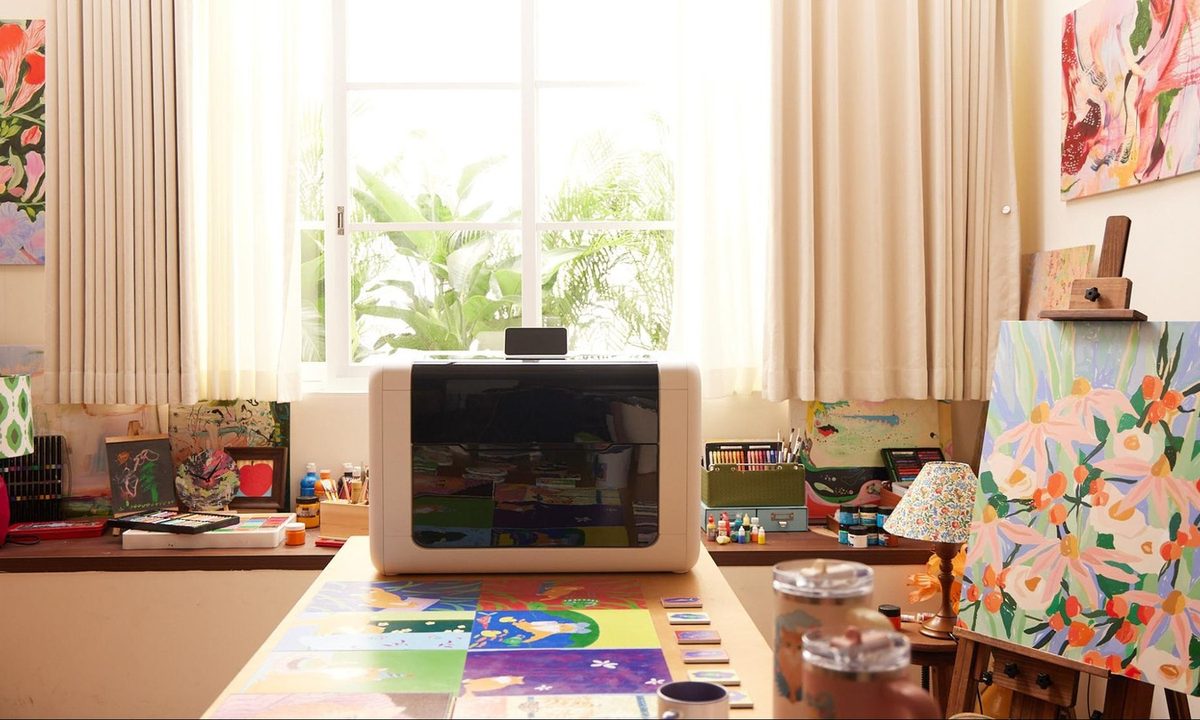
Industrial UV printers are known for their ability to create durable, vibrant prints on various materials like glass, wood, metal, and more. UV printers are often used for direct printing on items such as bottles, pens, phone cases, custom signs, and more.
As other forms of fabrication technology have become available in smaller formats, manufacturers have also begun exploring how UV printing might be adapted for studios, workshops, and other creative environments. Morpho is one company entering this developing desktop category.
The founder of Morpho, Mingyu (Brett) Wang, was helping his daughter with a school project and wanted to create a customized print. However, turning a child’s colorful creativity into reality proved to be more challenging than expected. According to Wang, his search highlighted the divide between large commercial equipment and smaller systems intended for less specialized settings.
“The market offered either large industrial machines or desktop systems that were difficult to use, high-maintenance, and unsuitable for home environments. We
founded Morpho to change that by making professional-grade UV printing intuitive, reliable, and accessible to anyone with a creative idea,” says Wang.
Adapting Industrial Technology
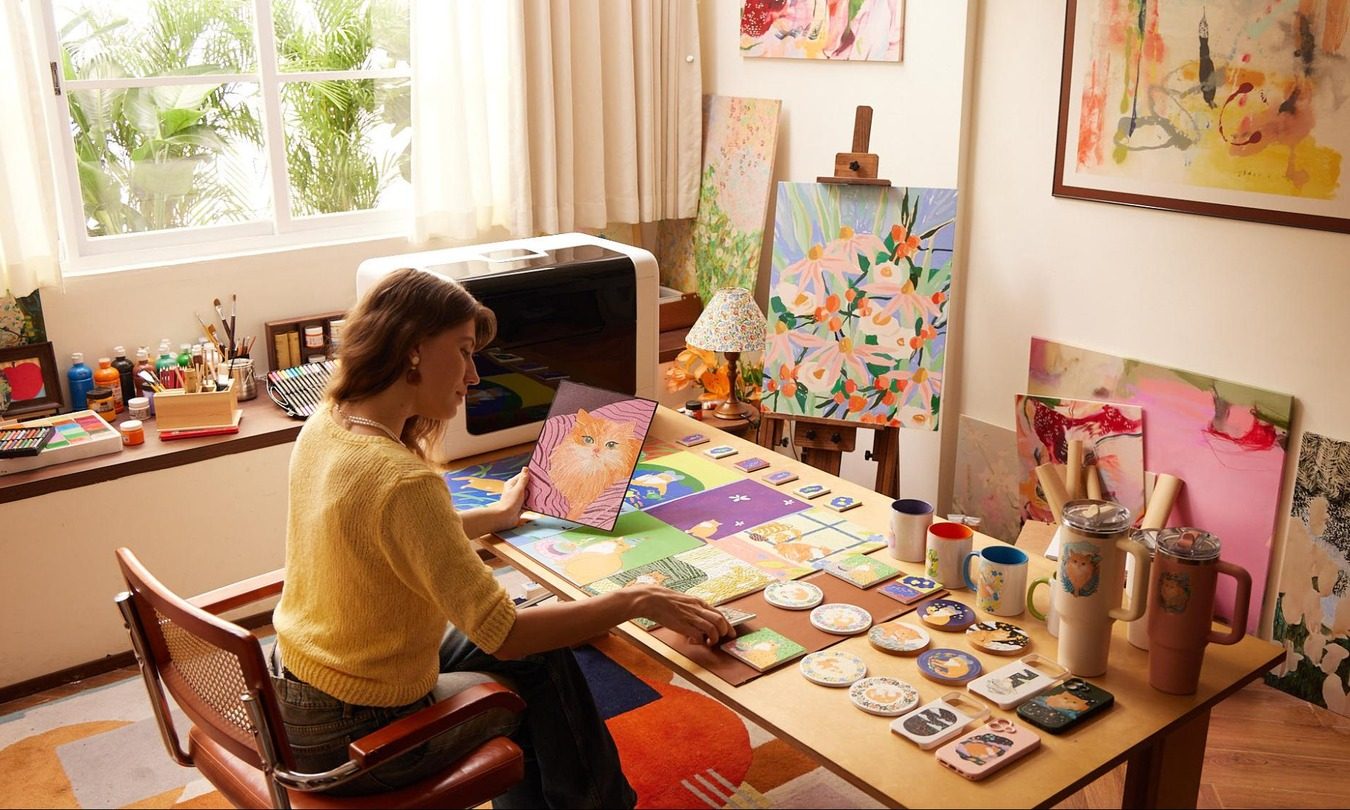
Moving UV printing beyond commercial production environments involves more than reducing the dimensions of the equipment. Manufacturers must also address ease of operation, intuitive setup, routine maintenance, ventilation, and seamless integration with other creative tools commonly found in studios and workshops.
Wang identified various problems with industrial UV printers that prevented the machines from crossing over to assist everyday creators such as artists and small businesses.
He says ease of use and maintenance became important considerations in Morpho’s development process. UV printing relies on ultraviolet light to cure specially formulated ink, which also makes enclosure and workspace conditions relevant parts of a desktop system’s design.
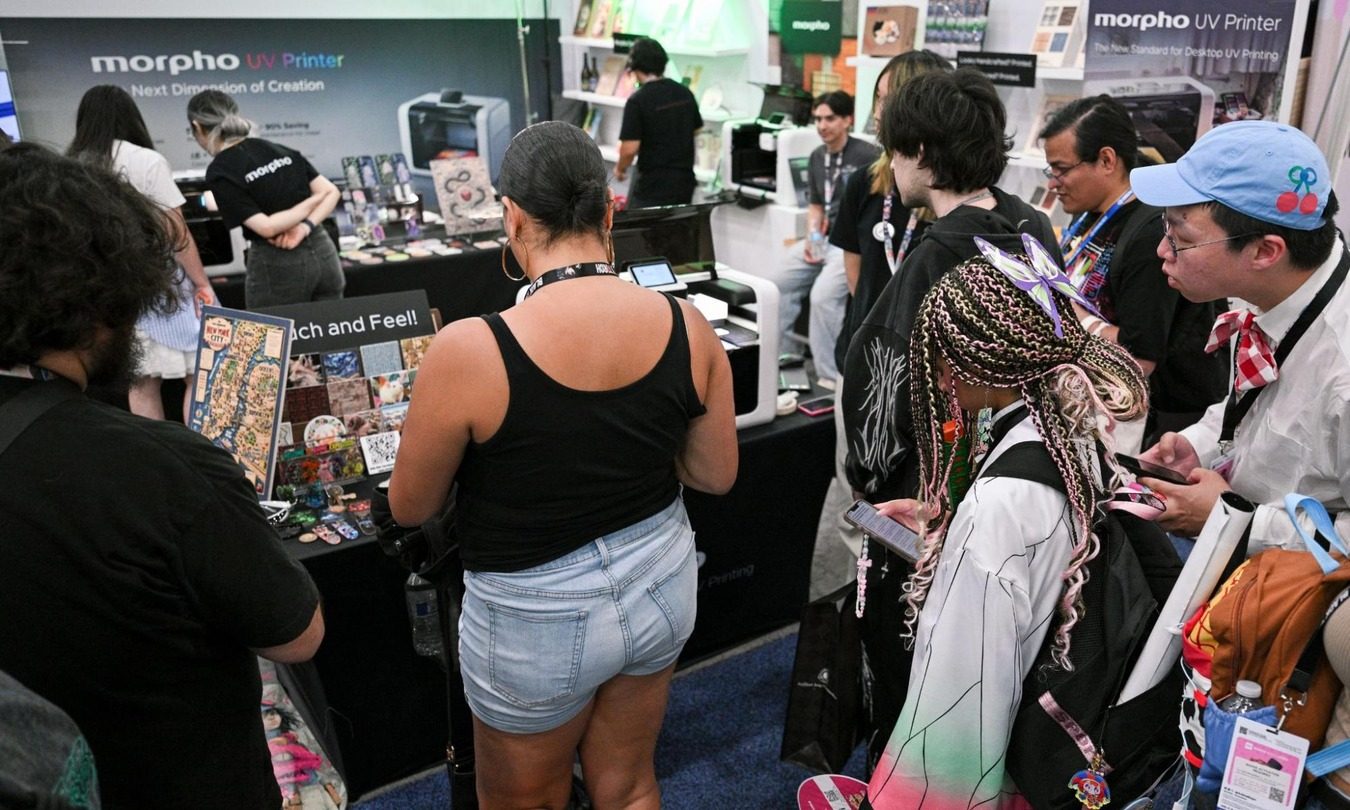
Morpho’s approach reflects a wider design challenge facing manufacturers of desktop fabrication tools: preserving industrial-grade performance while adapting the equipment for smaller, more creative, and user-friendly environments.
Designed Around Creative Workflows
Morpho’s flagship desktop UV printing system uses a compact, enclosed format intended for placement in a studio or workshop. According to the company, the enclosure is designed to limit direct exposure to UV light and contain some of the odors associated with printing. Users would still need to follow the manufacturer’s operating and ventilation guidance.
Morpho also addresses additional challenges that have limited industrial UV printing to large-scale environments. The system is engineered for ease of use, with intuitive controls and simplified workflows that help creators of all skill levels get started quickly. Like industrial UV printers, it is intended to work with multiple materials, including acrylic, glass, leather, metal, plastic, and wood. Morpho says the system
accommodates flat and curved objects, as well as raised and layered printing effects. These features allow users to personalize a wide variety of items, from custom signs and prototypes to decorative objects and everyday accessories.
This range illustrates why smaller UV printers may interest makers who produce customized objects rather than conventional paper-based work. A single project might involve printing on a sign, prototype, case, or decorative object, depending on the material and its compatibility with the equipment.
Reducing Routine Intervention
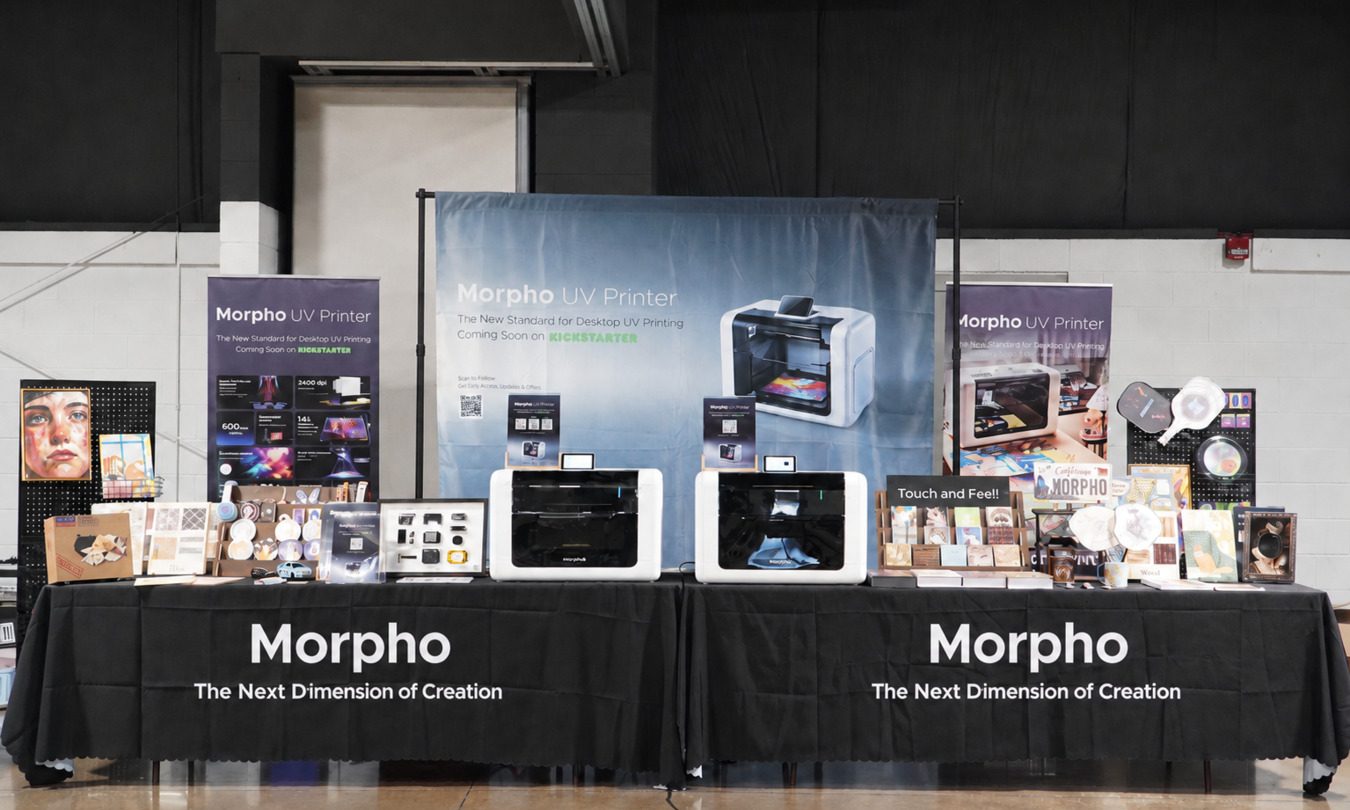
Morpho is committed to designing products that transform complex industrial processes into approachable tools for makers, artists, and innovators.
Maintenance presents another design consideration for desktop UV equipment, particularly because white UV ink can settle and interfere with ink flow. Morpho says its system circulates white ink and manages printhead temperature in an effort to reduce manual intervention. This automated maintenance helps minimize downtime and keeps the printer ready for use, even for those with limited technical experience.
The printer also incorporates camera-assisted alignment and color-calibration functions. These features are intended to help users position designs on objects and
manage color consistency, although results will depend on factors such as the material, artwork, and operating conditions. By integrating smart features that streamline setup and ensure high-quality output, Morpho lowers the barrier to entry for creators who may not have specialized printing knowledge.
For Morpho, its “physics first” approach means studying how materials react to UV ink, how mechanical tolerances affect accuracy, how ink flow behaves over time, and how potential failure modes can be reduced from the beginning rather than patched later.
The arrival of machines such as Morpho’s suggests that UV printing may be following a path already taken by 3D printers and laser cutters: technology once associated mainly with industrial settings is being repackaged for smaller creative spaces. How widely desktop UV printing is adopted will depend not only on technical capabilities, but also on cost, maintenance requirements, workflow compatibility, and the practical results creators can achieve.