  1. Home
  2. Phones
  3. Mobile
  4. Legacy Archives

Cash, card, or phone? Whatever, Poynt payment terminal lets you pay any way you want

Add as a preferred source on Google

To say that the mobile payment industry is fragmented would be a major understatement. Rival companies are all focused on finding the best mobile payment solution possible – the only problem is that they all have different ideas on how best to do it. The sheer variety of mobile payment methods is a major headache for businesses that are trying to choose the most appropriate payment terminal for the long haul.

Former Google Wallet creator and current PayPal executive Osama Bedier decided to make his own “future-proof” point-of-sale terminal called Poynt. Bedier designed Poynt to accept every single form of payment that currently exists, including traditional cards, EMV (chip and PIN), NFC (Apple Pay and Google Wallet), Bluetooth, Bitcoin, and QR codes. Most payment terminals only support a few of these methods and most will have to update to include support for EMV cards by 2015 when a key law change goes into effect.

One half of the Poynt is a tablet where the merchant can enter and view all the necessary info. The other half, which faces the customer, looks like a phablet with a printer on the bottom. Poynt runs a forked version of Android, so developers can tweak it to suit their needs. Bedier added a bunch of ports, too, so no business is left out in the cold when it comes to future expansion. Poynt has an Ethernet port; supports Wi-Fi, 3G, 4G; and offers a USB extension, so you can attach a cash drawer or other peripherals. It’s powered by two quad-core processors and has an eight-hour battery life. Of course, merchants can also just plug it in at the counter to keep Poynt juiced up all day long.

Recommended Videos

Business owners can use Poynt’s three different apps to keep track of their finances, manage their books, and gain insights into customer behavior. Customers don’t need to download any app and can simply pay with whatever payment method they feel most comfortable with. NFC payments are made by tapping your phone against the screen; you can also tap your EMV card or swipe your traditional credit card at the terminal. Bluetooth payments and QR codes work as well, but are less commonly used than even NFC; Poynt’s appeal lies in its ability to be universal.

The Poynt Smart Terminal is available for pre-order for $300 and will ship to merchants in early 2015. Developers can pre-order a developer kit for $500 that will ship later this year.

Malarie Gokey
As DT's Mobile Editor, Malarie runs the Mobile and Wearables sections, which cover smartphones, tablets, smartwatches, and…
Topics
Latest Pixel 11 series leak offers the clearest look yet at Google’s next flagship
Google's next Pixel has leaked again, but this time almost nothing is left to imagine
Pixel 11

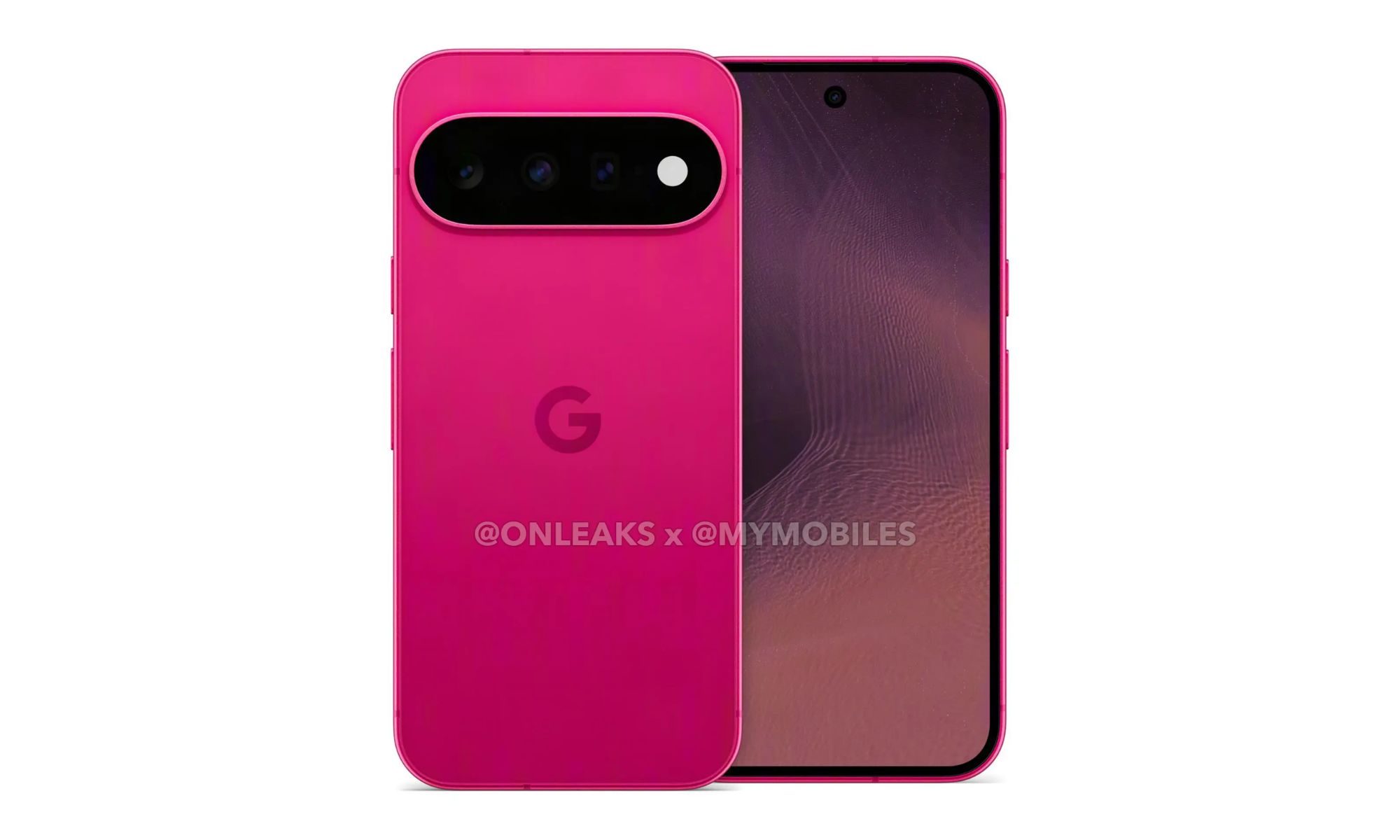
Google's Pixel launches have become increasingly difficult to keep under wraps, and the Pixel 11 series appears to be no exception. Weeks before Google's scheduled August 12 launch event, a fresh leak has revealed what is claimed to be the complete set of official press renders for the Pixel 11, Pixel 11 Pro and Pixel 11 Pro XL, showcasing every colour option across the lineup.

The renders, published by MyMobiles in collaboration with tipster OnLeaks, offer what is arguably the most comprehensive look yet at Google's next flagship family. If authentic, they not only confirm earlier design leaks but also reveal Google's colour strategy for 2026, including a vibrant Fuchsia finish for the standard model and a new copper-inspired "Dune" variant for the Pro series.

Read more
Galaxy Z Flip 8 vs. Motorola Razr Ultra (2026): Samsung’s flip phone is cheaper, but is it better?
One flip phone wins on value. The other wins on hardware.
Electronics, Phone, Mobile Phone

Flip phones have quietly become one of the most competitive corners of the smartphone market. It provides buyers with a satisfying folding snap, reducing the footprint to half the original size, and that’s the entire point. Motorola never really left the format after reviving the Razr name, while Samsung has spent generations treating the Flip line as its scrappy, budget-friendlier sibling to the Fold. 

This year, though, the gap between the two camps has narrowed to the point where picking a winner requires genuinely reading the spec sheet and learning about the phones before putting your money into one. One phone leans hard into raw display firepower, while the other leans into a deeper software ecosystem and a friendlier price tag. 

Read more
Samsung finally switched to silicon-carbon battery on Galaxy Z Fold 8. What’s so special about it?
One of Galaxy Z Fold 8’s biggest upgrade is hiding inside
Galaxy Z Fold 8 Ultra with Fold 8

Samsung has finally joined the silicon-carbon battery race with its latest batch of premium foldables packing the new battery tech. But details for this change were rather hard to spot on the spec sheets. The company has confirmed during media briefings that the Galaxy Z Fold 8 Ultra, Galaxy Z Fold 8, and Galaxy Z Flip 8 all use silicon-carbon batteries.

Even then, the resulting capacities are hardly record-breaking. The Fold 8 Ultra carries a 5,000mAh battery, the regular Fold 8 gets 4,800mAh, and the Flip 8 has 4,300mAh. Rivals from Honor and Motorola have already crossed the 6,000mAh mark. But the figures only tell part of the story.

Read more