1. Home
  2. Computing
  3. Legacy Archives

Intel’s fifth-gen processors are faster, more efficient. Surprised?

Add as a preferred source on Google

Late last year, Intel revealed a limited number of processors based on its latest Broadwell architecture, but the chips, known as Core M, were designed primarily for very slim, portable systems. And they were just the tip of the iceberg.

Now the rest has been revealed, and there was a lot hiding under the surface. A total of 17 processors have come to light spanning the Celeron, Pentium, Core i3, i5 and i7 product lines. They’re all dual-cores, and they’re all mobile chips, but their speeds and power consumption vary.

Recommended Videos

Most of the chips have a thermal design power (TDP) of 15 watts. That’s roughly three times a typical Core M processor, which has a specified TDP of 4.5 watts, and the difference should give you an indication of their relative capabilities. When we benchmarked Core M we found it was notably slower than a typical fourth–gen Core chip, but that won’t be true for these new Core processors.

While Intel has rated the majority of the new chips at 15 watts, the specifications vary substantially. On the low end there’s the Celeron 3205U, which has a base clock of 1.5GHz and doesn’t include hyper-threading or Turbo Boost. On the other end of the spectrum is the Core i7-5600U, which has a base clock of 2.6GHz and a maximum Turbo Boost of 3.2GHz on a single core.

Four of the chips do stand out from the rest, but not because of raw processing power. The quadruplet, which includes the i3-5157U, i5-5257U, i5-5287U and the i7-5557U, boasts a 28-watt TDP. Base frequencies are up a bit, topping out at 3.1GHz, but much of the extra juice goes to the upgraded Iris 6100 graphics.

So, what does all this mean? Perhaps less than you think. Even Intel’s slides claim only a 4-percent increase in productivity performance, which is the smallest jump this writer has ever seen on a company slide. This comes alongside a boost in battery life of up to 90 minutes, however, so the efficiency of Broadwell isn’t going to waste. It’s just going more to portability than performance, which is why we’re seeing multiple laptops with battery life exceeding 10 hours.

We’ll know more about how the fifth-gen processors stack up within a few days, after we have a chance to test the processors first hand.


Matthew S. Smith
Matthew S. Smith is the former Lead Editor, Reviews at Digital Trends. He previously guided the Products Team, which dives…
Topics
Microsoft wants Windows 11 and your phone to become best friends
Microsoft's latest plans reportedly focus on making the PC and smartphone experience feel seamless.
Windows 11 PC with Android Phone

For years, Phone Link has felt like that one app everyone knows exists but rarely remembers to open. Microsoft apparently wants to change that. According to a report from Windows Central, the company is working on a major overhaul of how smartphones integrate with Windows 11, making phones feel like a native part of the operating system instead of something users access through a separate app.

Phone Link is coming out of hiding

Read more
What are Copilot+ PCs? Everything you need to know
Copilot

Walk through a laptop aisle in 2026 and the Copilot+ PC branding is highlight for most Windows laptops. From Microsoft's own surface to other PC makers like Samsung, HP, and Dell, you can find notebooks that carry this badge to convey that they are AI-ready. At a glance, the name sounds like it refers to a computer with a better version of the Copilot chatbot, which only explains a small part of it.

A Copilot+ PC is a Windows 11 computer that meets Microsoft’s hardware standard for advanced on-device AI features like a compatible processor with a dedicated NPU. You also need a certain amount of RAM and storage, all of which brings access to Windows features such as Recall, Click to Do, and much more. Many of these experiences use the NPU to process information locally, reducing their reliance on cloud servers and helping them run more efficiently in the background.

Read more
ASUS expands its ProArt lineup with a compact keyboard and a smart creator mouse
The new ProArt KD300 and MD301 are designed to make life easier for designers, editors, and creators.
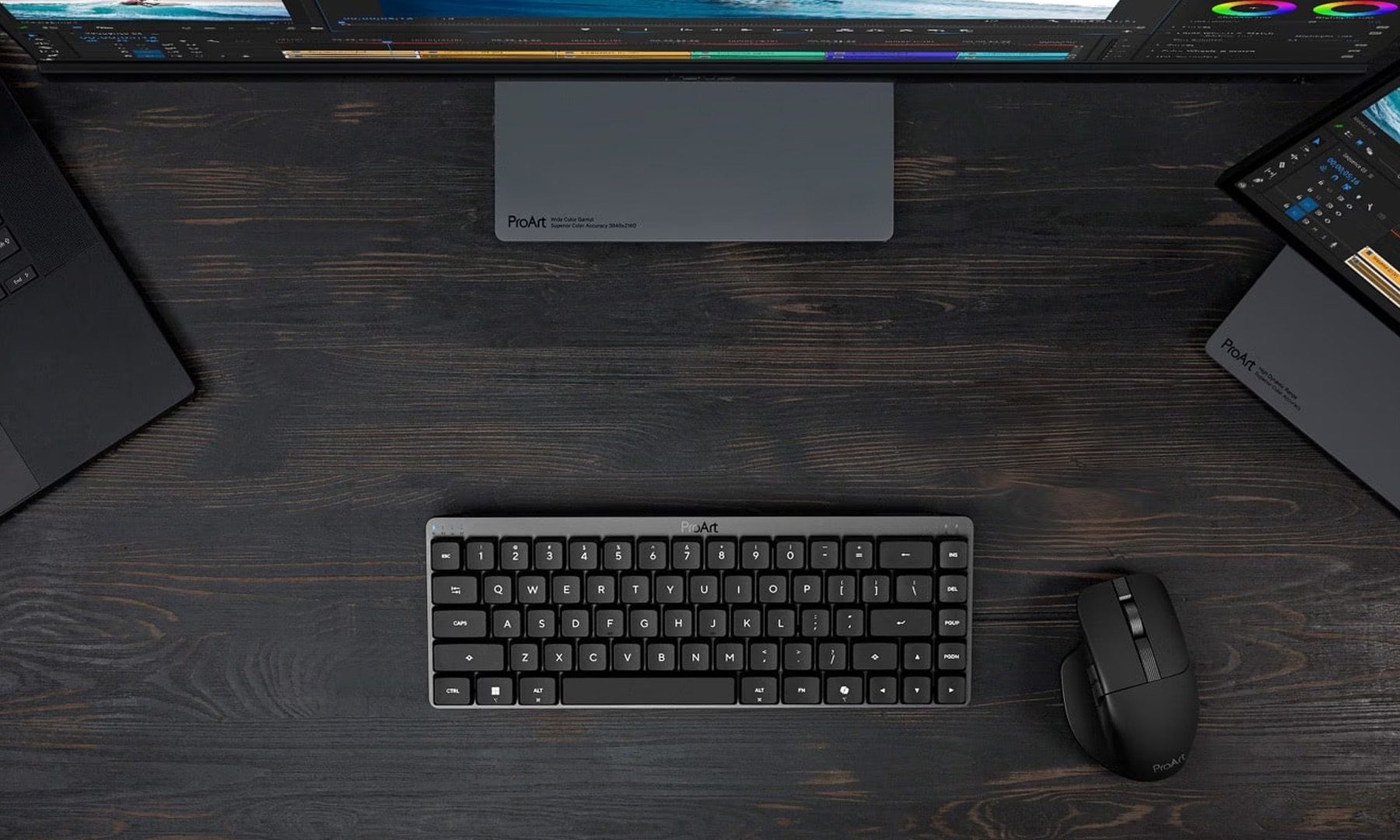
ASUS ProArt Keyboard KD300 and ProArt Mouse MD301

Creators have long had plenty of powerful laptops and monitors to choose from. Keyboards and mice? Not so much. ASUS is looking to change that with the expansion of its ProArt accessory lineup. Leading the announcement is the new ProArt Keyboard KD300, a compact low-profile keyboard that's designed to work alongside the ProArt Mouse MD301, giving creators a matching desktop setup built specifically for productivity instead of gaming.

A compact keyboard that doesn't sacrifice functionality

Read more