1. Home
  2. Cars
  3. News

Final decision on Toyota/BMW sports car expected by end of year

Add as a preferred source on Google

Back in 2012, Toyota and BMW established a partnership to share technology related to hydrogen fuel cells and lightweight components, and also to develop a new sports-car platform. That last part has kept enthusiasts riveted for the past three years.

Yet while both companies have apparently done significant development work, a final decision on whether or not to advance the sports-car project to production has not been made, although it will be soon. Toyota expects the project’s fate to be decided before the end of the year, according to Automotive News Europe (subscription required).

Recommended Videos

“By the end of the year we will approve whether or not we will make it,” a Toyota spokesperson said on the sidelines of the 2015 Frankfurt Auto Show this week. Both carmakers have reportedly studied platform designs, but have not decided whether to green light the project yet. The platform is expected to be for a front-engined, rear-wheel drive sports car, which creates some interesting possibilities.

There’s already plenty of speculation about what will be produced if the new sports-car platform does get the green light. The dominant theory is that Toyota will build a successor to the Supra, possibly with styling inspired by the FT-1 concept that rocked the 2014 Detroit Auto Show. Meanwhile, BMW is expected to build a car to replace the current Z4, perhaps utilizing the twin-turbocharged inline-six from the current M3 and M4.

Even if the new Supra and Z4 don’t get approved, there could be other tangible results from the Toyota-BMW team-up. Toyota has been steadily developing hydrogen fuel-cell technology in advance of the launch of its 2016 Mirai, and BMW may be able to use some of that for its own production models.

The German carmaker demonstrated fuel-cell prototypes based on the i8 and 5 Series Gran Turismo earlier this year. Both cars had an estimated range of 300 miles, but neither was anywhere near production ready. BMW has not committed to any timeline for launching a fuel-cell car, but it has said that it hopes to have production-ready powertrain components by 2020.

After all of this buildup, cancellation of the sports-car project would be quite a heartbreaker, but in the face of stricter fuel-economy standards, it wouldn’t be surprising if both partners decided to emphasize efficiency over performance.

Stephen Edelstein
Stephen is a freelance automotive journalist covering all things cars. He likes anything with four wheels, from classic cars…
A new sodium battery posts wild four-minute charging numbers, but don’t expect it in an EV yet
The breakthrough could improve fast charging and battery life, but the study hasn’t demonstrated those results in a production-sized pack
EV Charger

A new sodium-metal battery has posted a charging number that makes today’s EVs look painfully slow. In laboratory testing, the cell operated at a 15C rate, equivalent to completing a charge or discharge in roughly four minutes.

That doesn’t mean researchers plugged in an electric car and watched it fill up before the driver finished buying coffee. The result came from a small experimental cell using a new quasi-solid electrolyte, while the larger pouch-cell prototype delivered far less dramatic performance.

Read more
The Apple Car may be dead, but it became the foundation of Apple Intelligence
A decade of work on a canceled car project reportedly laid the groundwork for Apple Intelligence.
Apple Intelligence in Apple Car

The Apple Car may have never left the garage, but it apparently gave birth to Apple's AI ambitions. According to Bloomberg's Mark Gurman, Apple's canceled autonomous vehicle project, one that consumed more than a decade of work and over $10 billion before being scrapped in 2024, ended up laying the technological foundation for Apple Intelligence. In a rather ironic twist, one of Apple's most expensive failures may also become one of its most important long-term investments.

The Apple Car forced Apple to think like an AI company

Read more
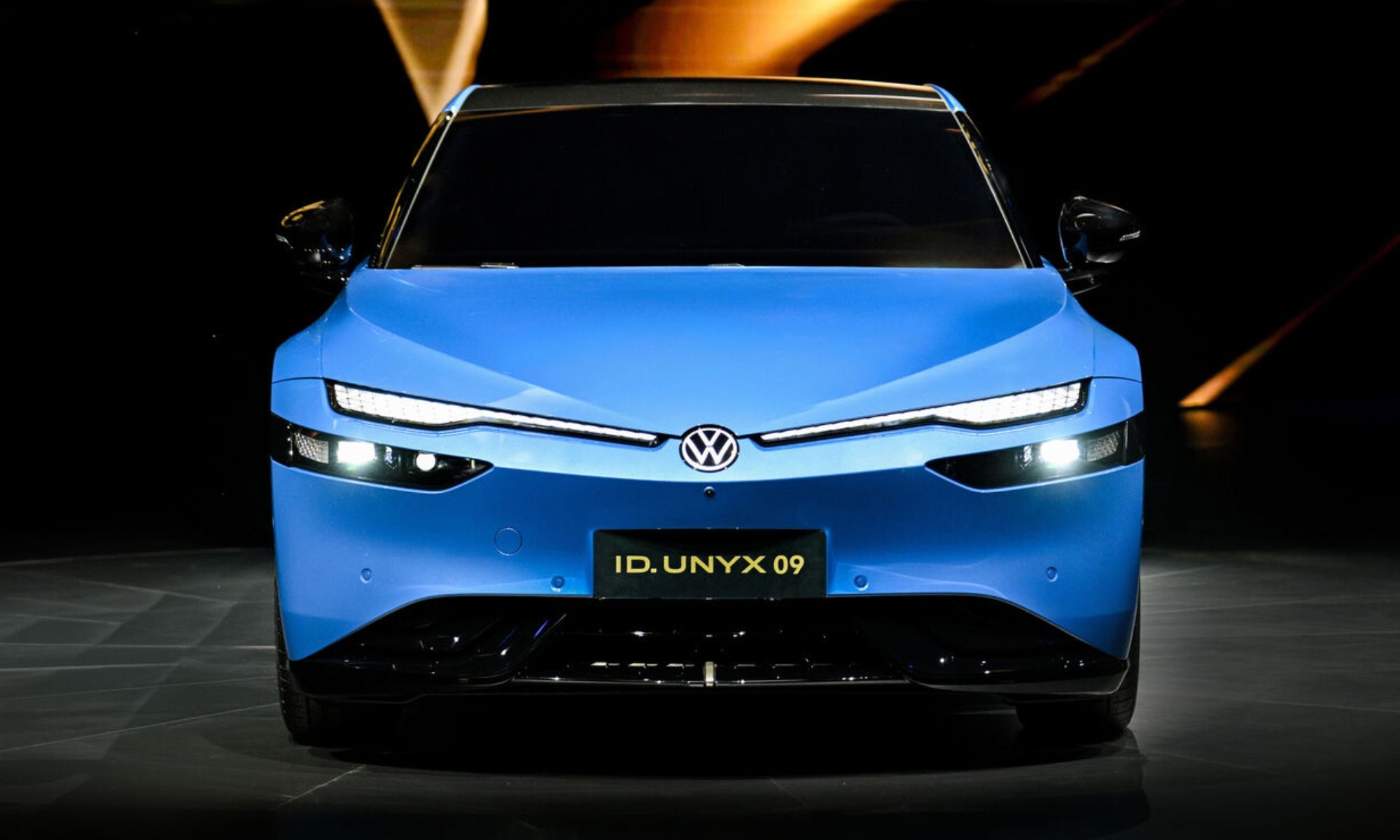
Volkswagen’s ID. Unyx 09 just leaked, and it’s the kind of EV I want to see in the US
VW's partnership with Xpeng is producing exactly what we hoped.
Bumper, Transportation, Vehicle

I've been watching Volkswagen's China lineup quietly get cooler for the past two years, but the ID. Unyx 09 might be the moment it finally gets exciting, not just for Chinese buyers, but for the rest of the world as well. 

Regulatory filings from China's Ministry of Industry and Information Technology, Batch 409, have exposed the full specs of the upcoming sedan ahead of its official launch later this year, and it looks nothing like any VW car I've seen before (via CarNewsChina).

Read more