1. Home
  2. Emerging Tech
  3. News

China has plans to build a particle collider that’s over triple the size of CERN’s LHC

Add as a preferred source on Google

Not one to be outdone by the West, China is reportedly preparing to build a super-sized particle collider that’ll dwarf the existing Large Hadron Collider operated by CERN. Chinese scientists will use its proposed Circular Electron Positron Collider (CEPC) to study Higgs boson particles, with the goal of learning more about the so called “God Particle” and possibly dark matter, which makes up most of the universe.

The CEPC collider will measure between 50 and 100 kilometers (31 to 60 miles) in circumference, which is significantly larger than the LHC, which measures just 27 kilometers (about 17 miles) around. It will generate seven times the energy of the LHC, allowing scientists to potentially create millions of Higgs boson particles in a single go.

Recommended Videos

To date, the LHC has only spotted hundreds of Higgs boson particles because “it generates Higgs particles together with many other particles,” explained Wang Yifang, director of the Institute of High Energy Physics, Chinese Academy of Sciences. “The proposed CEPC, however, collides electrons and positrons to create an extremely clean environment that only produces Higgs particles. The LHC is hitting its limits of energy level, it seems not possible to escalate the energy dramatically at the existing facility.”

Construction won’t begin for quite some time, however. Speaking to China Daily, Wang said that the scientists have completed the first conceptual design and submitted those plans for international peer review. A final conceptual design will be ready by the end of 2016. Construction of the fist phase of the CEPC will begin between 2020 and 2025 with a second phase planned for 2040. The second phase will see the establishment of a Super Proton-Proton Collider that will be powered by a 100 TeV proton collider. In comparison, the LHC currently operates a 13 TeV proton to proton collider.

Costs have yet to be detemined, but if the project is ever completed, the CEPC will likely be the largest, most expensive science experiment the world has ever seen.

Kelly Hodgkins
Kelly's been writing online for ten years, working at Gizmodo, TUAW, and BGR among others. Living near the White Mountains of…
Study finds humans will talk to AI ghosts of the dead as reincarnations, and it’s pretty grim
The first AI ghost study is in. The results are about as complicated as you'd expect.
VR Headset, Person, Face

A new study from the University of Colorado Boulder confirms something that sounds both impressive and concerning. People find interacting with AI simulations of their dead loved ones deeply meaningful, and most will come away wanting to do it again.

The researchers call it a "generative ghost," which is a clear reference to generative AI, but I’d still prefer to call it unsettling.

Read more
China’s UBTech unveils eerily lifelike companion robots, and yes, they want to move in with you
UBTech's new humanoid robots are built for companionship, using emotion-aware AI, long-term memory, and humanlike expressions to become part of your everyday life.
UBTech Uworld U1 series robot launch

A humanoid robot designed to live in your house, learn your habits, and pick up on your mood without being prompted is no longer science fiction. Shenzhen-based UBTech Robotics unveiled its Uworld U1 series this week, introducing three robots built for companionship rather than factory work or household chores.

A body that moves like yours, and a brain that reads how you feel

Read more
This $249 LED sign wants to fix your work-life balance
My productivity isn't worth $249... or is it?
Flipper Busy Bar

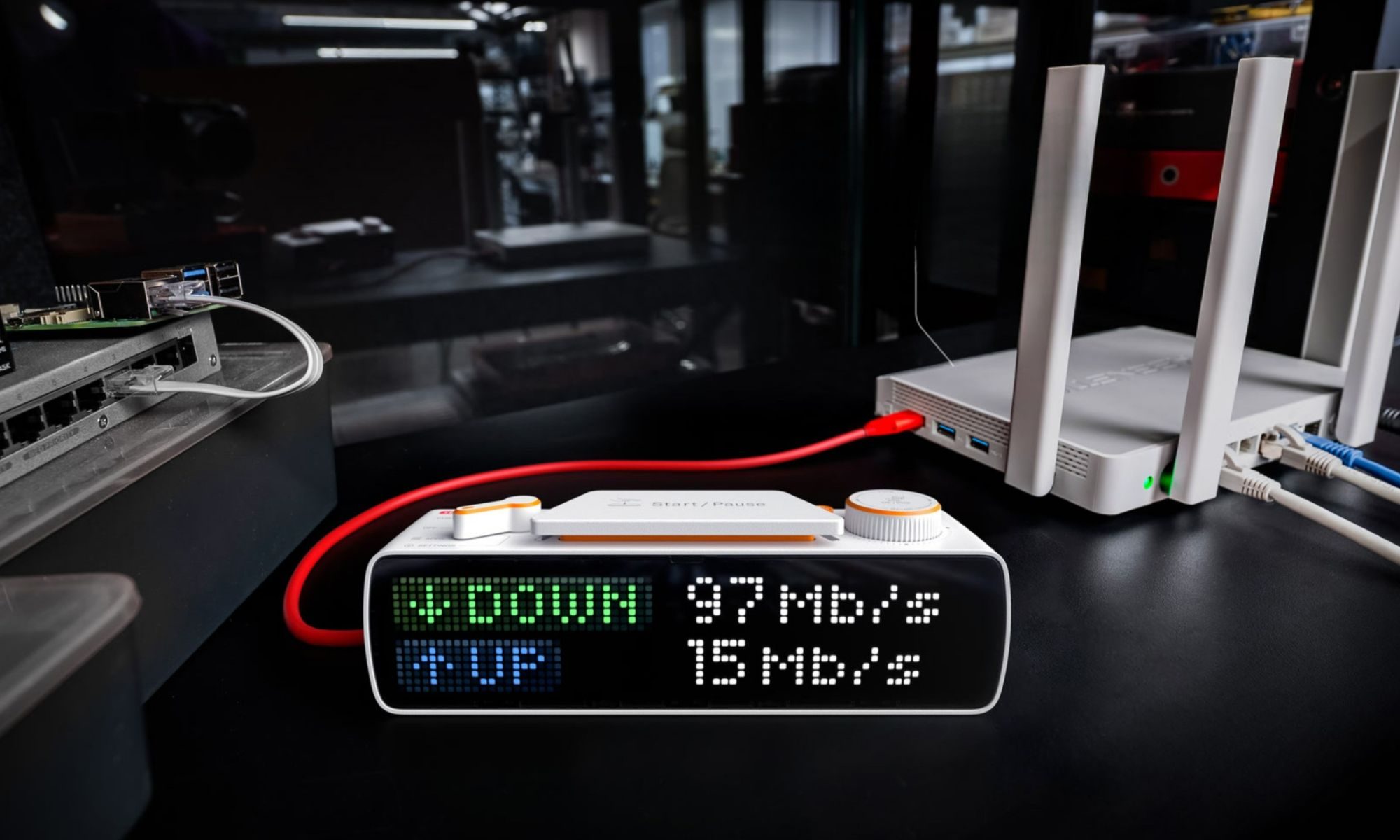
Flipper Devices has built a reputation among hackers and hardware enthusiasts with the Flipper Zero, a pocket-sized gadget capable of interacting with RFID, NFC, Bluetooth, and other wireless protocols. Now, the London-based company is taking a very different approach.

Its latest product, the Busy Bar, is a desktop productivity display designed to help users stay focused, signal their availability, and automate parts of their workflow. After being teased last year, the device is finally going on sale on July 14. While the concept is genuinely clever, its starting price of up to $249 may make many buyers think twice.

Read more