1. Home
  2. Computing
  3. News

Samsung announces portable, durable Chromebook 3

Add as a preferred source on Google

Samsung has announced the Chromebook 3, the latest entry in its popular line of highly portable laptops that use Google’s Chrome OS. Its predecessor was highly praised when it launched in 2014, and the follow-up seems poised to build on the same areas that made that release such a success.

It’s clear that Samsung’s designers considered portability and ease of use to be top priorities when putting together the Chromebook 3. At just over 2.5 pounds, it’s light enough to be carried around in a shoulder bag when you’re on the move — but its reinforced metal body ensures that it’s no fragile bit of kit.

Recommended Videos

Our review of the Chromebook 2 noted that its comfortable input methods were a major selling point, and that looks set to be improved upon even further by its successor. UL-certified keycaps on its ergonomic keyboard have now been implemented to ensure that long periods of typing are as pleasant as possible for the user.

Under the hood, an Intel Celeron N3050 CPU is paired with an Intel HD Graphics GPU and the user’s choice of either 2GB or 4GB of RAM. A 16GB eMMC hard drive provides a cost-effective way of getting a decent amount of storage space on board.

Meanwhile, an 11.6-inch HD display with a 1,366 x 768 resolution will offer all the visual fidelity you might need from an inexpensive working computer. Samsung is also claiming that the device’s ‘all-day’ battery will be able to last for up to eleven hours on a single charge, depending on what sort of activities are being performed.

The price point of the Chromebook 3 will likely be the sole deciding factor of whether or not it will find an audience — and, at least for the moment, Samsung remains tight-lipped about just how much the laptop will cost. With the company claiming an early 2016 release date for the system, we’re likely to hear more details in the coming weeks.

Brad Jones
Brad is an English-born writer currently splitting his time between Edinburgh and Pennsylvania. You can find him on Twitter…
The Mac Pro nearly received an M3 Extreme chip twice as powerful as M3 Ultra
High production costs likely killed Apple’s M3 Extreme plans
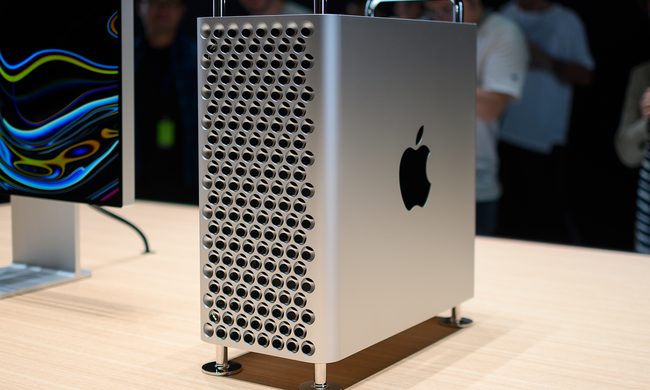
Apple's Mac Pro on a table at a press event.

Apple discontinued the Mac Pro earlier this year, ending a 20-year run for a computer that once represented the very best of the company’s desktop lineup. However, Apple reportedly had much bigger plans for the machine before ultimately replacing it with the Mac Studio.

According to Bloomberg’s Mark Gurman, Apple developed an M3 Extreme chip that could have offered twice as many CPU and GPU cores as the M3 Ultra. The processor was intended to sit above the Ultra tier and could have finally given the Mac Pro the performance advantage it badly needed. Apple eventually abandoned the chip due to concerns over production costs and limited demand for such an expensive machine.

Read more
Hidden prompts can secretly rewrite an AI’s memory, and researchers say that’s a serious problem
Researchers discover AI attack that rewrites an assistant's long-term memory
Chatbot on a smartphone.

Large language models are getting better at remembering us. Whether it's your preferred writing style, recurring tasks, shopping habits or project deadlines, AI assistants are increasingly storing long-term memories to make future conversations feel more personal and useful. But according to new research, that same feature could become one of AI's biggest security vulnerabilities.

Researchers from New Mexico State University have demonstrated a new attack called GhostWriter, capable of secretly planting false memories inside AI agents. Rather than stealing information outright, the attack manipulates what an AI remembers, potentially causing it to make dangerous decisions long after the original attack has taken place.

Read more
This experiment shows how easy it is to poison an open-weight AI model for under $100
This research raises new doubts about trusting open weight AI models.
Computer, Electronics, Laptop

Open-weight AI models have been having a moment lately. Just this month, Moonshot's massive Kimi K3 model landed close behind Claude Fable 5 and GPT 5.6 Sol in several benchmarks, all while remaining fully open-weight and downloadable by anyone.

However, Katie Paxton-Fear, a cybersecurity lecturer at Manchester Metropolitan University and staff security advocate at Semgrep, managed to poison an open-weight model and proved how easily that openness can be turned against you (via The Register).

Read more