  1. Home
  2. Computing
  3. News

MyndGazer wants to help you visualize your brainwaves in VR

Add as a preferred source on Google

Historically, visualization software has been associated with music. Open up a client like Winamp or iTunes, and you’ve probably — at one point or another — seen the waves of your favorite pop song sync up with some sort of, often wavy, visual representation.

New York City-based startup MyndGazer is trying to achieve something similar, only instead of music, it’s showing you your own brainwaves. And rather than displaying them on a 2D plane, you’re seeing them in real-time, and all around you with the help of a VR headset.
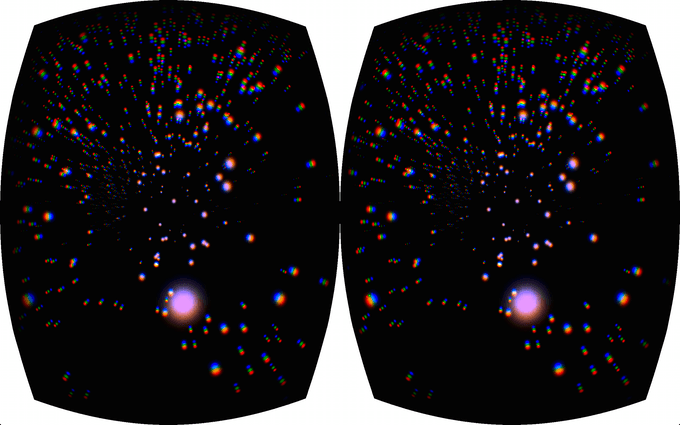
d1946587d7f3063c73d52d2ff0892615_original
Image used with permission by copyright holder

Compatible with both PC and Mac, the MyndGazer software is described as “a brain-computer interface platform that renders the user’s brain waves in real time as a Virtual Reality visualization.” It takes advantage of a technology called WebVR, and is supported by a wide range of VR headsets, including the Oculus Rift, HTC Vive, Google Cardboard, and “most other headsets.”

On its Kickstarter page, MyndGazer explains:

Recommended Videos

As you focus your attention, the visualization changes around you, providing instant feedback and thus allowing you to practice staying attentive. As you meditate, placing your awareness on the changing images and relaxing, the visualization changes again and you instinctively learn to stay with that mind state, resting and open.”

Interestingly enough, MyndGazer isn’t limited to VR headsets. Even if you’ve yet to be bitten by the HMD bug, you can still try it out for yourself on a regular computer monitor sans the third dimension. MyndGazer, the company writes, is “designed to facilitate attention to moment-to-moment sensory experiences and foster extended interaction, engagement, and exploration of neural activity.”

The goal is to analyze brainwaves in order to learn to relax your mind or focus your attention. And if it works as advertised, MyndGazer could be incredibly helpful for individuals struggling with anxiety or attention deficit disorders, among other illnesses.

MyndGazer is presently being crowdfunded through Kickstarter with a $10,000 funding goal. If you want to help out the company with its apparently grandiose endeavor, you’ll want to remember to do so by March 4 at the oddly specific time of 6:37 pm ET.

Gabe Carey
A freelancer for Digital Trends, Gabe Carey has been covering the intersection of video games and technology since he was 16…
Google Earth’s AI misadventure lasted only a day. It was a tale of dangerous ignorance.
Nuclear reactors, tanks, and historical destruction on a life-like satellite map? Yeah, that's bad.
Nano Banana AI image generator representation.

Technology behemoths are clearly not reading the room, or they are just moving faster than they should when it comes to AI deployment. Google has already stuffed its Gemini AI in every corner of its software stack, from Android to daily productivity tools like Gmail that are used by hundreds of millions of users every day. AI is everywhere. Not all of it is bad, mind you. But in a few places, it just feels forced.

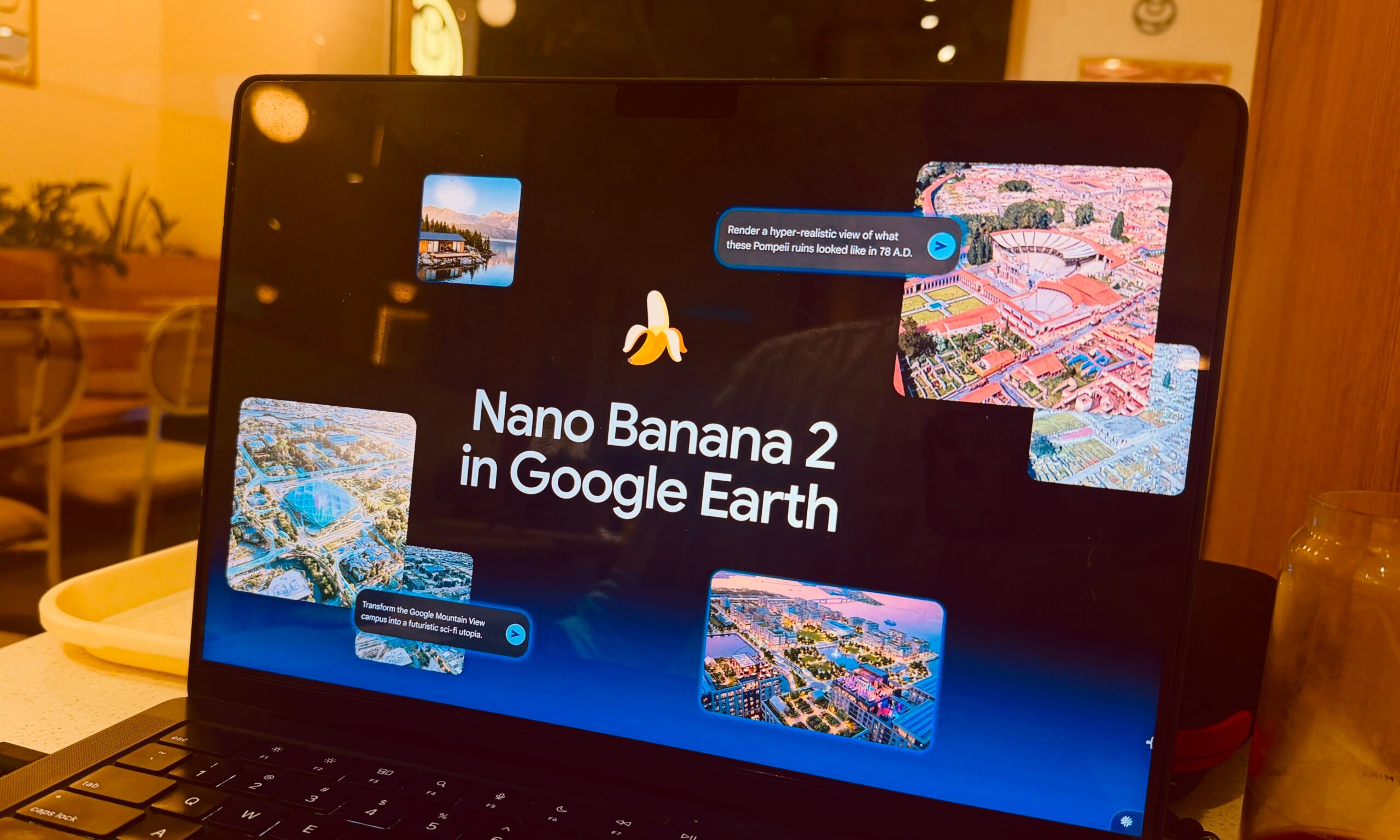
In its latest AI-fication experiment, the company targeted Google Earth. The idea was to let the audience use its Nano Banana 2 AI image generator and make images that can be placed on the map view. On paper, it's a cool idea. What would the Colosseum of Rome look like in your urban neighborhood? Yeah, fun stuff like that.

Read more
AMD is apparently gearing up to raise GPU prices right after Nvidia’s steep hike
AMD has reportedly told AIB partners about a price hike that goes into effect in. August.
AMD RX 7800

AMD is next in line to raise the asking price of its Radeon GPUs, merely days after the news of a similar hike coming for Nvidia graphics cards started making waves. As per ChannelGate on Weibo (h/t VideoCardz), AMD has informed its board partners that the price of GPU and memory bundles will go up by at least 10% in August.

Is a similar price hike coming for standalone graphics cards? I won't be surprised if that happens. The situation is so bad that AMD is planning to bring back graphics cards with 4GB of onboard memory. AMD just introduced the RX 9050 GPU, which costs $279. Notably, it's just $20 less than the RX 9060 XT that offers double the graphics memory.

Read more
Microsoft will make Windows work well with just 8GB RAM. We desperately need it
The dream of a reliable and affordable Windows laptop hinges on the next milestone at Microsoft.
Surface laptop on wooden table

The year 2026 has marked a huge course correction for Microsoft after years of frustrating users with plenty of confusing processes, unoptimized UI elements, and just the generous bloatware that can bring any Windows system to a crawl. Microsoft has finally shifted into a new phase. From fixing the right-click behavior to speeding up the Search system, the company has fixed plenty of papercuts.

The next major milestone is making Windows 11 run smoothly on Windows PCs with just 8GB of RAM. That directly means entry-level and budget laptops will at least get the basics right, even if that means sacrificing the on-device AI bells and whistles. Let's face it. The increasingly AI-first approach to computing on a Windows 11 machine is a little too taxing on the hardware at hand.

Read more