Buying a new car is a little like adopting a pet. You want your car’s personality to mirror your own. Reliability/loyalty, fun, on-road manners, and cost of ownership are all factors you need to consider when choosing a vehicle – or taking home your new best friend.
Most of us don’t have infinite resources (or giant backyards), so our buying choices are limited to certain car breeds. But, that doesn’t mean you can’t find something special, whether it’s a utility-focused hatchback, style-forward coupe, or traditional sedan.
Even with a budget limited to just $20,000, almost every mainstream automaker would love to sell you an entry-level model, especially a four-door. With so many choices, we’ve refined the list to five excellent sedans, each with plenty of character for the money.
Mazda3 Sedan ($17,845)
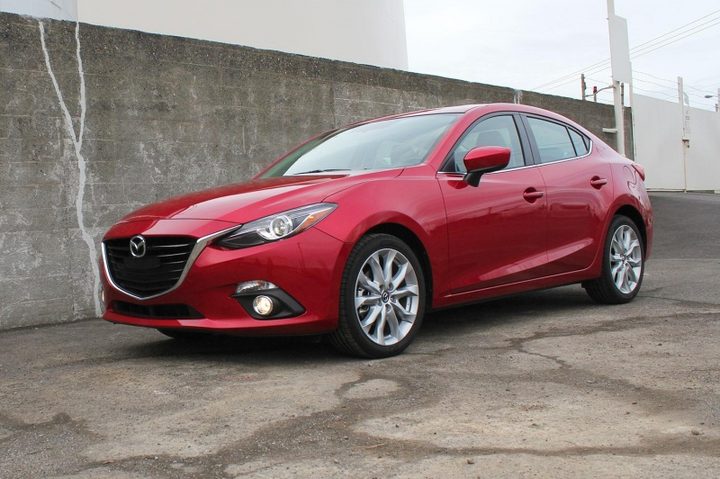
The Mazda3 sedan has always been the driver’s choice among compacts, and the latest generation has lengthened its performance lead over rivals. Mazda’s SkyActiv design philosophy lends itself to a lightweight body, robust powertrains, and a smooth-shifting six-speed manual transmission.
Mazda’s entry-level sedan loves to carve corners and look sexy doing it. While some favor the five-door hatchback, the sedan is every bit as good looking, without sacrificing much utility. A 2.0-liter four-cylinder comes standard with 155 horsepower and 150 pound-feet of torque – more grunt than most trim-topping compact rivals. Of course, if you want maximum performance, you’ll need to choose the 2.5-liter unit, which makes a segment-best 184hp.
A handsome interior, easy-to-use infotainment system, and strong fuel economy numbers round out the Mazda3’s best traits. Prices for the 2016 model start at $17,845.
Honda Civic ($18, 640)
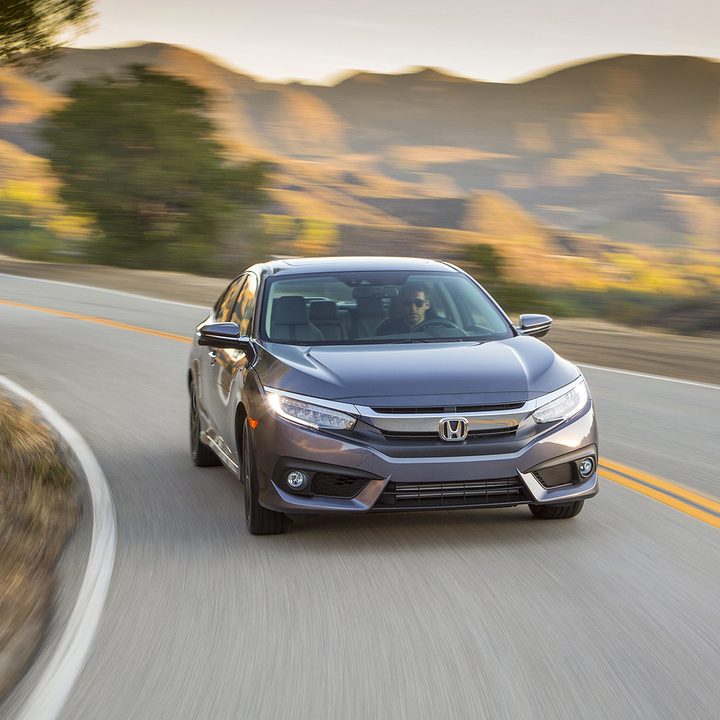
Honda’s all-new “epic” 10th generation Civic has turned the compact car market on its head, providing the best fuel economy numbers, most striking design, and well-sorted suspension geometry in its class.
While the eight and ninth gen Civic were a bit of a let down, it’s nearly impossible to poke holes in the 2016 model’s engineering. An available 174hp turbocharged engine is plenty feisty and even the CVT transmission has some life in it. While you can’t option the turbo sedan with a six-speed manual just yet, it’s just on the horizon. Having driven the Civic on some rather technical roads back-to-back with the Mazda3, I was blown away by the confidence of the Honda.
The Civic’s exterior styling is aggressive and upscale, while inside, the new model can be optioned with the latest and greatest in safety and infotainment features to turn a compact commuter into a veritable entry-level luxury car. Apple Carplay, Android Auto, adaptive cruise control, lane-keeping assist, automatic braking assist…the list goes on. The 2016 Civic sedan stickers at $18,640.
Chevrolet Cruze ($17, 295)
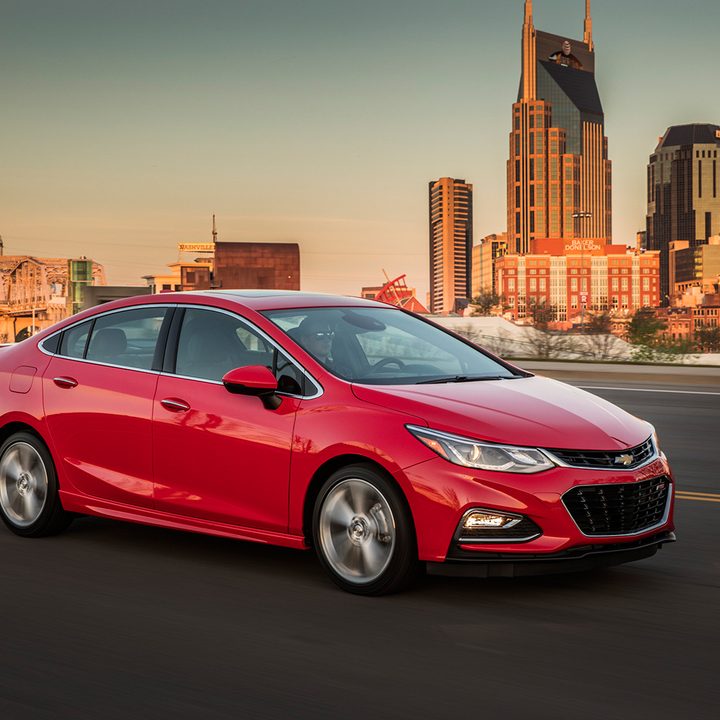
Chevrolet debuts its second generation Cruze this year, and steals the show once again. Honda and Mazda will undoubtedly sell more compact sedans annually, but not because their products are necessarily better than the Chevy.
Sporting a brand new design inspired by the Impala and Malibu, shedding 250 pounds of weight savings compared to the 2015 model, and leveling up its interior technology, the 2016 Cruze is one tricked-out underdog.
Better still is Chevy’s 1.4-liter turbocharged Ecotec 4-cylinder, standard on every trim. The new motor produces a strong 155hp and 177 lb-ft of torque, which, when paired with either a six-speed manual or automatic, offers a surprisingly fun driving experience. For the first time, the Cruze also tops 40 mpg on the highway. At $17,495, what’s not to love?
Hyundai Elantra ($17,150+)
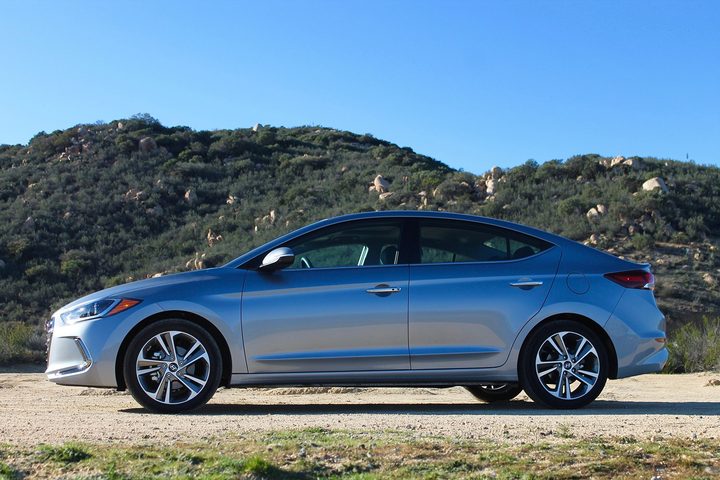
Hyundai’s previous generation Elantra was all about putting build quality concerns to rest. This new Elantra is about rattling the cages of the establishment.
The 2017 Elantra doesn’t just look fantastic, it’s an ergonomic, tech-savvy sedan that’s priced to undercut the three aforementioned models without skimping on the features. Styling is reminiscent of the larger Sonata sedan and passenger space front and rear is improved significantly.
Hyundai’s segment-beating 10-year, 100,000-mile powertrain warranty is one of the few carry-overs from the 2016 car. Hyundai’s Bluelink app can now control your door locks or start your engine remotely, and there’s an updated six-speed automatic transmission to increase fuel economy. Hyundai’s 2017 Elantra retails for $17,150 and goes on sale this summer.
Dodge Dart ($16, 995)
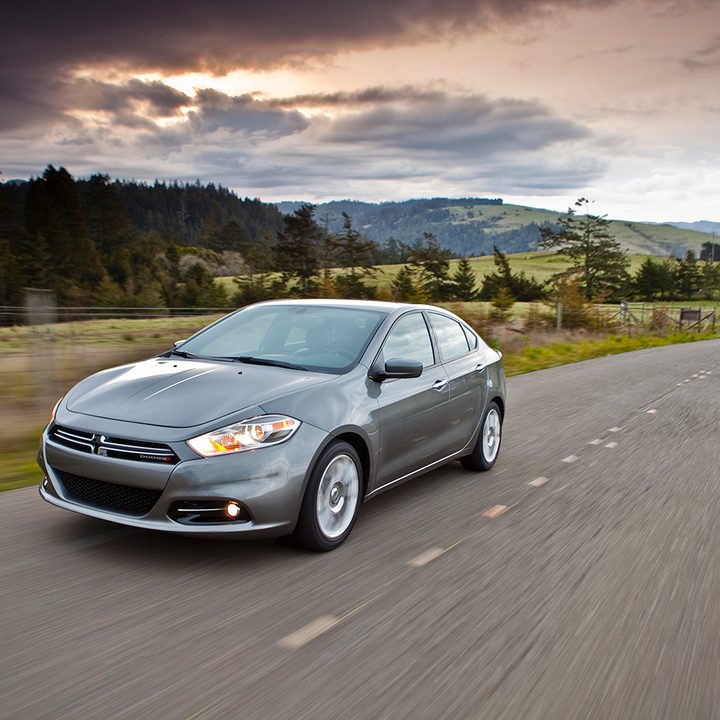
Bet you didn’t expect to see a Dodge on this list, but hear me out on this one: The Dart may be a slow-seller, especially compared to other four-door compacts, but its uniqueness is actually an advantage for those who dread the thought of driving “just another sedan.”
Rarity can only get you so far, however, so it’s a good thing the Dart is genuinely a good car, and is the only model on this list that starts under $17,000. Handsome styling, generous interior volume, spunky handling, and the excellent optional UConnect infotainment system all favor choosing the Dart.
If the Dart’s affordable proposition interests you, best act soon, as FCA has announced the compact model will end production next year as the brand makes way for more crossovers. Prices for the Dart start at $16,995.