  1. Home
  2. Business
  3. Android
  4. Mobile
  5. News

Samsung's 4th-quarter estimates are pretty impressive, despite Galaxy Note 7 woes

Add as a preferred source on Google

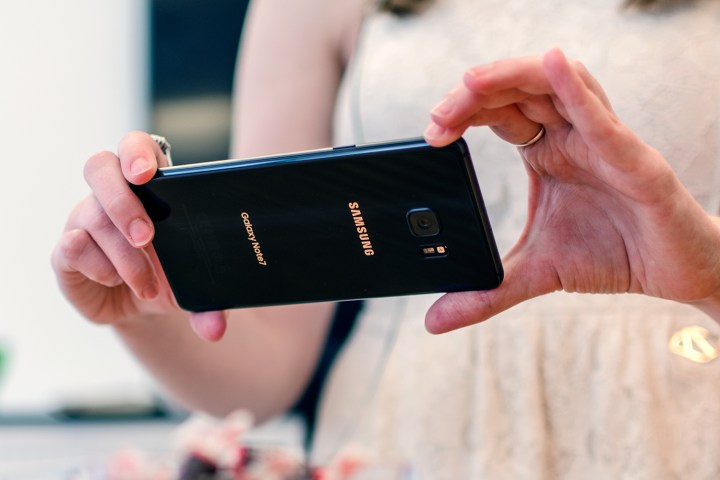
Samsung’s smartphone division has had a pretty rough few months. Only a few months ago, the company was forced to go through an embarrassing recall of the Galaxy Note 7, arguably the best phone it has ever made, due to the some batteries in the device catching fire. After the recall and replacement program, batteries continued to catch fire, so it had to recall the replacement devices and put an end to the phone once and for all.

So it might be surprising to hear that the company estimates an absolutely massive consolidated operating profit of 9.2 trillion won — or around $7.2 billion U.S. — for the fourth quarter of 2016. That’s 50 percent more than the 6.14 trillion won, or $5.2 billion, it reported for the same quarter the previous year.

Recommended Videos

So what does all this mean? Well, it basically suggests that the Note 7 scandal was just a tiny bump in the road for the behemoth that is Samsung. Even the smartphone division reported perfectly respectable profits thanks to the Galaxy S7, indicating that the Galaxy S8 could be a big hit for the company once it does finally hit the market.

It turns out that the third quarter wasn’t quite as excellent as the fourth quarter. Samsung originally forecasted pretty hefty growth for the third quarter, but it had to revise those forecasts a little — while it originally expected to make 7.8 trillion won, or $6.6 billion, it revised its estimates down to 5.4 trillion won, or $4.4 billion.

Samsung’s massive fourth-quarter success likely isn’t due to its mobile division — but rather sales of its displays and memory. Sure, the company isn’t struggling financially, but if it wants to remain a top player in the smartphone business, the Galaxy S8 better be an excellent device.

Christian de Looper
Christian de Looper is a long-time freelance writer who has covered every facet of the consumer tech and electric vehicle…
What Features Matter Most in a Printer for a Small Business or Home Office?
Choose a laser printer that works as hard as your business does.
Computer Hardware, Electronics, Hardware

For small businesses and home offices alike, the printer has become something more than a peripheral. Remote and hybrid work, side businesses, and small teams handling their own operations have all raised the bar on what a shared office printer needs to do. A machine that handles the occasional document is no longer enough when invoices, contracts, client paperwork, and employee forms are moving through it every day.

What follows is not a feature checklist. It is a walk through a typical hybrid workday and the moments where the printer either earns its keep or quietly costs you time you cannot get back. The features that matter most are the ones that show up in those moments.

Read more
WarpSpeed Wants to Be the AI Assistant That Finally Gets Your Life Organized
Trending Forward

Most of us don't need AI to write sonnets, generate pirate jokes, or explain quantum mechanics for the fifth time. What we really need is much simpler and much harder: help getting through the day.

Email. Calendar. Tasks. Chat. Reminders. Follow-ups. Missed messages. Half-finished replies. The bill you meant to pay. The lunch you forgot to confirm. The document someone sent three weeks ago that you now need "right away."

Read more
How can businesses simplify invoicing and payment processing?
Connect invoicing, payments, and accounting into one seamless workflow
Body Part, Finger, Hand

This post is brought to you in paid partnership with QuickBooks.

Creating an invoice is rarely the hardest part of getting paid. For most small businesses, it takes only a few minutes to prepare an estimate, send an invoice, or request payment. The work that quietly consumes time comes afterward, when payments need to be tracked, deposits verified, invoices marked as paid, and accounting records updated. Simplifying invoicing isn't just about creating invoices faster. It's about reducing the manual work that happens between sending an invoice, collecting payment, and keeping financial records accurate. QuickBooks is designed around that idea, bringing invoicing, payments, and accounting together in one connected workflow instead of treating them as separate tasks.

Read more