  1. Home
  2. Cars
  3. Legacy Archives

ABT Sportsline ‘sort of’ improves the looks and performance of the Audi A6 TDI

Add as a preferred source on Google

Just when Audi performance enthusiasts thought quattro GmbH was all they had to think about for the ultimate Audi, ABT unveils a performance-tuned A6 at SEMA.

ABT Sportsline is the largest aftermarket tuner of Volkswagen AG cars on the globe and is planning to open an outlet in Los Angeles. Before it does, however, it has a new performance sedan to unveil in SEMA: the ABT AS6. This is not just a performance Audi, however. It’s also a TDI diesel.

Recommended Videos

ABT took the standard 245 horsepower A6 TDI and squeezed from it 286 horsepower and 500 pound-feet, representing a leap of more than 41 horses and 72 pound-feet.

Then ABT designers laid their hands on the sleek A6 body. Here’s how ABT put it: “The ABT front spoiler sort of lowers the car’s center of gravity at least visually; fender inserts and side skirts and the carbon fiber mirror covers underscore the athletic design and reveal at first glance what drivers can expect. The rear end is also accentuated by the ABT rear spoiler in combination with the ABT rear skirt kit (incl. tail pipe covers).”
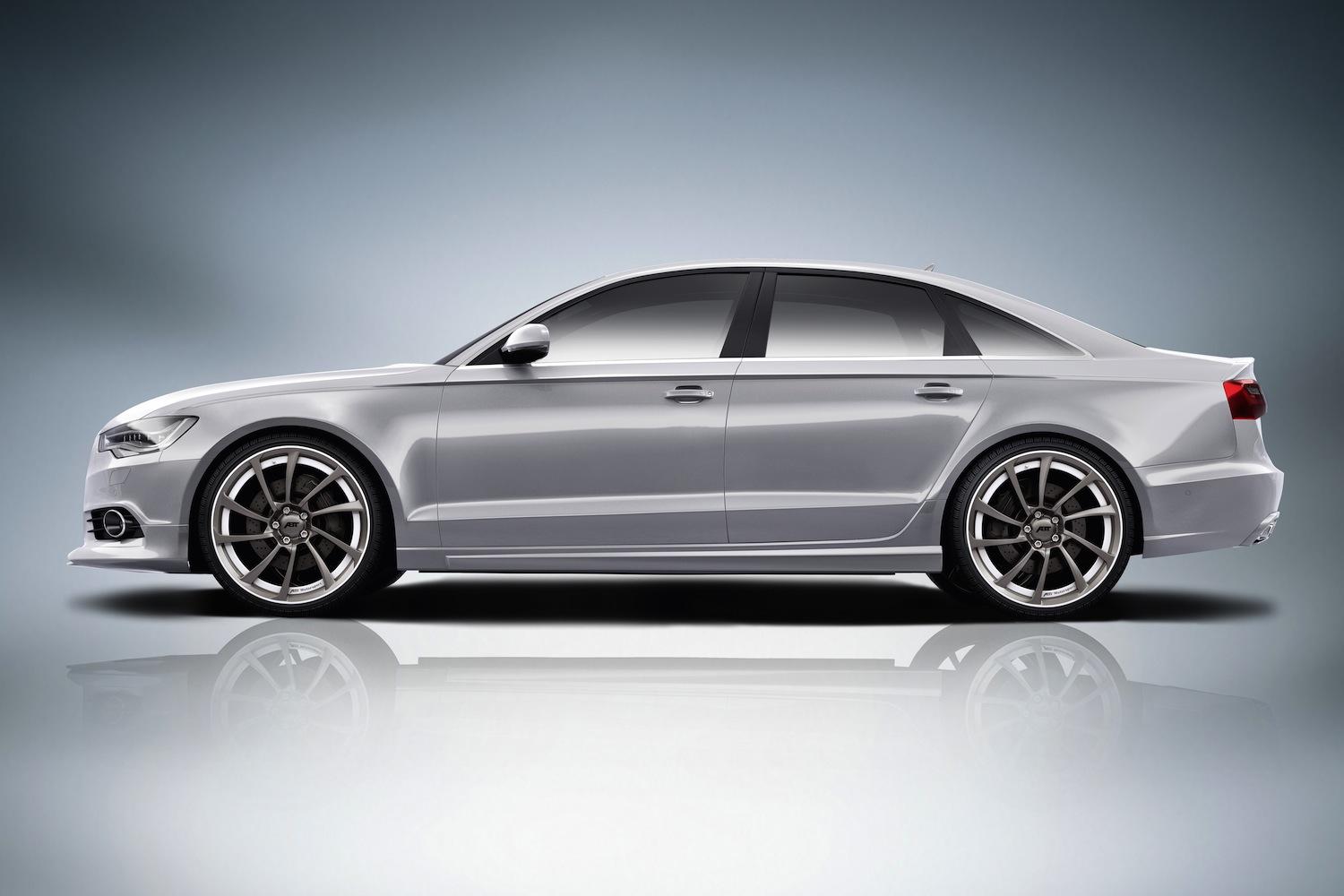
ABT A6_4G0_Seite_DR_14
Image used with permission by copyright holder

Did you catch it? ABT says its front spoiler “sort of lowers” the AS6’s center of gravity. Yes, I am sure it does. Adding to that appearance of a lower center of gravity, ABT bolted up some sportier ABT springs.

From there, designers made sure the AS6 stops as strongly as it accelerates, adding an ABT brakes. ABT doesn’t say how much better these brakes are, but I am assuming they’re at least “sort of” better.

Finishing off the new look, designers slapped on some ABT ER-C premium sport-type wheels. These, I think, are the best-looking ABT addition to the AS6.

I – for one – am all for diesel performance tuning. While some automakers look to hybridization to improve performance, I think Volkswagen is right on the money with its focus on efficient and torque-y TDIs.

Nick Jaynes
Former Automotive Editor
Nick Jaynes is the Automotive Editor for Digital Trends. He developed a passion for writing about cars working his way…
Waymo wants your next robotaxi ride to feel less like a taxi and more like your living room
Your next Waymo ride could come with Gemini as your travel companion
Adult, Female, Person

Waymo is giving its robotaxis one of its biggest passenger-facing upgrades yet, bringing Google's Gemini AI assistant into the cabin alongside a redesigned in-car interface that reimagines how riders interact with autonomous vehicles. Both features will debut in the Ojai, Waymo's purpose-built robotaxi, as the company prepares to expand access to more public riders. Rather than changing how the vehicle drives, the update focuses on what passengers can do once they're inside, signalling that the next phase of the robotaxi race may be fought on experience rather than autonomy.

For years, autonomous vehicle companies have competed on sensors, safety records and driverless capabilities. Waymo now appears confident enough in those foundations to shift attention toward the cabin itself, treating the journey as a product rather than simply a trip from one location to another.

Read more
Two Indian automakers just beat Tesla at the one thing you’d expect it to own
Two Indian automakers, Tata Motors and Mahindra, just topped a global EV efficiency ranking ahead of Tesla and BYD.
Car, Suv, Transportation

I'll admit, Tesla topping an efficiency ranking felt like a foregone conclusion until I actually saw the numbers. Turns out two Indian automakers just embarrassed both Tesla and the world's biggest EV maker at their own game. 

The first time I read the report, I couldn’t believe it, and I’ve been following the Indian automobile industry for a couple of years now.  

Read more
BYD’s new Racco is Japan’s first electric kei car with over 300 km range
The Racco also undercuts Nissan's Sakura on price before taxes and incentives, which packing in features rarely seen in the kei car segment.
BYD Racco

BYD has entered the Japanese kei car market with the Racco, an electric car built specifically for the country's compact car segment. Its top trim delivers 320 km of range, making it the first compact electric car in the market to pass 300 km, according to ITHome.

Kei cars are a Japanese vehicle class with strict size and power limits, and the segment has long been dominated by domestic automakers such as Honda, Nissan, Suzuki, and Daihatsu. The Racco is BYD's first attempt to compete in that space.

Read more