1. Home
  2. Cars
  3. Photo Galleries
  4. News

A mini BMW 3 Series is right around the corner … if you live in China

Add as a preferred source on Google

BMW has traveled all the way to China to introduce the Concept Compact Sedan at the Guangzhou Motor Show. As its name clearly implies, the show car provides an accurate preview of what the Munich-based car maker’s upcoming entry-level sedan will look like.

The Concept Compact Sedan was unabashedly designed with young Chinese motorists in mind. Up front, it wears wedge-shaped headlights and a wide rendition of BMW’s kidney grille with chromed horizontal slats, while the back end boasts a spoiler built into the trunk lid and L-shaped LED tail lamps. All of the typical BMW styling cues are accounted for; The Concept Compact Sedan almost looks like a shrunken-down 3 Series when it’s viewed from certain angles.

Although the cabin is as futuristic as the set the concept was photographed on, its basic layout bears more than a passing resemblance to the 1 Series hatchback and the 2 Series coupe. Staying true to tradition once again, the cockpit offers a driver-oriented center console, a three-spoke steering wheel, and a duo of simple, easy-to-read gauges. The front passengers can navigate the infotainment system using a controller knob found on the center console.

BMW has chosen not to publish technical specifications, but the long front overhang suggests that the sedan is front-wheel drive, not rear-wheel drive like the 1 Series and the 2 Series. If that assumption is correct, the Concept Compact Sedan likely rides on the same UKL platform as the third-generation MINI Hardtop, the new X1, and the family-friendly 2 Series Active Tourer that’s sold across the pond.

The fact that BMW chose to introduce its latest concept at the Guangzhou Motor Show instead of presenting it at the massive Los Angeles Motor Show that’s currently taking place speaks volumes. While the concept almost certainly previews a regular-production model, executives have previously hinted the sedan will be a China-only model that won’t make its way to North American showrooms.

Ronan Glon
Ronan Glon is an American automotive and tech journalist based in southern France. As a long-time contributor to Digital…
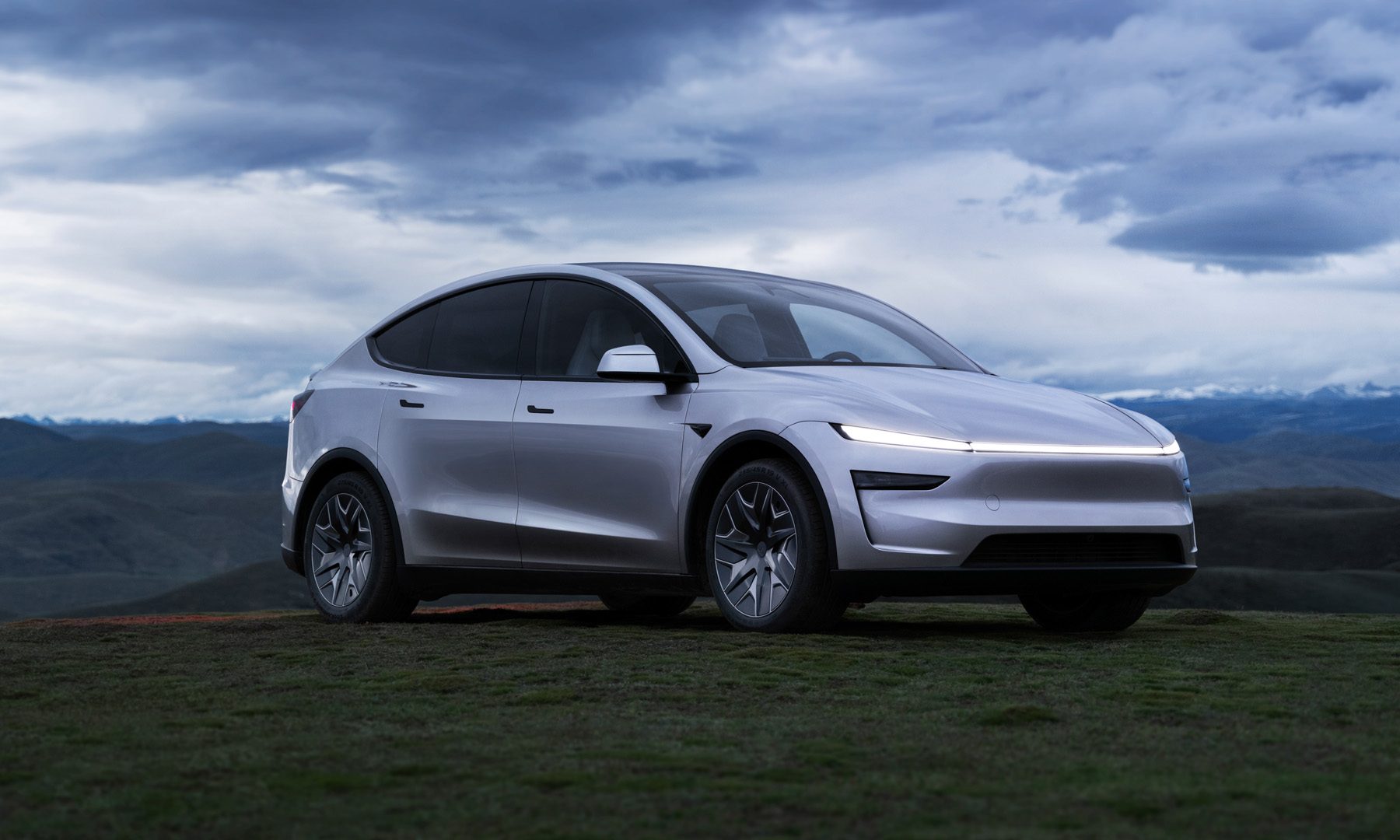
Tesla launches the six-seat Model Y Long Wheelbase in the US
The stretched electric SUV brings more space, more comfort, and up to 325 miles of range.
Tesla Model Y Long Wheelbase Featured

Tesla is giving the Model Y a little more breathing room. The company has officially launched the Model Y Long Wheelbase in the United States and Puerto Rico, introducing a stretched version of its best-selling electric SUV with a three-row, six-seat layout that's designed to make family road trips a lot more comfortable.

A bigger Model Y with a focus on comfort

Read more
A stolen Kia reveals the hidden limits of connected car technology
Kia can see where your stolen car is. GDPR means it won't share that in real time. That is the entire problem.
Kia EV3 design

If you’re buying a car with connected car technology, thinking it would help you to recover it in the event of theft, you might want to recalibrate your expectations. 

A recent incident in the UK, in which a car owner had three tracking devices installed in his car and still couldn’t recover it, led the carmaker to state that connected-car technology isn’t a “certified security vehicle tracker” (via the BBC).

Read more
Cambrige experts find utterly simple fix for longer lasting EV batteries. Just put some pressure on it.
Scientists found a way to make EV batteries last longer without reinventing the battery
EV Charging

EV battery breakthroughs typically involve new chemistry, exotic materials, or faster charging/higher capacity. But a new study reveals that you can skip all the fancy stuff and go with a very simple solution, Researchers from the University of Cambridge found that putting the battery under the right amount of pressure actually helps.

The study was about how physical pressure affects lithium-ion battery life, which found that keeping cells under constant pressure could double their lifespan. The work was published in Nature Energy, and the team says the improvement came without changing the active materials, electrolyte, or basic battery chemistry.

Read more