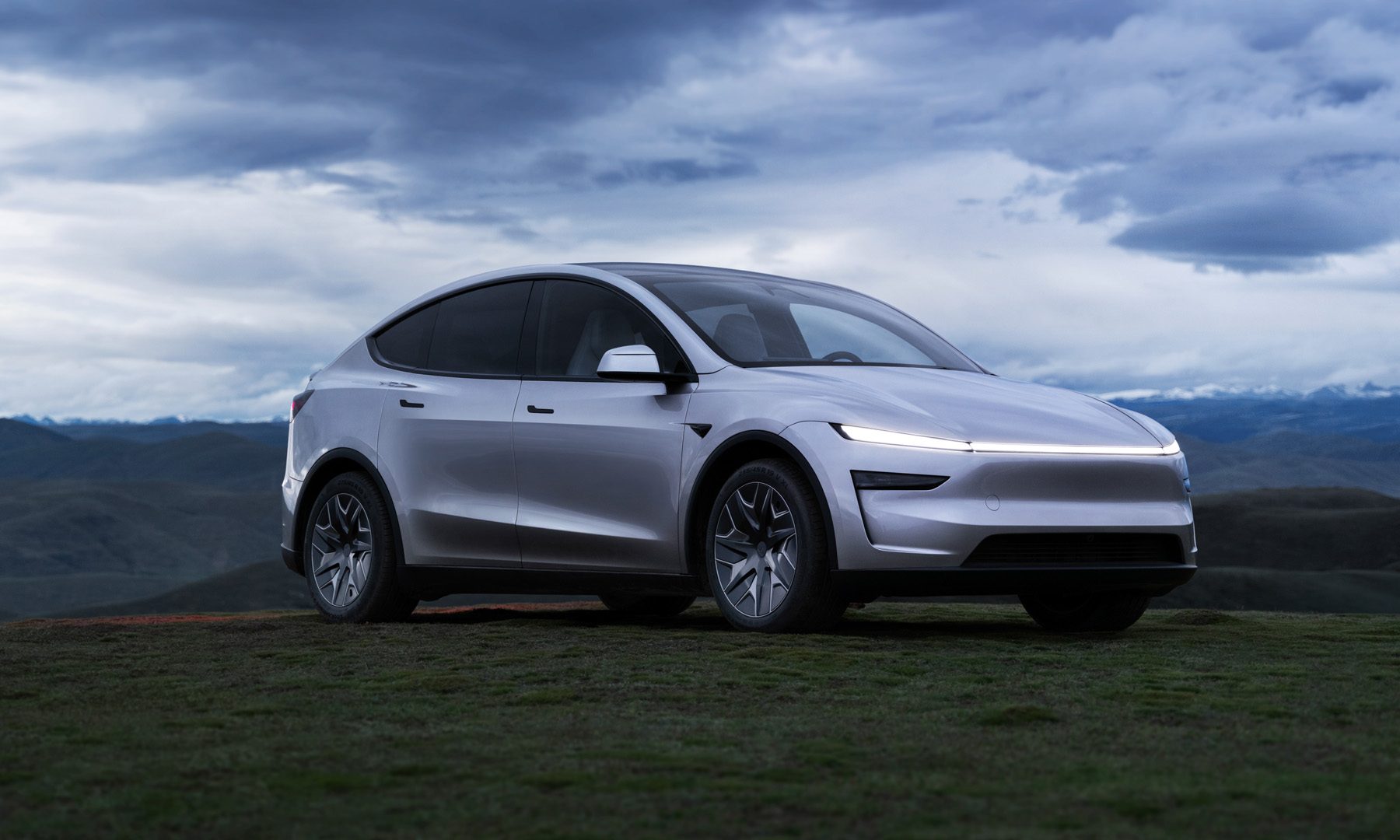
Driving “stick” is a popular term for those who know how to drive a car with a manual transmission. Manual transmissions, needing a unique skill set to wield, give drivers more control over shifting, power, and many think it enhances the overall driving experience.
Automatic transmissions shift automatically through gears as needed, allowing the driver to focus on the road and their passengers. The differences in feel and mechanics run deep as we compare manual and automatic transmissions through this guide.
Manual transmission

A manual transmission is also known as a stick-shift, and that says it all — the driver literally uses a stick to change gears. Your dad’s first car might have had a steering column- or dashboard-mounted shifter, but in a modern car, the shift lever is almost always mounted vertically on the center console and connected to the transmission via a linkage.
To change gears, a clutch disc sandwiched between the engine and the transmission needs to be released via a third pedal located on the left side of the brake. Release the clutch, select the desired gear, and engage the clutch again. From a standstill, engaging the clutch too slowly will wear out the disc prematurely, and engaging it too quickly will cause the engine to stall.
Learning how to drive a stick shift takes a little bit of time, but it’s rewarding and much simpler than it sounds. Driving a stick, you feel a connection to your car that is difficult to reproduce with an automatic transmission. Additionally, motorists who can operate a manual transmission are able to drive virtually any type of automobile, anywhere in the world — including in countries where renting an automatic is easier said than done.
Three-speed manual transmissions were common in the 1940s, the 1950s, and even the 1960s; the original Ford Mustang came standard with a three-speed. Engineering departments added gears as technology improved, and as cars got faster and the need for efficiency increased. The four-speed manual became the norm for decades, then five, and now six. However, some high-end sports cars — like the Porsche 911 — offer seven gears.
Automatic transmission
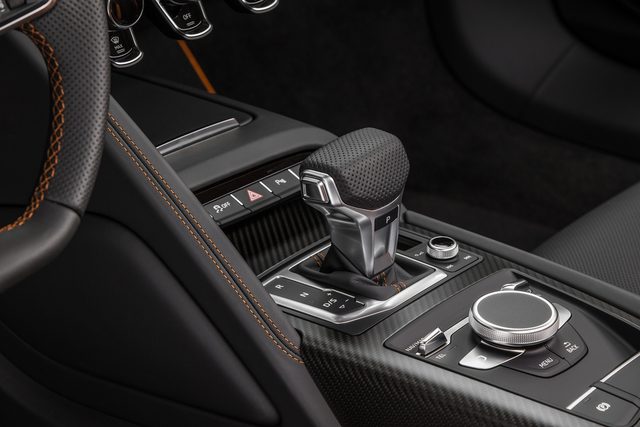
Believe it or not, a transmission that shifts gears on its own was once considered a luxury, and it was an expensive option on many models for a long time. Browse the local classifieds and you’ll inevitably notice the automatic transmission has become as widespread as power windows and air conditioning.
There are two basic types of automatic transmissions. A traditional automatic is connected to the engine via a hydraulic torque converter, and a dual-clutch automatic relies on — you guessed it; nice work — a pair of clutches. Both can change gears without any input from the driver. The process is done hydraulically or electronically by monitoring important parameters such as the position of the throttle pedal, the speed that the car is traveling at, and the engine’s revolutions. In many automatic cars, the gears can be selected manually using either the shift lever or paddles mounted behind the steering wheel.
Having only two pedals offers many advantages. It’s almost impossible to stall the engine with this configuration, and an automatic car tends to be smoother and more comfortable to drive than a stick-shift, especially in stop-and-go traffic. An automatic typically requires less maintenance than a manual as well, though that can vary from model to model. Finally, a dual-clutch automatic gearbox often shifts gears in mere milliseconds for greater performance and efficiency.
Four-speed automatic transmissions were the norm in the industry for a long time, and a small handful of models still soldier on with just four gears. However, six- seven-, and eight-speed automatics are common today. Honda builds a nine-speed; Ford and General Motors even have a jointly developed 10-speed transmission on the market. More gears mean better acceleration, quieter highway driving, and improved fuel economy.
CVT
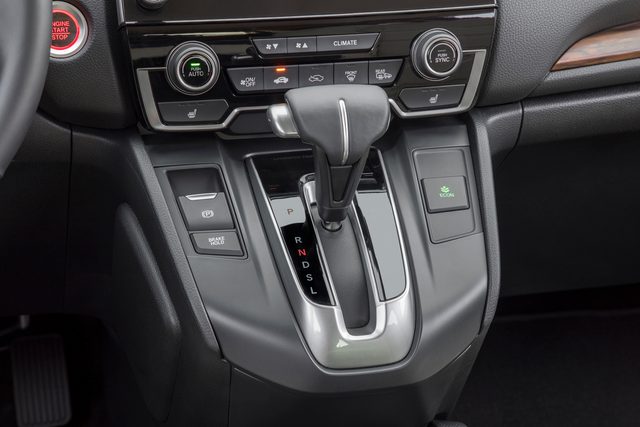
The third main type of transmission is the continuously variable transmission, a name usually abbreviated to CVT. In lieu of gears, a CVT relies on a belt and pulley system that provides an infinite number of ratios. In other words, the transmission never shifts. CVTs are also found in scooters, motorcycles, and snowmobiles.
Generally speaking, a car equipped with a CVT is smoother to drive than an equivalent model fitted with a regular automatic transmission. A CVT can improve gas mileage, too, which explains why a lot of hybrid cars are equipped with one. It’s not all pros, though. Some buyers find driving a car with a CVT downright bizarre because it doesn’t shift. The engine tends to drone when it’s bolted to a CVT and cars often deliver rubber band-like acceleration.
In a bid to boost consumer acceptance, car companies sometimes offer CVT-equipped cars with shift paddles that select preprogrammed ratios to mimic the gears in a regular automatic. Not every motorist will appreciate living with a CVT. Our advice is to try before you buy, and make sure you use it in many different scenarios, not just around the block. You may not notice what it’s doing behind the scenes to keep you move it, or you may completely hate it.
CVTs are in countless cars on the Japanese market, and they’re becoming increasingly common in the United States. The Subaru Crosstrek, the Mitsubishi Outlander Sport, and the Honda CR-V are among the models that come with a CVT. Additionally, some performance cars — notably the Subaru WRX — offer a CVT instead of a standard automatic.
Which transmission is right for me?
You’ve probably heard that it’s wise to choose your car based on its transmission. We agree. You can significantly narrow your options by deciding if you want a manual or automatic transmission. If not, you’ll waste a lot of time sifting through countless options. Deciding on either a manual or automatic transmission comes down to two key factors: your specific driving style and what vehicle piques your interest the most. If you don’t care about “driving dynamics,” then you’ll probably be just fine with the set-it-and-forget-it peace of mind accompanied by an automatic or CVT.
Most car fans choose a manual transmission because they love to play an active role in driving. Remember that it’s best to avoid a manual transmission if you have a long, traffic-heavy commute. A stop-and-go route is not fun if you have a manual transmission. However, it’s important to note that you may have limited options because many newer vehicles only have one type of transmission available. In some cases, you can ask for a transmission change from the manufacturer, but that will cost a pretty penny.
Folks who enjoy driving with manual transmissions will be saddened by their lack of longevity in the car industry. Many U.S. automakers are decreasing the number of manual transmissions they produce, making manual transmission a luxury for active drivers. Thankfully, there are still a few affordable cars on the market that offer a manual transmission. These include the Volkswagen GTI, the Subaru Impreza, the Mazda MX-5 Miata/Fiat 124 Spider siblings, and the Toyota 86. There are also options available to those with bigger budgets, including the BMW M3, the Porsche 911, and the Jaguar F-Type, although you may have to special-order one.