  1. Home
  2. Cars
  3. Photo Galleries
  4. News

One of the final McLaren F1 supercars ever produced could be yours

Add as a preferred source on Google

Hopefully, you’ve been saving all your pennies, because McLaren just announced something worth spending all you’ve got: a low-mileage, perfectly maintained F1 supercar.

Only 64 street-legal McLaren F1s were built between the years of 1993 and 1998, and McLaren’s Special Operations Heritage unit is releasing one of the very last F1s ever produced for auction. Chassis No. 069 is in stunning condition and only registers 2,800 miles on its odometer, or what I’d like to consider “the break-in period.”

As a bit of history for those who need a refresher: The F1 was a piece of automotive innovation like no other in the mid-’90s. Designed to be the ultimate driver’s car, it features a midmounted, naturally aspirated 6.1-liter V12 with 627 horsepower. When tested, the F1 took the top speed crown with a record 242.8 mph run. Though the Bugatti Veyron eventually took the title — almost 20 years later — the F1 still is the fastest street-legal naturally aspirated production car.

Read More: McLaren Tricks Out Two of Its Most Extreme Machines For Geneva

In its final year of production, only six F1s were produced, which, when compared to today’s elite supercars, is like a pinch of salt out of a giant bowl. This particular model is the 60th model, hand-built in Woking, England, and painted in carbon black with 17.0-inch magnesium wheels.

The iconic center-driving position is detailed in black-and-red stitching, while the two passenger seats are covered in alcantara, a synthetic composite material. If the car itself doesn’t impress you, it comes with fitted luggage, a titanium tool kit, Facom tool books, all books and owners manuals, and a limited-edition McLaren F1 owner’s watch.

Though it’s unclear where the bidding will start on this piece of automotive history, don’t expect things to get interesting until somewhere beyond $2 million. Let’s just hope the new owners don’t simply tuck away their new possession in a garage but actually enjoy one of the finest vehicles ever built.

Miles Branman
Miles Branman doesn't need sustenance; he needs cars. While the gearhead gene wasn't strong in his own family, Miles…
Tesla launches the six-seat Model Y Long Wheelbase in the US
The stretched electric SUV brings more space, more comfort, and up to 325 miles of range.
Tesla Model Y Long Wheelbase Featured

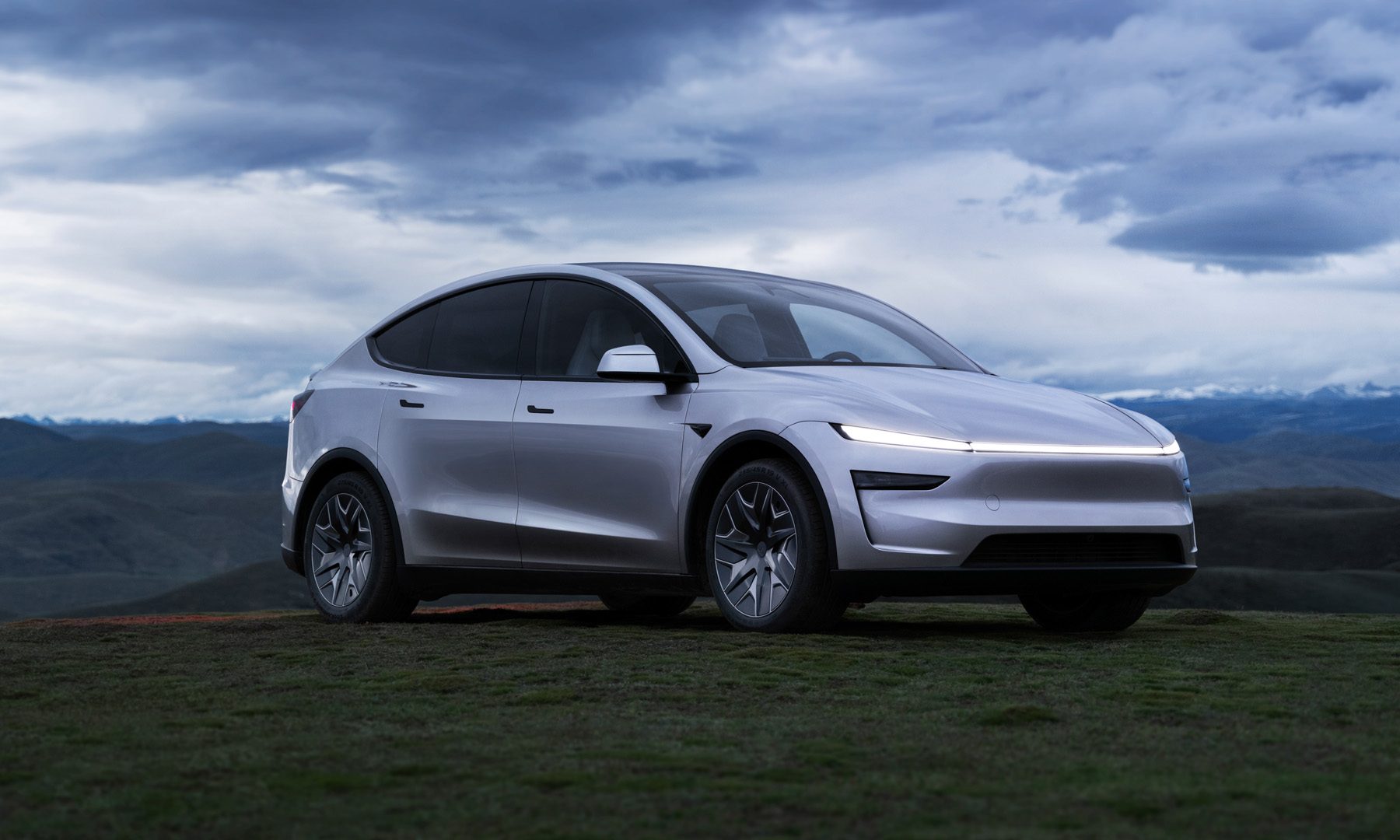
Tesla is giving the Model Y a little more breathing room. The company has officially launched the Model Y Long Wheelbase in the United States and Puerto Rico, introducing a stretched version of its best-selling electric SUV with a three-row, six-seat layout that's designed to make family road trips a lot more comfortable.

A bigger Model Y with a focus on comfort

Read more
A stolen Kia reveals the hidden limits of connected car technology
Kia can see where your stolen car is. GDPR means it won't share that in real time. That is the entire problem.
Kia EV3 design

If you’re buying a car with connected car technology, thinking it would help you to recover it in the event of theft, you might want to recalibrate your expectations. 

A recent incident in the UK, in which a car owner had three tracking devices installed in his car and still couldn’t recover it, led the carmaker to state that connected-car technology isn’t a “certified security vehicle tracker” (via the BBC).

Read more
Cambrige experts find utterly simple fix for longer lasting EV batteries. Just put some pressure on it.
Scientists found a way to make EV batteries last longer without reinventing the battery
EV Charging

EV battery breakthroughs typically involve new chemistry, exotic materials, or faster charging/higher capacity. But a new study reveals that you can skip all the fancy stuff and go with a very simple solution, Researchers from the University of Cambridge found that putting the battery under the right amount of pressure actually helps.

The study was about how physical pressure affects lithium-ion battery life, which found that keeping cells under constant pressure could double their lifespan. The work was published in Nature Energy, and the team says the improvement came without changing the active materials, electrolyte, or basic battery chemistry.

Read more