“Why you can trust Digital Trends – We have a 20-year history of testing, reviewing, and rating products, services and apps to help you make a sound buying decision. Find out more about how we test and score products.“
No matter how immersive a VR experience is, there is almost always one thing missing: free movement that doesn’t involve a controller. The WizDish Rovr is a potential solution, and opens up the VR world in a more realistic and immersive fashion. It lets you move around, but your feet still stay firmly planted on the ground at all times.
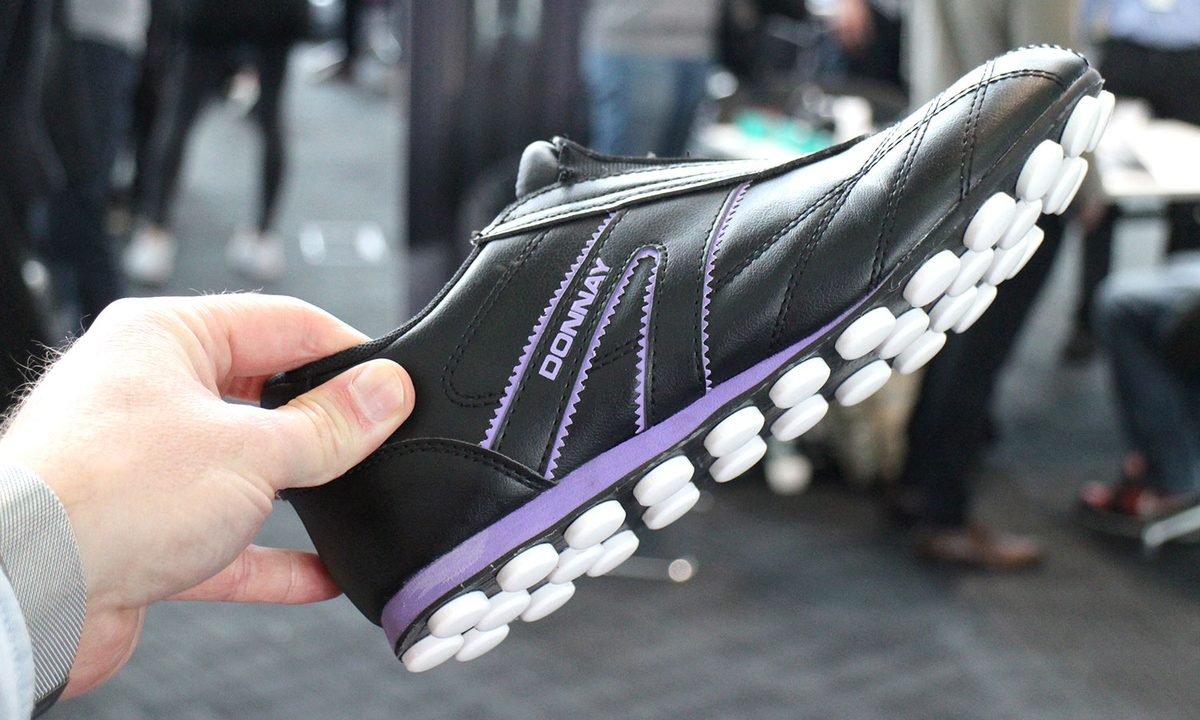
You may have seen those crazy VR platforms where someone’s strapped into a little pod, usually clutching a gun, maniacally running around but not actually going anywhere. The concept is the same for the WizDish Rovr, but the execution is different. You wear a special pair of shoes with a super slippery studded sole. Think of it like a reverse football boot, and you’re about right. You have grab handles, but are unsecured, and it’s much less physically tiring than actual walking.
The Rovr dish has a subtle concave to it, and is slippery like ice. Instead of actually running on the spot, you slide your feet across the surface like a stationary skater. WizDish says although this movement looks weird from the outside, our brains are easily fooled into thinking we are walking, just by the motion of moving our legs in a similar fashion. We don’t really notice the difference because walking is an autonomous action, and not something we think about as we do it.
Slippery when not wet
Stepping on to the Rovr is disconcerting. It’s really, really slippery, and hanging on to the guard rails is essential. You can’t run along with a gun your hand on this thing, unless you’re keen to start breaking bones. I played a Pac-Man style game, running down corridors collecting pills and avoiding ghosts. While I was never utterly convinced I wasn’t sliding along the ground, it didn’t break the spell or unique feeling of bodily-generated movement. If it managed to do this in a basic Pac-Man clone, then it should do well in Call of Duty or Minecraft.


It takes a while to get used to the way it responds to movement though. Motion is generated by moving your feet and by looking around with the headset. In the few minutes I used the Rovr, it was more like having a massive controller under my feet than actually wandering around in the real world. That’s not a bad thing, but there is definitely a learning curve to master smooth, forward propulsion. I repeatedly ran into walls inside the Pac-Man world, and frequently became disorientated when spinning round.
This was all in a very tight game world, so out in the open air things may be different, but without the chance to test it in an intensive gunfight or escape situation, it’s impossible to say if it’s a control nightmare. Most people should be fine after some practice though.
The Rovr lets you move around, but your feet still stay firmly planted on the ground at all times.
If you’re wondering how the Rovr translates your sliding feet into in-game motion, it’s done using sound. There’s a microphone under the disc which picks up the vibrations, and the device integrates with the computer and game’s audio system. This makes it very robust. There are no delicate sensors to break, or a web of cabling underneath to destroy. That’s a good thing. WizDish said the shoes are equally strong, and 6,000 hours of use on a test device only saw the upper parts of the shoe begin to show their age.
I used the Rovr with the Oculus Rift, but in the near future, WizDish will add Bluetooth connectivity to the Rovr, so it’ll also work with wireless headsets including the Samsung Gear VR, which was our favorite product of 2015.
Freeing, but expensive
While gaming is the obvious focus, the Rovr makes even more sense in an educational environment. VR field trips are already changing classrooms, but they’re mainly stationary experiences. Using the Rovr, kids can get a better feel for scale and distance. How big was the Colosseum, really? How does the view change over a few hundred meters on the Great Wall of China? Not only would they see, but would also get the chance to actually move around those spaces.
The Rovr is tough, small enough to be used in any room, compatible with most headsets and many games, and takes us a step closer to solving one of the major obstacles in creating a truly immersive VR experience. The downside is price. It costs £400/$580, for which you get the dish, guard unit, and a pair of slidy shoes. That’s the same price as the Oculus Rift itself, and a considerable investment on the top of what’s already a considerable investment. However, if you want to move about in your virtual world, this is a good way to do so.
Highs
- Robust
- Wide device compatibility
- Simple setup
Lows
- Expensive
- Limited game support