  1. Home
  2. Computing
  3. Legacy Archives

Google tests cars that drive themselves

Add as a preferred source on Google

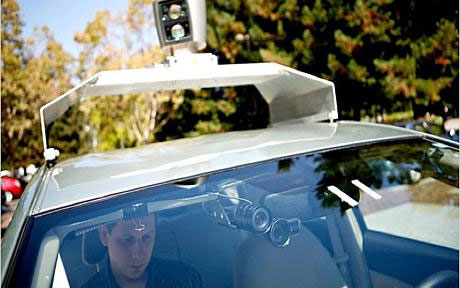
The cars are using artificial-intelligence, as reported by The New York Times, to make themselves aware of obstcacles and respond as a normal driver would to road conditions.

The cars have always had a technician behind the wheel, in case the computer malfunctioned, but the test has had surprising results. Google drove seven cars for 1,000 miles with zero human assistance and 140,000 with occasional human intervention. There has been one accident — one of the test cars was rear-ended at a light.

Recommended Videos

As The New York Times reports, “Robot drivers react faster than humans, have 360-degree perception and do not get distracted, sleepy or intoxicated, the engineers argue. They speak in terms of lives saved and injuries avoided — more than 37,000 people died in car accidents in the United States in 2008. The engineers say the technology could double the capacity of roads by allowing cars to drive more safely while closer together. Because the robot cars would eventually be less likely to crash, they could be built lighter, reducing fuel consumption. But of course, to be truly safer, the cars must be far more reliable than, say, today’s personal computers, which crash on occasion and are frequently infected.”

The cars can be programmed to mimic our own driving styles. They can drive more safely or aggressively depending on what is input by the driver.

Google’s willingness to investigate future technologies is nothing new for the company. And while they may not have a clear business model in place for how to actually capitalize if this were to become public, it’s possible they could sell navigational software to compliment an autonomous vehicle.

Does this mean we’ll be seeing autonomously driven cars in the future? Right now it’s too early too say, but Google is committed to making the technology safe and pushing the boundaries of what man and machine can achieve.

Laura Khalil
Former Digital Trends Contributor
Laura is a tech reporter for Digital Trends, the editor of Dorkbyte and a science blogger for PBS. She's been named one of…
Topics
Gemini Notebook’s new Collections arrive just as Google turns it into a bigger workspace
Google is cleaning up notebook organization as the former NotebookLM expands across Gemini and Search
Gemini Notebook branding on a MacBook

Google has barely finished renaming NotebookLM, and it’s already addressing one of the headaches that comes with building a large research library.

Collections are rolling out to all Gemini Notebook users, giving them a way to group related notebooks while keeping everything visible under My Notebooks. The dashboard gets some structure without asking users to rearrange the library they’ve already built.

Read more
Samsung’s humanoid robot ambitions are real, but factories come first
Samsung’s new robotics division has humanoids in its sights, although its immediate business is far more practical factory automation
Robot Touch Human Finger

Samsung wants a place in the humanoid race, but its new robotics push begins with machines built for factories rather than homes.

The CEO-led RX robotics division will initially focus on manufacturing robots. Samsung has separately identified humanoids as a priority, although it hasn’t announced a commercial model or explained where one fits into the division’s immediate plans.

Read more
WhatsApp’s Liquid Glass redesign is finally coming to Mac after months of waiting
WhatsApp's Mac app is getting Apple's Liquid Glass-inspired makeover
WhatsApp

WhatsApp has been steadily adopting Apple's new design language across its apps, but Mac users have largely been left watching from the sidelines. That is finally beginning to change.

The messaging platform has started rolling out its Liquid Glass redesign for the WhatsApp Mac app, bringing the desktop experience much closer to what iPhone and iPad users have been seeing over the past few months. The update introduces a refreshed interface with redesigned navigation elements, updated menus, and a cleaner layout that aligns with Apple's latest software aesthetic. According to WABetaInfo, the rollout has begun through the latest Mac App Store update and is currently reaching a limited number of users.

Read more