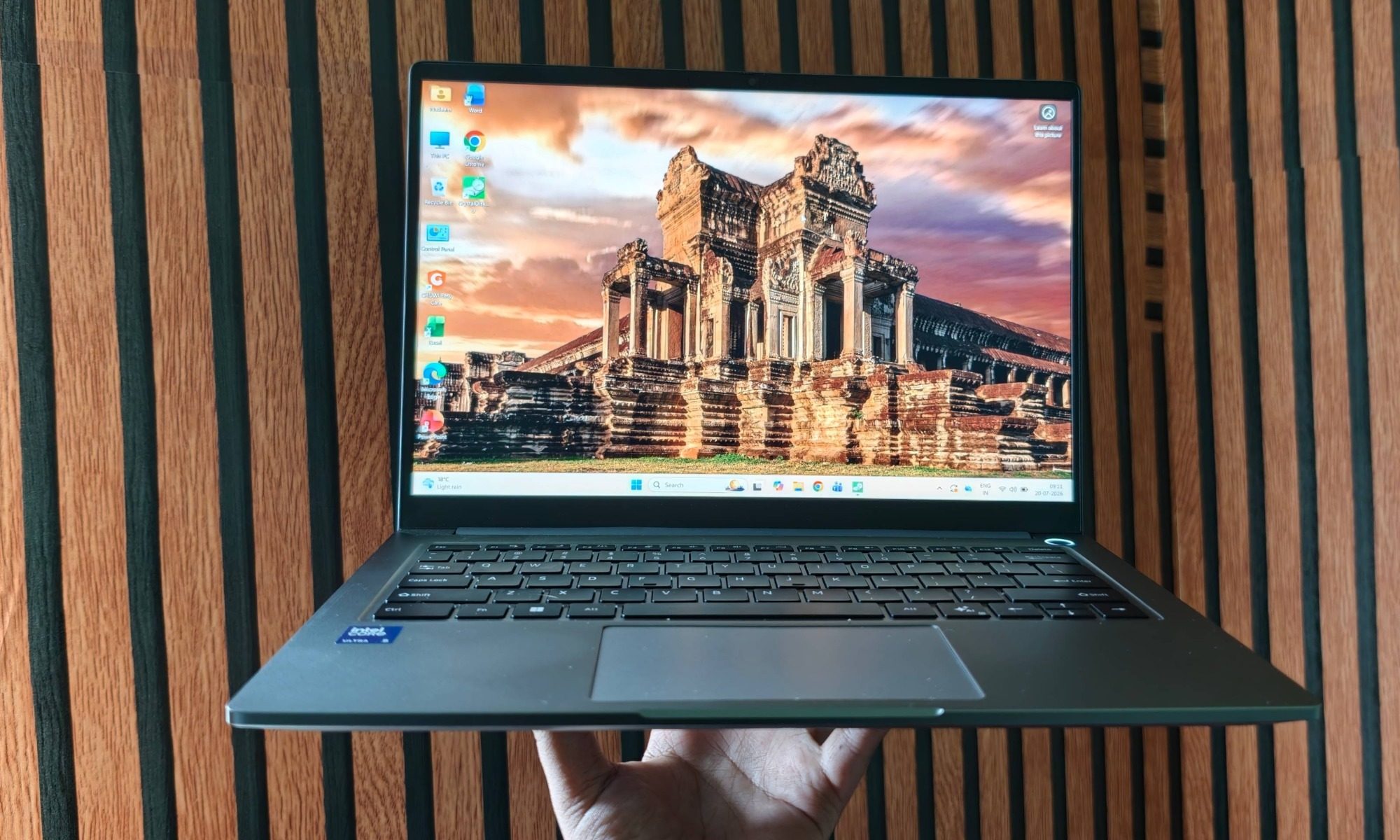
Rest in peace, Trackpoint. We barely needed ye. Although a pointing stick — which is apparently the brand-agnostic name for the Trackpoint — was popular on laptops in the late 1990s and early 2000s, the only company to carry the tradition forward has been Lenovo. You’ll find the iconic red Trackpoint on just about every ThinkPad laptop available, but Lenovo is doing away with the design at CES 2025 with its new ThinkPad X9.
The Trackpoint is, in 2025, not very useful. Lenovo tells me that the change is to signal a modern approach to the ThinkPad range, the roots of which go way back, to when ThinkPads were branded with an IBM logo. Just a few months back, we looked at the Lenovo ThinkPad X1 2-in-1, which still had the Trackpoint. Now, it’s gone, and seemingly gone for good.

At least the ThinkPad X9 looks like one heck of a laptop otherwise. Out of the gate, Lenovo is offering the new X9 with either a 14-inch or 15-inch display, and both are branded as being among Lenovo’s Aura Edition laptops (read our Lenovo Yoga Slim 7i Aura Edition review for the specifics on this range of laptops). Both models are also meet Microsoft’s Copilot+ standards, leveraging an Intel Lunar Lake CPU for both battery life and access to AI features.
Externally, Lenovo is using an OLED display across both the 14-inch and 15-inch model, and both use a haptic touchpad along with the well-known (and loved) ThinkPad keyboard. Under the hood, Lenovo says the laptop is serviceable by removing the bottom covering, allowing you to replace the SSD and battery if you need.


And, of course, you can’t have a laptop released in 2025 without a little dose of AI. It’s called Lenovo AI Now, and the company describes the feature as an “advanced on-device AI assistant that brings powerful, real-time intelligence to users.” It’s similar to something like Nvidia’s Chat RTX, as it uses a large language model (LLM) to provide a chatbot that only knows about your local files. Lenovo built the assistant with Llama 3.0, so hopefully it will work well.
It has some interesting features outside of searching for documents. Lenovo says the AI assistant can work across devices, allowing you to search for things regardless of the device you’re on. Lenovo AI Now isn’t exclusive to the ThinkPad X9, either — it’s available to download on several supported Lenovo machines.
Although it’s disappointing to see the Trackpoint bite the dust, the ThinkPad X9 looks fantastic. Both the 14-inch and 15-inch models will be available beginning in February, starting at $1,399 and $1,549, respectively.