1. Home
  2. Computing
  3. Apple
  4. Business
  5. News

Samsung dedicates 200 employees to producing displays for Apple

Add as a preferred source on Google

Merely mentioning Apple and Samsung in the same breath brings to mind images of a fierce rivalry. That rivalry still certainly exists at certain levels within both companies, but it isn’t going to stop them from working with each other when there is a clear benefit.

Samsung has dedicated a team of 200 employees to working on displays exclusively for Apple, Bloomberg reports. This team was created on April 1, a date that also saw Samsung splitting its display division into separate LCD and OLED units.

Recommended Videos

Currently, Samsung is providing larger displays — those for iPads and MacBooks — but reports from as early as last year say that Samsung may provide the screens for the next iPhone.

Information on Apple-related business can only be shared within the 200-person group, which is likely a large part of the reason it was created, and possibly a condition to securing the current orders. This could also help win future screen orders for other products.

“The new exclusive team for Apple implies that the relationship between Samsung and Apple has improved,” IHS Inc. analyst Jerry Kang told Bloomberg. “This also suggests that Samsung Display will win screen orders from Apple, such as for the Apple Watch.”

This whole arrangement may seem counter-intuitive given that Samsung competes with Apple in several markets, but orders from Apple are generally large, and pay very well. Moreover, Samsung has been fabricating chips for Apple for years, so this is just another step in the same direction.

Samsung isn’t the only company competing with Apple even as it supplies parts for the company — LG supplies Apple with displays as well. In 2013 a MacBook owner filed a class action against Apple over the LG-made Retina display, which he claimed suffered from “brightness, color and image display flaws.” The Samsung-made display for the same model exhibited none of those issues.


Kris Wouk
Former Contributor
Kris Wouk is a tech writer, gadget reviewer, blogger, and whatever it's called when someone makes videos for the web. In his…
Claude’s Sonnet 5 is built to do more on its own and cost you less
Better than its predecessor, nearly as good as the flagship, and meaningfully cheaper than both.
Art, Floral Design, Graphics

Every major AI lab is racing to prove its models can work autonomously with minimal hand-holding; we’re now seeing pricing emerge as the next battleground. 

Anthropic just fired its latest shot, Claude Sonnet 5, a model the company says performs nearly as well as its flagship Opus 4.8 at a fraction of the cost.

Read more
Apple Creator Studio adds AI tools across Final Cut Pro, Logic Pro and Pixelmator Pro
Final Cut Pro gets AI captions, Auto Mask and better Pixelmator Pro workflows in Creator Studio update
Computer Hardware, Electronics, Hardware

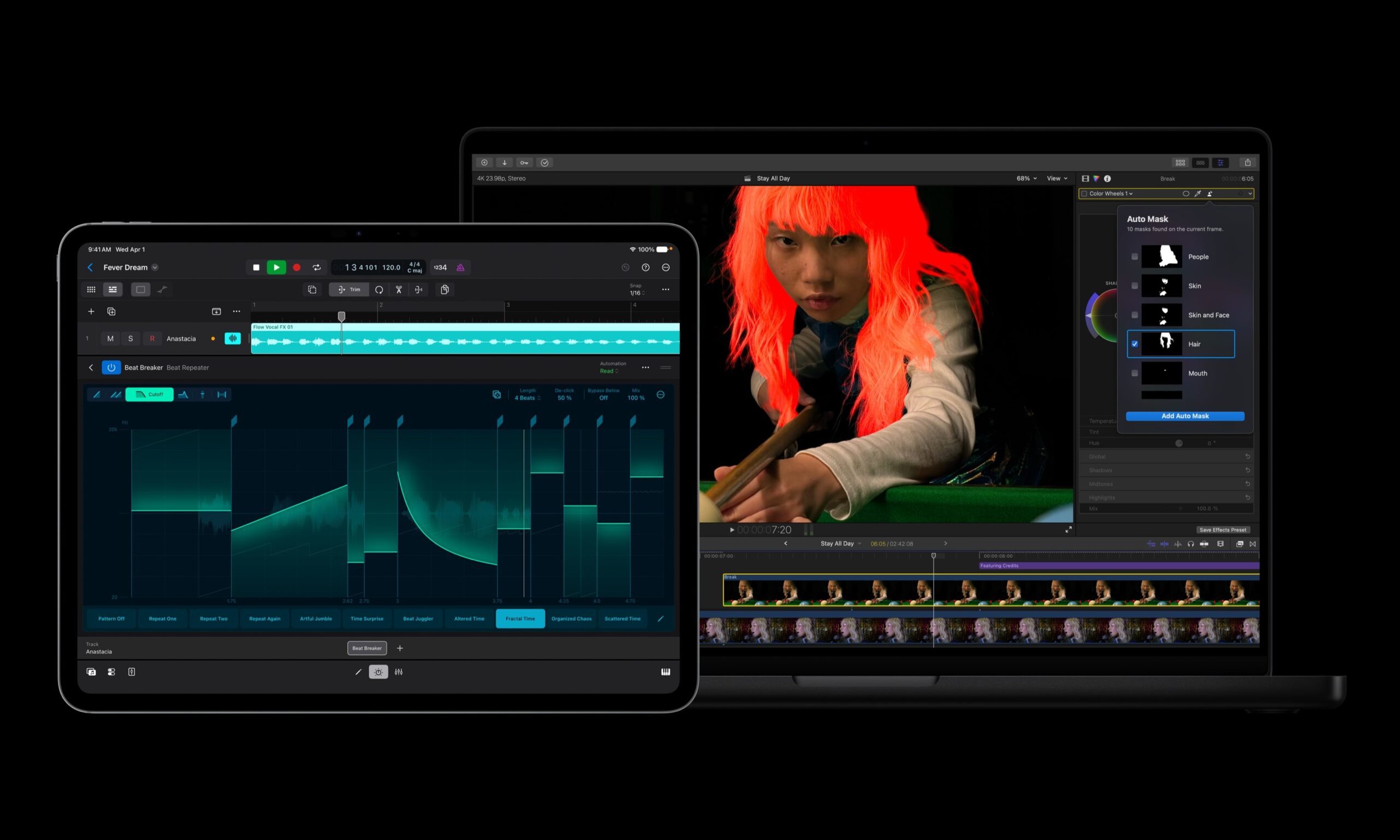
Apple has introduced a major update to Apple Creator Studio, adding new AI features, deeper Pixelmator Pro integration, and workflow upgrades across Final Cut Pro, Logic Pro, Keynote, Pages, Numbers, Motion, Compressor, Freeform, and Final Cut Camera.

The update makes Creator Studio more useful across Mac, iPad, and iPhone, especially for people who move between video editing, image editing, presentations, documents, spreadsheets, and music production.

Read more
AI browsers like Perplexity Comet can be tricked into spilling your password through BioShocking exploit
Six AI browsers were found leaking saved passwords and many of them haven't fixed it yet.
MacBook Air in hand, Comet browser loaded—let’s see what Perplexity’s AI can really do

Security researchers just found a strange way to trick AI browsers into handing over your passwords. They managed to trick AI browser agents into exposing sensitive data like saved passwords, session cookies, and private tokens by disguising the theft as part of a harmless "game."

The technique is called BioShocking, named after the popular video game BioShock, where a brainwashed character is manipulated into believing a false reality. Once an AI browser falls for the same trick, it stops following its own safety rules entirely.

Read more