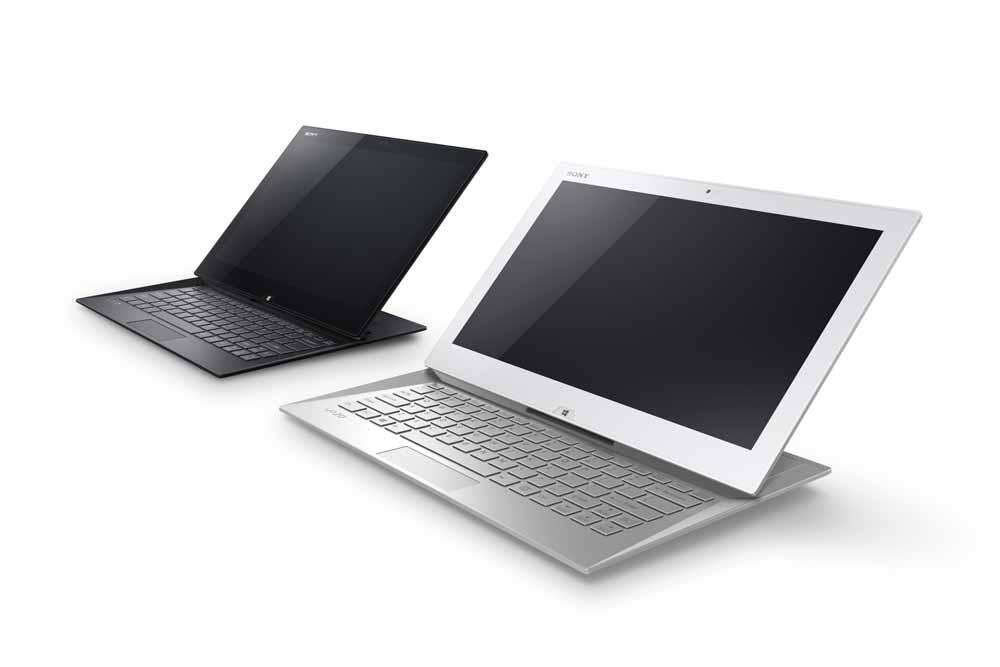
At this year’s CES the higher-ups at Sony talked about creating a more unified experience across all of their product categories. After all, what’s the point of being a multifaceted electronics giant if you don’t get some synergy going between the HDTVs and laptops and music tech and cameras? We saw the first inklings of this strategy in the Sony Vaio Fit E notebook, and now the company is showing off more examples at Computex. The Sony Vaio Pro 11- and 13-inch Ultrabooks and the Vaio Duo 13 slider are coming our way in just a few days.
The Sony VAIO Duo 13 is an update to the Duo 11 we reviewed earlier this year. As our own Matt Smith pointed out, the Duo 11 is a great idea that’s flawed in its execution. The Duo 13 attempts to address the issues of the last generation while maintaining a similar footprint and weight (2.8 pounds). Along with a larger 13.3-inch display, this new Duo features a full-sized, backlit keyboard inside a carbon fiber case that is light and sturdy. There’s even room for a teeny, tiny touchpad, though whether it’s useful is to be determined.
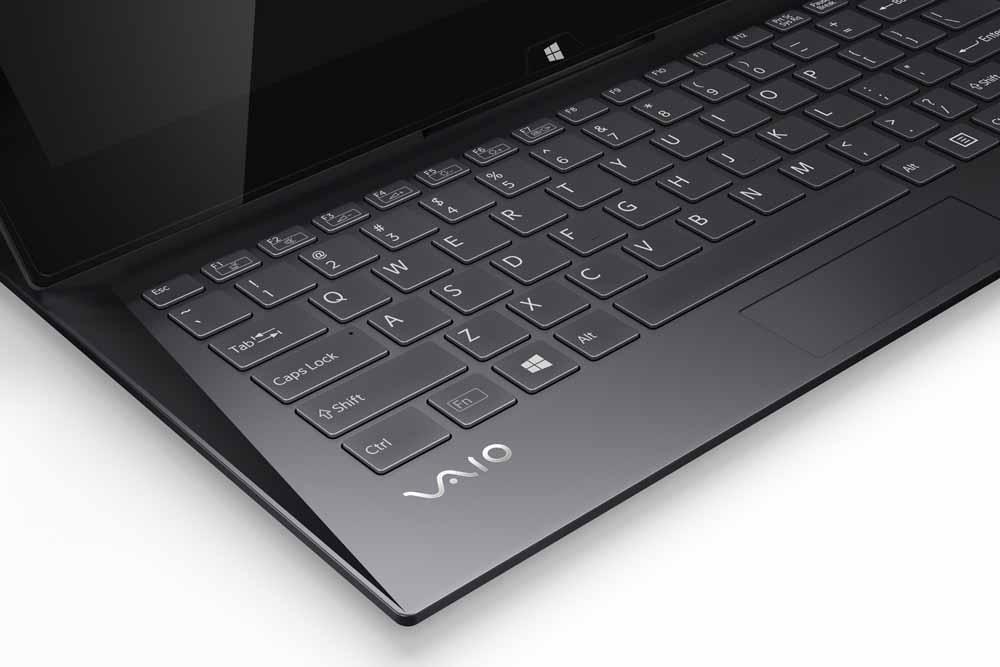
We got a preview of the Duo 13 back in April and the overall build appears sturdy, as does the hinge mechanism, which is easy to operate and takes up less space than before. The display still has limited angles/positions, which is touted as an asset in this version since the Duo 13 is pen-enabled. The pressure-sensitive digitized pen is backed by a few useful applications, including one for notes and ArtRage Studio Pro. Luckily, the Triluminos display will make an excellent canvas and photo frame. This is the same screen technology as found in Bravia TVs and Sony promises great color accuracy and high quality.
Inside, the Duo 13 benefits from Intel’s newest 4th-generation Core i (Haswell) processors up to Core i7. The slider also includes NFC technology for easy pairing with Sony media products. Another major feature Sony is touting is the Duo’s 8-megapixel camera, which is supposed to be good enough for scanning documents. It comes with CamScanner for that purpose.


The Duo 13 will be available June 9t in two colors, Carbon Black and Carbon White, starting at $1,400.
If the hybrid form factor isn’t your thing and you’re in the market for an Ultrabook, Sony would like you to slide your eyes on over to the Vaio Pro. Available in two sizes, 11.6- and 13.3 inches, the Vaio Pros also sport Haswell processors and full HD Triluminos displays. They’re both very light – the 11-incher coming in at just under 2 pounds, and the 13-inch model weighing just 2.3 pounds. Carbon Fiber helps with the light/durable balance here as well.

In addition to 4th-generation Core i CPUs, the Pro 13 also features a PCIe solid-state drive, which is much faster than other SSDs. Since this technology already delivers exponentially faster performance over traditional spinning drives, the Vaio Pro 13 should be a major speed demon. The thin chassis means a thin battery. If you need extra long life, Sony does provide a sheet battery for both the 11- and 13-inch models that doesn’t add much weight and maintains the sleek line of the design.
The VAIO Pro 13 has a full-size, backlit keyboard with decent travel. The keyboard on the 11-inch model is less comfortable and the pre-production model we tried felt more cramped than it should have been. We’re looking forward to testing the final version to see if this is still an issue. We hope not, since the smaller Pro definitely appeals to the mega mobile type.


Prices start at $1,150 for the 11 and $1,250for the 13. Both come in Carbon Black or Carbon Silver and will be available June 9.