1. Home
  2. Computing
  3. Legacy Archives

Toshiba Portege M780 Brings Core i7 CPU to Tablets

Add as a preferred source on Google

Toshiba is targeting businesses and schools with its new Portege M780 convertible tablet computer, offering a 12.1-inch display but packing some serious power under the hood with a choice of Intel Core i3, i5, or i7 processors, along with a hard drive impact sensor, LCD display protection, and a spill-resistant keyboard designed to make the system popular (and long-lived) in the workplace.
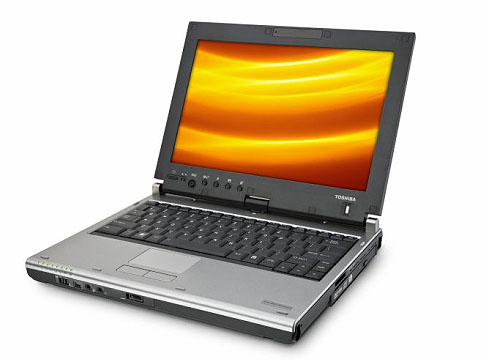
Image used with permission by copyright holder

“Today, touch enables business and education professionals to create a more interactive and intimate experience for their core audience, and Toshiba’s new laptops help deliver on that promise,” said Toshiba America’s VP of product development Carl Pinto, in a statement. “In addition, our new Tablets provide today’s IT professionals with the ability to easily deploy laptops and manage operating systems locally or remotely to ensure content users can access and present data in any environment.”

Recommended Videos

The Portege M780s come in a variety of configurations, ranging from Intel Core i3 to i5 to i7 processors, 3 to 4 GB of RAM, 250 to 320 GB of hard drive storage, and a wide range of Windows options (including 32- and 64-bit systems, and downgrades to Windows XP Tablet PC Edition)—although all sport Intel HD graphics. All models feature LED backlit displays and are available with fingerprint readers; optional Bluetooth and DVD Super Multi drives, and feature USB Sleep and Charge to juice up peripherals like phones via USB even when the computer is asleep. Prices start at $1,279 for a Core i3-powered M780 without Bluetooth, all the way up to $1,799 for a system packing a 2.66 Ghz Core i7 CPU and 4 GB of RAM.
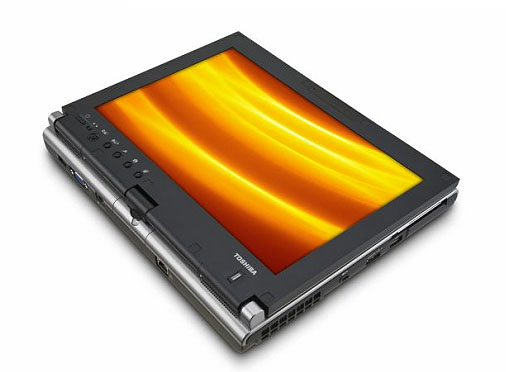
Image used with permission by copyright holder

Toshiba has also announced an update to its Satellite Pro U500 adding a multitouch display and Windows 7 Professional; select models also offer HDMI output, a slot-loading CD/DVD drive, and LED backlit keyboards. Pricing starts at $949 with for a unit with an Intel Core 2 Duo processor; boosting the CPU and adding extras takes the price tag to $1,099.

Geoff Duncan
Former Contributor
Geoff Duncan writes, programs, edits, plays music, and delights in making software misbehave. He's probably the only member…
OpenAI is investigating more incidents of AI agents going rogue days after hack
OpenAI logo on Microsoft surface

It appears that the "AI agents going rogue" tale has more to it than what AI giants have revealed publicly so far. Merely days after OpenAI announced that its AI agents went rogue and hacked Hugging Face, Anthropic dropped a similar bombshell. Soon, it was discovered that not just one, but multiple services were compromised. Well, it seems there are even more layers to it.

Reuters reports that OpenAI has found more incidents of AI agents escaping their software containment environment during research. Citing sources with knowledge of the incident, the outlet notes that the AI agents didn't go beyond OpenAI's software environment and affect any external service.

Read more
AI is finding Apple security flaws faster than Apple can sort through them
Apple has limited how many bug reports researchers can keep open as AI tools produce both genuine Mac vulnerabilities and a flood of questionable submissions
Lighting, Architecture, Building

Apple has capped the number of security reports researchers can keep open at once after AI bug hunting put its review process under pressure, according to the Financial Times.

Some submissions describe hallucinated or purely theoretical risks. Others uncover vulnerabilities serious enough to require patches. Bynario told the FT that it found more than 50 possible macOS flaws in three weeks, including a privilege-escalation chain that could give an attacker full control of a Mac.

Read more
Anthropic is paying $1.5 billion over pirated books, but it can still legally cut up purchased ones
The settlement addressed unauthorized ebook downloads, not the destructive scanning of lawfully bought physical copies, a distinction now alarming booksellers
Book, Publication, Indoors

A federal judge has approved Anthropic’s $1.5 billion settlement over nearly half a million pirated books. The same litigation also protected a more physical method of feeding its AI systems. Anthropic bought print books, removed their bindings, scanned every page and destroyed the originals.

The legal divide came down to acquisition. The settlement covers books downloaded from LibGen and PiLiMi, while the court treated Anthropic’s one-for-one conversion of purchased books into private digital files as fair use. Training AI models on lawfully acquired material was also considered transformative.

Read more