
  1. Home
  2. Computing
  3. Legacy Archives

Microsoft urges Windows 7 users to install Service Pack 1 before April 9

Add as a preferred source on Google

windows-7-logo-pcsAs Microsoft winds down free support for Windows 7, it’s pushing out one of its only service packs (SP1)  to users who have yet to install it. Unless you have SP1 on your computer by April 9, Microsoft will stop supporting your computer with future security and performance fixes, so it’s imperative that you take the time to get this service pack.

Windows users should be familiar with service packs – a feature that basically consists of a number of fixes that are all delivered in one big software update. Microsoft actually rolled out Service Pack 1 for Windows 7 back in February, 2011, but because support for it ends within 24 months, the update will expire on April 9, 2013.

Recommended Videos

There’s a good chance  you already have SP1 installed, especially if your computer is set to automatically receive updates from Microsoft. You can check to see if you already have the service pack installed by following these instructions. According to Microsoft, starting today, “the installation will be fully automatic with no user action required for those who already have Automatic Update enabled.” 

If you don’t have it, it’s not difficult to get this very important Windows 7 update. Depending on whether you’re running the 32-bit or 64-bit Windows 7, you will need to free up between 750MB and just over 1GB of space on your hard drive to install SP1. Otherwise, you will need to head over to Download Center to grab the service pack yourself, which takes about 30 minutes to download.
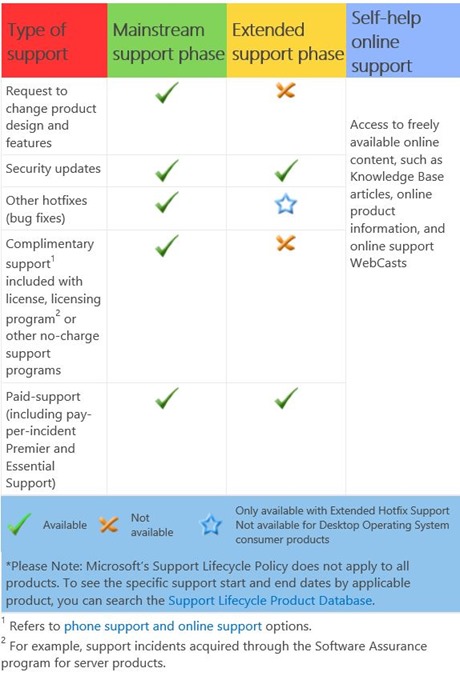
windows 7 support chart
Image used with permission by copyright holder

Once your copy of Windows 7 is up to date, Microsoft promises to keep providing updates and free “mainstream support” until January 13, 2015. That said, if you require help with Windows 7 beyond 2015 (and until January 14, 2020), as you can see in the chart above, you’ll have to pay Microsoft for “extended support.”

Gloria Sin
Former Contributor
Gloria’s tech journey really began when she was studying user centered design in university, and developed a love for…
Google changes its Workspace privacy promise on ads, and opting out limits Personal Intelligence
Smarter AI answers, with a side order of ads.
AI mode in Google Search

There’s no such thing as a free recommendation. Google’s latest policy tweak is a clear reminder. Google has long promised that your Gmail, Drive, and Google Photos content never helps it personalize ads. 

However, since October 16, 2026, its privacy policy adds a catch. The promise lapses if you let other ad-showing Google services use that content. That means using Personal Intelligence, an opt-in tool that lets Google’s AI search read your connected apps, does exactly that (via Google).

Read more
OpenAI is locking its most advanced AI models offline after a string of security scares
OpenAI’s fake internet is a safety fix and an admission.
openai-anthropic-logo-on-screen

Part of me is relieved that an AI lab is hitting the brakes. The other part wishes it hadn’t taken real incidents to get there.

OpenAI said Friday that its most advanced models will now train without live internet access. Instead, they’ll practice on a cached, simulated copy of the web.

Read more
Your Windows touchpad is about to make scrolling long pages way less tiring
Three touchpad tricks that make long documents feel a lot shorter.
Windows new scrolling feature

Today I learned about a touchpad tip that I think every Windows laptop user should know. Microsoft shared it as its Friday Windows tip of the day, and it’s all about scrolling.

If you read long documents, browse webpages, or write code on a Windows laptop, you know the drill. You swipe, lift your fingers, and swipe again until you reach the part you need. Microsoft has three touchpad features that cut down on all that swiping.

Read more