

In a world where digital transformation is accelerating at an unprecedented pace, AI-driven data analytics has become the cornerstone of both cybersecurity and public safety innovation. As organizations collect and process more data than ever before, the ability to secure, analyze, and act on this data in real time has become a critical differentiator.
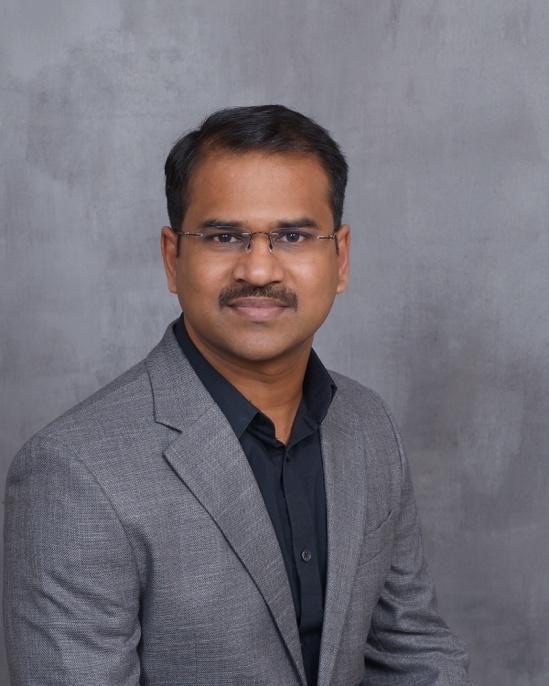
At the forefront of this evolution is Shamnad Mohamed Shaffi, an accomplished data architect with over 18 years of experience. He stands among the leaders at the intersection of AI, data architecture, and public safety innovation. His work spans multiple industries and has redefined how real-time data can drive enterprise security, national compliance, and scalable digital transformation. Recently honored with the 2025 Global Recognition Award, Shamnad is known for developing intelligent, ethical, and high-impact solutions that are helping organizations transition from reactive to proactive data strategies.
Real-time public safety intelligence platforms
One of Shamnad’s impactful contributions is the development of a real-time, mission-critical data platform, originally created to assist legal teams in responding to lawful queries from federal agencies. This platform is designed to provide law enforcement and emergency responders with instant, secure access to crucial information. Built to support high-availability scenarios like 911 services and emergency incident response, this solution ensures compliant and auditable data retrieval in life-critical moments.
Shamnad says, “Public safety today demands precision, speed, and accountability. The right data, at the right time, can save lives.”
The platform’s architecture supports seamless integration with public sector systems while enforcing strict access controls and logging for digital traceability. By equipping first responders with timely insights, the solution improves field response time, operational coordination, and public safety outcomes.
The rise of AI-driven data marketplaces
To break down data silos and democratize access, Shamnad developed an enterprise-wide Data Marketplace—a centralized, AI-enabled platform that allows teams to discover, explore, and analyze curated datasets. This marketplace streamlines data governance while promoting cross-functional collaboration. Each dataset is tagged, classified, and enriched with metadata, ensuring transparency, traceability, and trust.
Shamnad explains, “The Data Marketplace is more than a platform—it’s a shift in how organizations value, share, and act on data.”
By integrating this marketplace with AI analytics tools and dashboards, Shamnad has enabled various departments—ranging from compliance and finance to marketing and operations—to operate from a single source of truth. As a result, the marketplace has improved data literacy across organizations and accelerated decision-making cycles for both business leaders and analysts.
Accelerating decision-making with zero-ETL architecture
According to Shamnad, “We built Zero-ETL not just for speed, but for action. It’s about empowering enterprises to make decisions in real time, not retrospect.”
To address latency challenges in traditional data systems, Shamnad advocates a Zero-ETL architecture — a transformative approach that eliminates the delay between data ingestion and insight generation. This innovation allows organizations to process and analyze data in real time without the overhead of extract-transform-load cycles. This architecture supports applications in smart cities, digital health, industrial automation, and emergency services, where real-time action is critical.
His work has been recognized at multiple industry conferences and published in leading journals and professional forums, including ISACA and DAMA, where his insights continue to influence best practices for secure, low-latency data integration. By enabling immediate access to actionable insights, the Zero-ETL architecture is reshaping how enterprises think about data ingestion, speed, scalability, and strategic responsiveness.
Championing ethics and governance in AI
Underpinning all of Shamnad’s technical innovations is a commitment to ethical AI and data governance. He actively builds frameworks that prioritize data privacy, regulatory compliance, and algorithmic transparency. This is particularly relevant in sensitive sectors such as healthcare, where mishandled data can lead to not only compliance violations but also eroded public trust.
Shamnad emphasizes, “Trust is the foundation of intelligent systems. Without ethical frameworks, innovation becomes risk, not reward.”
He is an active member of international organizations such as IEEE and BCS and serves on review panels and advisory boards focused on data analytics, cloud computing, cybersecurity, AI ethics, and data management. He leads by example through mentorship and thought leadership. He is an active speaker at conferences and contributes to scholarly publications, shaping industry discourse and helping train the next generation of data professionals.
“Innovation is only valuable when it’s secure, scalable, and inclusive. My mission is to build systems that earn trust while enabling transformation.”
Scaling impact across critical sectors
Shamnad Mohamed Shaffi’s pioneering contributions in AI-driven data architecture go beyond theoretical frameworks. From real-time public safety platforms and cybersecurity automation to scalable data marketplaces and zero-latency pipelines, his work delivers tangible impact across sectors. As threats become more dynamic and systems more interconnected, his architectural blueprints offer organizations a resilient path forward—one that’s rooted in intelligence, ethics, and purpose.
Shamnad aims to expand the impact of AI and data analytics in critical domains such as finance, healthcare, cybersecurity, and cloud computing. He is focused on scaling real-time, secure data architectures that enable predictive governance, national resilience, and sustainable innovation. By continuing to lead strategic initiatives, he hopes to shape the next era of intelligent systems that are ethical, inclusive, and built for societal benefit.


