  1. Home
  2. Emerging Tech
  3. News

World’s most powerful rocket even more powerful than first projected

Add as a preferred source on Google

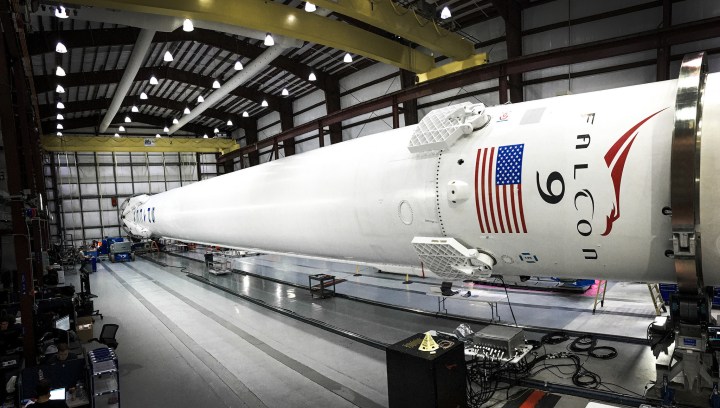
When it comes to the Space X program, Elon Musk can’t help but boast about the system’s capabilities. This time around the fearless leader of the SpaceX program is crowing about the Falcon 9 and Falcon Heavy, both of which are turning out to be stronger than initially projected.

According to updated specs recently posted on the Space X website, the Falcon 9 rocket is capable of carrying up to 50,265 pounds to a low earth orbit. This is a significant jump from the 29,000 pounds previously referenced for the space vehicle. The Falcon Heavy, which Musk describes as a beast, is capable of hauling 119,930 pounds (54 metric tons) up from the previously projected 116,845 pounds. Musk confirmed on Twitter that these values were obtained through more careful testing of the spacecraft and did not involve changes to the hardware of the systems.

Recommended Videos

Hauling capacity isn’t the only parameter receiving a boost. According to Musk, the company also plans to increase the rate liftoff thrust of both the Falcon 9 and the Falcon Heavy. If all goes as planned, the Falcon 9’s liftoff thrust will be increased later this year to 1.71 million pounds up from the current 1.3 million. The Falcon Heavy already measured a slight boost in thrust following testing, increasing from 5.1 million pounds on liftoff from the previously estimated 4.5 million.

To put that value into perspective, the thrust of a single Falcon Heavy is equal to the combined thrust of eighteen 747 aircraft operating at full thrust. Moreover, this value is twice the thrust of any other rocket currently being used, making the Falcon Heavy the world’s most powerful rocket.

Musk hopes to improve its rocket technology in the coming years as it plans for a 2018 trip to Mars. The company previously targeted 2022 for it first Mars landing but recently moved up that date by a few years. This first Mars trip will see the transport and landing of an unmanned Dragon capsule with future Red Dragon launches bringing people, instrumentation, and more to the red planet.

Kelly Hodgkins
Kelly's been writing online for ten years, working at Gizmodo, TUAW, and BGR among others. Living near the White Mountains of…
AI’s new cancer-screening partner has four legs and a very good nose
A 10-minute breath sample could give cancer-sniffing dogs something important to say
Dognosis, Indian Startup training AI and Dogs for cancer-screening Featured Image

AI apparently doesn’t need to replace every biological system. Dogs are still keeping their jobs, at least for now. An Indian startup from Bengaluru, Karnataka, is training dogs with sensors and machine learning. Patients breathe normally into a face mask for about 10 minutes, ship the sealed sample to a lab, and let the dogs get to work.

The dogs are trained to identify changes in volatile organic compounds, or VOCs, associated with cancer. Sensors meanwhile track signals including movement, respiration, brain activity, and body language, which Dognosis’ AI translates into standardized data rather than relying entirely on a human handler interpreting each animal’s behavior.

Read more
AI agents are sitting through students’ online courses, and colleges are struggling to stop them
The technology has moved from helping with homework to effectively impersonating students inside virtual classrooms.
Student taking notes in classroom with laptop macbook

AI cheating has already gone from asking a chatbot to write an essay to using tools that can make that AI-written work look human. We've previously talked about AI tools designed to help students cheat and the growing problem of AI detectors struggling to keep up, as well as how commonly students are already using AI for homework. Now the technology isn't merely helping students do the work. In some cases, it can effectively be the student.

Just tell the AI to take the class

Read more
Researchers built a tiny wearable patch that measures cholesterol levels from your sweat
Skipping the lab visit might actually be possible in the future.
caltech-wearable-patch-tests-cholesterol-triglycerides

Think about the last time you actually had your cholesterol checked. If you are like most people, it has probably been years since it usually means scheduling a lab visit and getting your blood drawn. Caltech researchers just built something that could change that entirely — a small stick-on patch that reads your cholesterol and triglyceride levels continuously, using sweat instead of blood.

How the sweat patch actually reads your cholesterol

Read more