  1. Home
  2. Emerging Tech
  3. Legacy Archives

Zune HD Prices Dip Even Further Below iPods

Add as a preferred source on Google

Anyone remember when the Zune was going to be the iPod killer? As it turned out, one of the big things eating away at Apple’s iPod sales is the Apple iPhone rather than any media player Redmond has spun out…but Microsoft has always said the plan to be in the PMP game for the long haul, and now the company has taken another baby-step along that road by lowering the prices on its 16 GB Zune HD and 32 GB Platinum Zune HD to $190 and $250, respectively, widening the price gap between the Zune HDs and Apple’s iPod touch line.
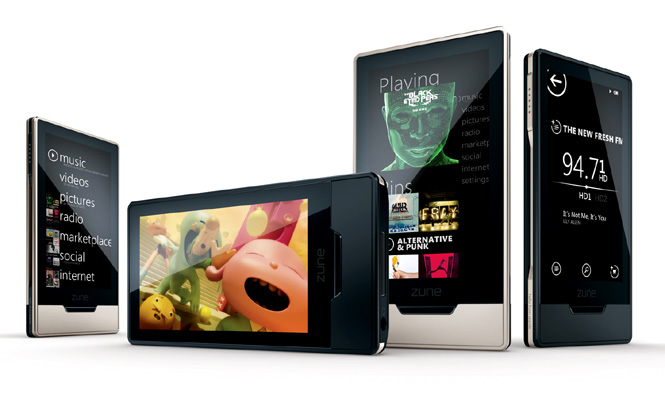
Microsoft Zune HD family
Image used with permission by copyright holder

Microsoft’s price reductions mean that the 16 GB Zune HD now costs $10 less than the 8 GB iPod touch…and offers twice the storage capacity along with HD radio and the big 3.3-inch OLED display.

Recommended Videos

However, the Zune HD line has long had an edge on the iPod touch in terms of pricing, and consumers have still gravitated towards the Apple products, potentially because of the device’s more-mature ecosystem of applications (both on the devices and on Macs and PCs) plus a wider world of accessories. However, the price cuts may help Microsoft convince a few more customers to give the Zune a try…and may be a hint that Microsoft has more Zune products coming down the pipe in the near future.

Geoff Duncan
Former Contributor
Geoff Duncan writes, programs, edits, plays music, and delights in making software misbehave. He's probably the only member…
Google’s new AI gives robots better balance, smarter hands, and teamwork capabilities
Google just made robots a lot less clumsy and a lot more helpful.
Gemini robotics 2.0

Google DeepMind just brought sci-fi robots closer to reality, and it is very exciting. Building on its original Gemini Robotics model, the company has introduced Gemini Robotics 2, an AI system designed to help robots think, move, and even work together. Unlike most robots today, which rely on pre-programmed routines or someone controlling them remotely, this new system lets robots figure things out on their own when situations get unpredictable.

Can robots finally handle whole-body tasks?

Read more
Remember Samsung’s Ballie home robot? It may finally be inching closer to reality
Leaked app wireframes give the strongest hint yet that Samsung's Ballie home robot, first shown at CES 2020, might still be headed toward an actual release.
Samsung Ballie robot in a room next to a dog feeder.

Samsung's rolling home robot has been the industry's longest-running "will it ever actually ship" joke, and I'll admit I'd mostly given up on it. Now, there's finally a glimmer of hope.

Samsung first unveiled Ballie as a concept at CES 2020. Then, it showed it as a significantly upgraded version four years later. However, the company never confirmed a release date or committed to releasing it at all. 

Read more
Polar is yet another AI browser, but it goes beyond just automating the mundane web chores
Polar wants to turn your browser into an AI-powered productivity tool
Polar AI browser

The AI browser race is entering a new phase. After spending much of 2025 trying to reinvent web search with built-in chatbots, startups are increasingly shifting their attention toward browser agents that can automate repetitive work instead of simply answering questions. The latest company to embrace that transition is Polar, a startup founded by former Perplexity engineer Kevin Zhang, which has raised $5.7 million in seed funding led by Madrona.

Unlike the first generation of AI browsers that targeted everyday consumers, Polar is designed specifically for knowledge workers. Its premise is straightforward: instead of replacing Google Search, the browser aims to eliminate repetitive tasks that professionals perform across dozens of browser tabs every day.

Read more