  1. Home
  2. Gaming
  3. Computing
  4. News

Valve pulls the plug on paid mod program, says it ‘missed the mark pretty badly’

Add as a preferred source on Google

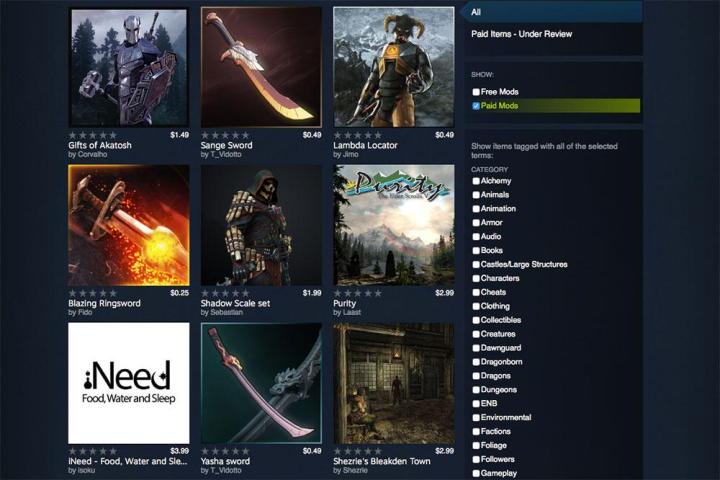
As quick as it started, it ended. Late last week, Valve announced it had found a new way to make money, by allowing home developers to charge for some of the more popular mods available for Bethesda Game’s Elder Scrolls V: Skyrim. Despite micro-transactions for hats and swords all over the marketplace already, there was swift and violent outrage to the idea that some people would charge for their mods. Now, in response to user feedback, Valve has turned the feature off, issuing a refund to anyone who purchased a mod, and assuaging the anger of the community at the very idea they might allow people to charge for their work.

The company’s intentions setting out were noble. Valve has a long history of supporting modders, which is why we now have popular games like Defense of the Ancients 2, DayZ, and even the Counter-Strike games, all of which started as mods for popular games like Warcraft and Half-Life. As the Valve employee Alden Kroll put it in the announcement today, “We thought this would result in better mods for everyone, both free & paid” which would “allow mod makers the opportunity to work on their mods full time if they wanted to, and to encourage developers to provide better support to their mod communities.”

Recommended Videos

Related: Valve and HTC to offer free Vive virtual reality kits to developers
But that wasn’t how the community saw it. Users from all over the net found their way to the message boards to complain that this was just another example of hats for Team Fortress 2, an opportunity for Valve to line its pockets with revenue from content it hadn’t produced. In response, developers sold mods for lofty prices that did little to nothing in the game, like giving the player a chicken familiar, or putting extra fruit in random places.

It’s always refreshing to see a company respond so nimbly to user feedback, even if its also in their own self-interest to continue selling games and bringing modders into their community. A number of commenters on the post are hoping that Valve will bring a “Donate” button to the Steam Workshop, allowing users who enjoy content to contribute to the people who made it directly. Modding has long been a staple of PC gaming for its ability to bring together gamers, as well as add value to a game long after its done updating. If that’s the sort of community Valve and Bethesda are looking to build, then making all mods free from the Workshop was the right choice.

Brad Bourque
Brad Bourque is a native Portlander, devout nerd, and craft beer enthusiast. He studied creative writing at Willamette…
Exclusive: Microsoft explains why RTX Spark’s Prism emulation is about more than higher FPS
Because an erratic 80 FPS will always feel worse than a silky-smooth 60.
ARC Raiders with Anti-Cheat Support running on NVIDIA RTX Spark Laptop

NVIDIA’s RTX Spark may pack a powerful Blackwell GPU, but its ability to run the massive library of existing PC games on Arm depends on a quieter piece of technology: Microsoft’s Prism emulator. Prism allows x64 Windows games and applications to run on RTX Spark’s Arm-based CPU without requiring developers to immediately rewrite them for ARM64.

During an exclusive conversation at NVIDIA’s private IFA 2026 demo, Microsoft’s Peter Dawoud explained that the latest Prism work isn't just about pushing emulated workloads to higher FPS. Microsoft is also focused on performance consistency, particularly in GPU-heavy games where the CPU still has to coordinate frames, physics, and rendering. Because a higher average FPS doesn't always mean a smoother experience, that could prove to be one of Prism’s most important improvements yet.

Read more
I played Star Wars: Galactic Racer at Gamescom, and this is way more chaotic than I expected
Four very different vehicles, dangerous shortcuts and enough mid-race chaos to make even a podracer veteran sweat.
Star Wars Galactic Racer Official Image

The first few minutes with Star Wars: Galactic Racer at Gamescom had me thinking I was playing a very pretty, very modern take on Wipeout. Then the race properly kicked off, and the Burnout DNA came roaring through.

That makes perfect sense, considering Fuse Games was founded by former Criterion developers. But knowing that on paper and actually feeling it while racing are two very different things. This is an arcade racer that really doesn't want you to sit back and admire the scenery. You're boosting, dodging, ramming rivals, dealing with power-ups and trying to pick the right racing line, all while the track throws hazards and shortcuts at you. It's loud, chaotic and, occasionally, wonderfully messy.

Read more
NVIDIA G-SYNC Pulsar is proof that gaming monitors don’t just need more Hz
NVIDIA G-SYNC Pulsar Comparison Image

There is something slightly ridiculous about the gaming-monitor arms race. We now have displays pushing 500Hz, 560Hz, and even 720Hz, with esports gamers understandably chasing every last millisecond. The problem? The faster you go, the more you're often asked to compromise on resolution.

NVIDIA G-SYNC Pulsar takes a very different approach. I got to see it in action at Gamescom, and after watching NVIDIA switch the technology on and off in front of me, I came away thinking that perhaps the industry has been asking the wrong question.

Read more