Leave it to Amazon, one of the world’s largest retailers, to seek to disrupt augmented reality and home security. The Seattle, Washington-based retailer is actively developing Alexa-enabled “smart glasses,” according to an exclusive report in the Financial Times, alongside a “smart” security camera.
Amazon’s smart glasses, which are said to resemble an off-the-shelf pair of spectacles, pack a microphone, a wireless chip of some kind, and an earbuds-free bone-conduction system that pipes Alexa’s voice straight to your inner ear. It’s reportedly being spearheaded by Babak Parviz, the founder of Google Glass, who joined Amazon in 2014, and could launch as soon as “year-end.”
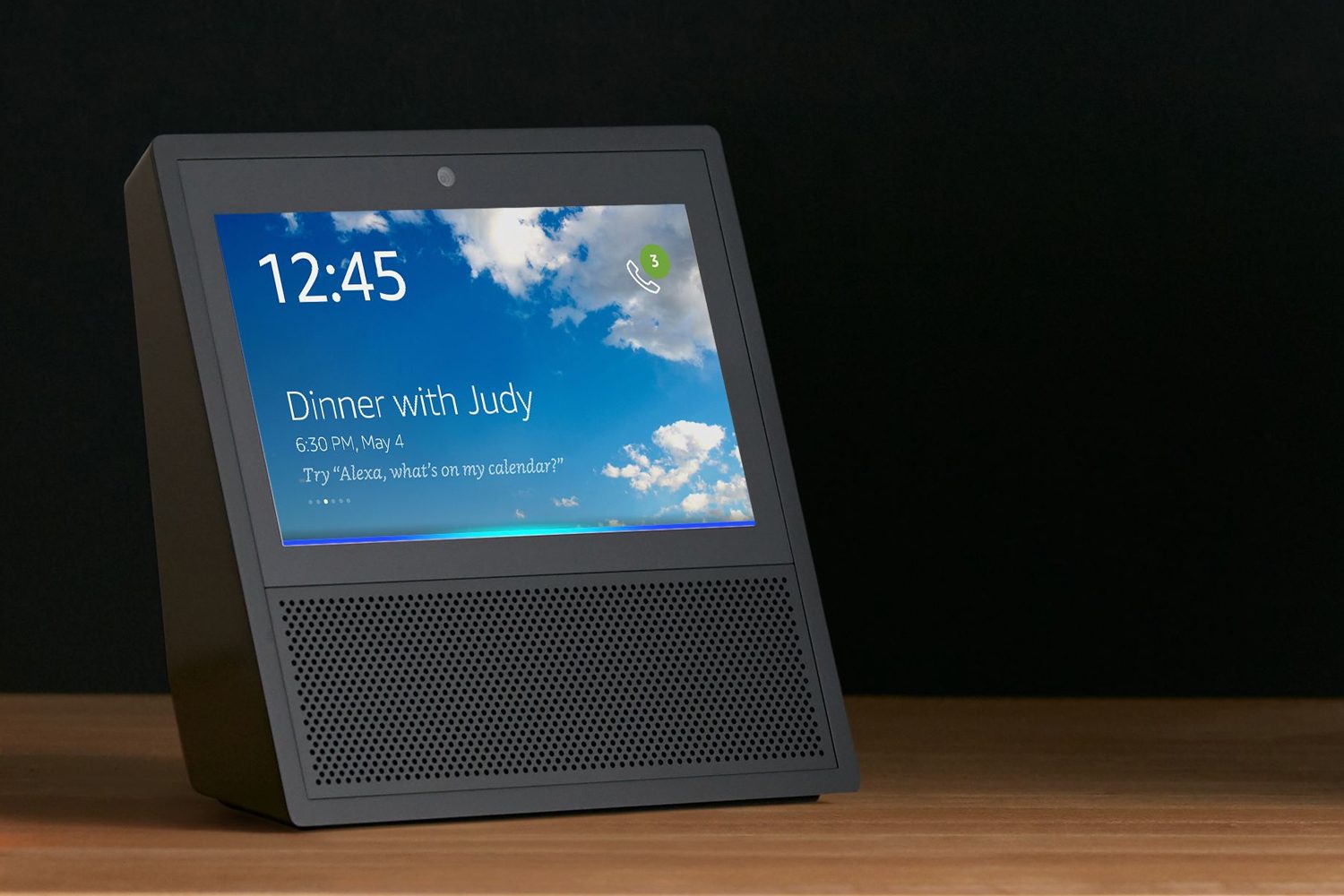
It’s not the only skunkworks project at Lab 126, Amazon’s secretive hardware research division. Engineers are reportedly developing a home security camera that would tie into Amazon’s growing Echo lineup — the Echo Dot and Echo Tap speakers, the screen-touting Echo Show, and the fashion-focused Echo Look camera. The Echo Protect would show a live video feed on the Echo Show’s screen, for example, and alert you when an Amazon package arrived at your doorstep.
Amazon isn’t the first tech giant to try its hands at AR eyewear. Google Glass, a heads-up eyepiece with bone-conduction audio and Bluetooth connectivity, quickly became the subject of controversy. Privacy advocates claimed that its built-in camera let wearers surreptitiously record the people around them, and Glass was banned from shops, bars, and restaurants before Google pulled the plug on public sales in 2014.
Others have had more success. Snapchat’s Spectacles, a colorful pair of camera-equipped shades that record ten-second videos to Snapchat, quickly sold out at pop-up vending machines across the country.
And companies like Microsoft, Facebook, and Magic Leap continue to refine their own AR solutions. As recently as August, Apple was said to be working on Project Mirrorshades, a pair of Google Glass-like AR glasses with motion sensors, transparent displays, and integrated touch panels.
But despite the challenges, Amazon sees the move into AR and home security as natural extensions of its existing ecosystem. Company executives see the Echo family, which has sold in the “tens of millions of units,” as a key way to “listen and respond” to customers needs, according to the Financial Times.
It remains to be seen if the retailer can carve out niches in these challenging markets, though. AR glasses and heads-up displays have yet to take off in the way that the Echo has, and formidable competitors like Alphabet-owned Nest, Ring, August, Netgear, and Lighthouse already offer “smart” home security cameras.