When you think of kitchen design, words like sleek, modern, contemporary, clean, and functional likely come to mind. And while you likely take steps to hide the garbage in your kitchen, Ikea wants you to put it on display with Kungsbacka, its new recycled kitchen cabinet collection.
Ikea paired up with Swedish design studio Form Us With Love to create kitchen cabinets made entirely from reclaimed industrial wood and plastic bottles. Twenty-five plastic bottles are used in each 15.75-by-31.5-inch cabinet, according to Form Us With Love.
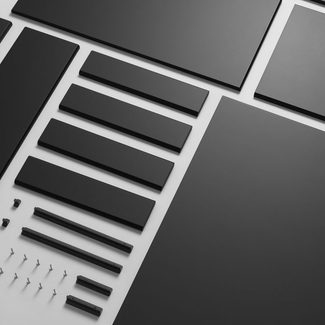 While Ikea and Form Us With Love used trash to make a functional kitchen, you would never know it by looking at the design. The cabinet fronts, colored in matte, anthracite grey, are elegant, too. “We wanted it to feel like a black t-shirt, tuned to fit right, practical and still precious,” said John Löfgren, creative director at Form Us With Love.
The furniture giant also focused on longevity and affordability. ‘Today, applying waste materials in production is unfortunately still costly and the Kungsbacka kitchen fronts could have easily ended up too expensive. Overcoming the price was a milestone in the development. Sustainability should be for everyone, not only for those who can afford it,’ says Anna Granath, product developer at Ikea.
Some Americans drink bottled water like its some sort of magic potion. In the mid-1970s, the typical American drank about a gallon-and-a-half of bottled water during the course of a year. By 2015, each American increased their bottled water consumption to more than 36 gallons, National Geographic reports.
All of this bottled water produces massive waste; and, it’s waste that’s not always recycled. The average American throws away 600 times their weight in garbage, and a large portion of that waste is plastic products, Boston College reports.
While Ikea is keeping some of these bottles out of landfills at the moment, the cabinets aren’t built to last forever; the company expects them to stay in good shape for about 25 years, though.
Ikea’s Kungsbacka kitchen will be available in February 2017.