  1. Home
  2. Smart Home
  3. Mobile
  4. Legacy Archives

Now valued at over $2B, grocery delivery startup Instacart eyes nationwide expansion

Add as a preferred source on Google

2014 was a monumental year for Instacart. At the onset of the year, the on-demand grocery delivery service was only up and running in a handful of U.S. cities. By midyear, it was on the ground in more than a dozen and was valued at $400 million. Now, with 2015 just around the corner, the company has just announced a monstrous $220 million funding round at a valuation of about $2 billion.

This new infusion of cash should help Instacart continue the pace and expand its grocery delivery business to even more cities across the U.S. The startup currently delivers to Atlanta, Austin, Boston, Boulder, Chicago, Denver, Houston, Los Angeles, New York City, Philadelphia, Portland, the San Francisco Bay Area, San Jose, Seattle, and Washington D.C. — and it expects to be nationwide by the end of 2015

Recommended Videos

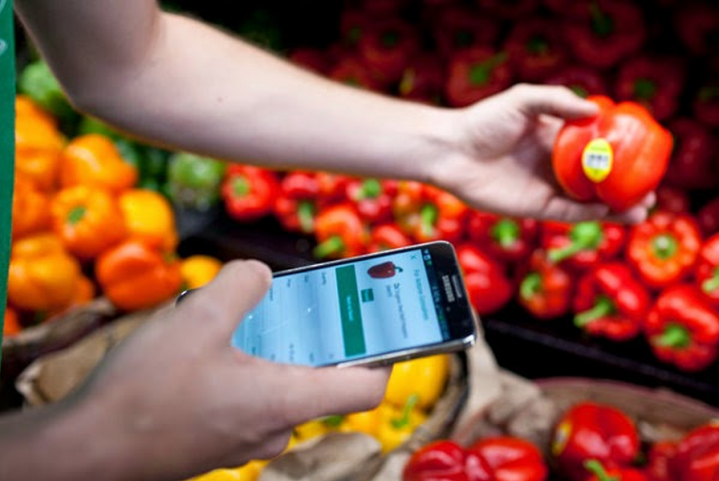
If you’re unfamiliar, Instacart works pretty much exactly how you’d expect a card-carrying grocery delivery startup to work. You start by simply visiting the Instacart site from a computer or mobile device and then add items to your cart just like you would on any other ecommerce site. After you’ve selected all the stuff you want, you then choose a delivery time, specify the location at which the groceries should be delivered, and check out with a credit card. After you’ve placed an order, Instacart instantly beams that information to the smartphone of one of its personal shoppers, who then goes to a local store, buys the groceries, and delivers the order at the arranged time.

Services like this definitely aren’t new, but with this recent $2B valuation, it’s obvious that Instacart is growing much faster than its competitors. Over the past year, the company’s revenue has grown more than 10 times over. Much of that growth comes as a direct result of the company’s agile, crowdsourced marketplace model, which has ultimately allowed it to expand operations quickly and cheaply — unlike other companies that have to set up distribution centers in every new location.

But other grocery delivery startups aren’t Instacart’s only competition. Recipe kit delivery services like Blue Apron and HelloFresh have also experienced massive growth in 2014 and offer a completely different, much more laid-back solution to the same problem. It’s hard to say which model will prevail in 2015, but regardless of wether there’s a clear-cut winner or loser, this mounting grocery delivery arms race is definitely a win for consumers.

Drew Prindle
Former Senior Editor, Features
Drew Prindle is an award-winning writer, editor, and storyteller who currently serves as Senior Features Editor for Digital…
Topics
Lutron just made it easier to control your smart home without touching your phone
Smart home voice control usually means buying yet another speaker or hub. Lutron and Sonos found a simpler fix: use the speaker you probably already own.
Electronics, Speaker, Text

If you’ve lost count of how many remotes and apps you juggle between just to dim a light or skip a song, I have something for you. Lutron just gave its Caseta smart home lineup a new shortcut, letting you control lights, shades, and Sonos playback with your voice alone.

For anyone who is catching up, Caseta is Lutron's do-it-yourself smart lighting system. It’s built around a small hub that basically talks to switches, dimmers, and plugs over a radio signal (instead of Wi-Fi), making it easier to manage the entire setup. While the company has worked alongside Sonos for a while, voice control was the one piece still missing from that partnership. That changes now.

Read more
The best smart home gym equipment
Find the connected fitness equipment that's worth your money.
Woman boxing with FightCamp.

The average workout doesn't begin with your first rep anymore. It begins with the data you've already collected. Smartwatches track your sleep and heart rate, smart rings measure recovery, and some fitness enthusiasts even use continuous glucose monitors to better understand how their bodies respond to training and nutrition. Smart home gym equipment builds on that foundation, combining connected hardware with AI-powered coaching, adaptive resistance, and long-term progress tracking to turn health insights into smarter workouts.

Smart fitness has also grown well beyond streaming workout classes. The latest machines can automatically adjust resistance as you get stronger, analyze your performance over time, and sync with the health devices you already use. Some even use AI to recommend workouts based on your goals and training history, making every session feel more personalized. If you're still deciding whether investing in connected fitness makes sense for your lifestyle, check out our guide on whether a smart home gym is worth it.

Read more
Tineco Pure ONE Station 5 Pro review: A reliable kit that’s low on maintenace, high on conveniences
An easy recommendation for anyone who wants a cordless vacuum that is genuinely easy to live with.
Tineco Pure One Station 5 Pro vacuum cleaner

See at tineco

With two young children and two dogs, my floors put vacuums through a real-world stress test every day. Between constant crumbs, pet hair, tracked-in dirt, and everything in between, there’s always something waiting to be cleaned. The Tineco Pure ONE Station 5 Pro solved those those pain points for me pretty well. It can run for over an hour and a half on a single charge, while its base station dustbin capacity outpaces many standard upright vacuums that I've tested over the years.

Read more