  1. Home
  2. Smart Home
  3. Evergreens

On-demand grocery delivery startup Instacart raises $44 million in VC funding

Add as a preferred source on Google

Roughly one full year after its 8.5 million series A round in 2013, on-demand grocery delivery startup Instacart has just concluded a massive $44 million series B funding round led by Andreesen Horowitz. This fresh infusion of cash will reportedly help the burgeoning company make its services available in every city in the United States.

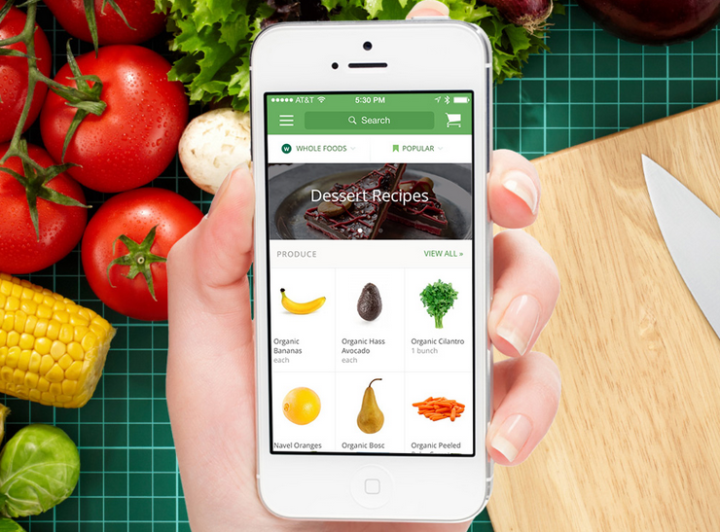
If you’re unfamiliar with it, Instacart works pretty much exactly how you’d expect a card-carrying grocery delivery startup to work. You start by simply visiting the Instacart site from a computer or mobile device, and then add items to your cart just like you would on any other ecommerce site. After you’ve selected all the stuff you want, you then choose a delivery time, specify the location at which the groceries should be delivered, and check out with a credit card. After you’ve placed an order, Instacart instantly beams that information to the smartphone of one of its personal shoppers, who then goes to a local store, buys the groceries, and delivers the order at the arranged time.

Recommended Videos

Services like this definitely aren’t new, but Instacart is growing much faster than its competitors. Over the past nine months, the company’s revenue has grown more than 15 times over. Much of that growth comes as a direct result of the company’s agile, crowdsourced marketplace model, which has ultimately allowed it to expand operations quickly and cheaply in a handful of new cities. As of April, you can now order groceries from Instacart in ten major cities across the country, including San Francisco, Austin, Boston, Chicago, Los Angeles, New York City, Philadelphia, San Jose, Seattle and Washington, D.C.

According to co-founder and CEO Apoorva Mehta, nearly every city that it’s launched in has grown more quickly than the last, so the company plans to use this new funding to continue pushing forward, and ramp up expansion efforts in the next few months. Instacart expects to have operations in a total of 17 U.S. cities by year end, and it hopes to be in all major U.S. cities by the end of 2015.

Find out more here.

Drew Prindle
Former Senior Editor, Features
Drew Prindle is an award-winning writer, editor, and storyteller who currently serves as Senior Features Editor for Digital…
Topics
Apple is reportedly looking to expand its smart home lineup with smart displays, cameras, and updated HomePods
Apple's smart home roadmap reportedly includes new displays, cameras and HomePods
Apple HomePod with Apple iPhone

Apple appears to be preparing a much broader push into smart-home hardware, with several new products in development as the company looks to expand beyond the HomePod mini and Apple TV, according to a 9To5Mac report.

The roadmap includes refreshed versions of both existing products, a new smart-home hub with a display, a larger HomePod update, and eventually Apple's first dedicated smart-home security devices. The information comes from recent reporting summarized by 9to5Mac, which notes that Siri's long-awaited AI upgrades could remove one of the obstacles that has held back new Home products.

Read more
Lutron just made it easier to control your smart home without touching your phone
Smart home voice control usually means buying yet another speaker or hub. Lutron and Sonos found a simpler fix: use the speaker you probably already own.
Electronics, Speaker, Text

If you’ve lost count of how many remotes and apps you juggle between just to dim a light or skip a song, I have something for you. Lutron just gave its Caseta smart home lineup a new shortcut, letting you control lights, shades, and Sonos playback with your voice alone.

For anyone who is catching up, Caseta is Lutron's do-it-yourself smart lighting system. It’s built around a small hub that basically talks to switches, dimmers, and plugs over a radio signal (instead of Wi-Fi), making it easier to manage the entire setup. While the company has worked alongside Sonos for a while, voice control was the one piece still missing from that partnership. That changes now.

Read more
The best smart home gym equipment
Find the connected fitness equipment that's worth your money.
Woman boxing with FightCamp.

The average workout doesn't begin with your first rep anymore. It begins with the data you've already collected. Smartwatches track your sleep and heart rate, smart rings measure recovery, and some fitness enthusiasts even use continuous glucose monitors to better understand how their bodies respond to training and nutrition. Smart home gym equipment builds on that foundation, combining connected hardware with AI-powered coaching, adaptive resistance, and long-term progress tracking to turn health insights into smarter workouts.

Smart fitness has also grown well beyond streaming workout classes. The latest machines can automatically adjust resistance as you get stronger, analyze your performance over time, and sync with the health devices you already use. Some even use AI to recommend workouts based on your goals and training history, making every session feel more personalized. If you're still deciding whether investing in connected fitness makes sense for your lifestyle, check out our guide on whether a smart home gym is worth it.

Read more