  1. Home
  2. Phones
  3. Mobile
  4. News

At last, phones with massive batteries are coming

Add as a preferred source on Google
iQOO 13, Oppo Find X8 Pro and Vivo X200 Pro -- silicon carbon battery-equipped phones.
Prakhar Khanna / Digital Trends

The smartphone industry is eyeing a rather innovation-heavy year ahead, one that could bring us more capable cameras, useful AI deployment, and newer form factors. Another welcome advancement is a possible shift to dramatically bigger batteries fitted inside phones. It should, thankfully, be a rather open approach to battery innovation and extend from flagships down to the budget segment.

According to a reliable leaker posting on the Chinese microblogging platform Weibo, a Xiaomi sub-brand could put a massive 7,500mAh battery inside one of its budget phones later this year, and the phone in question is likely to be the upcoming Redmi Turbo 4 Pro. We’ve recently looked at the Redmi Note 14 Pro Plus, which has a 5,110mAh cell inside.

Recommended Videos

Moreover, there are murmurs of an even bigger 8,000mAh battery being in the test phase at Xiaomi. The same source also mentions that with the increase in size, users won’t necessarily lose out on the fast charging perk, adding that up to 100W charging is still possible on these mammoth battery units.
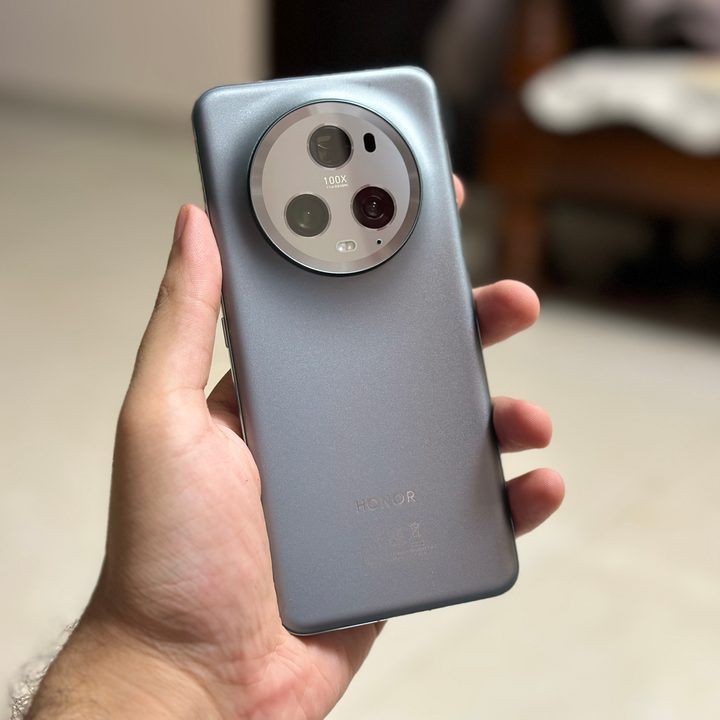
Honor Magic 5 Pro in hand.
Honor Magic 5 Pro was one of the first to embrace a silicon carbon battery. Prakhar Khanna / Digital Trends

The tech facilitating this massive jump in smartphone battery capacity is a silicon-carbon hybrid as the anode material. Or, to put it more specifically, a Silicon Carbon Composite (SiC) as the anode material compared to the traditional usage of graphite.

Silicon, when deployed as an electrode, can store ten times as many ions, which brings a massive gain in the electrochemical energy density. As a result, one can make denser batteries with a higher capacity in a smaller package. It also opens the door for faster charging, and the material itself happens to be available in abundance.

Redmi won’t be the first brand to take advantage of the battery breakthrough, though it certainly looks primed to set a new record. Honor kicked off the trend in 2023 with the arrival of its Magic 5 Pro flagship. The most recent addition to the brand’s line-up, the Magic 7 Lite, further upped the ante with a 6,600 mAh battery. Elsewhere, the Red Magic 10 Pro has a massive 8,080mAh battery with 100W fast wired charging support.
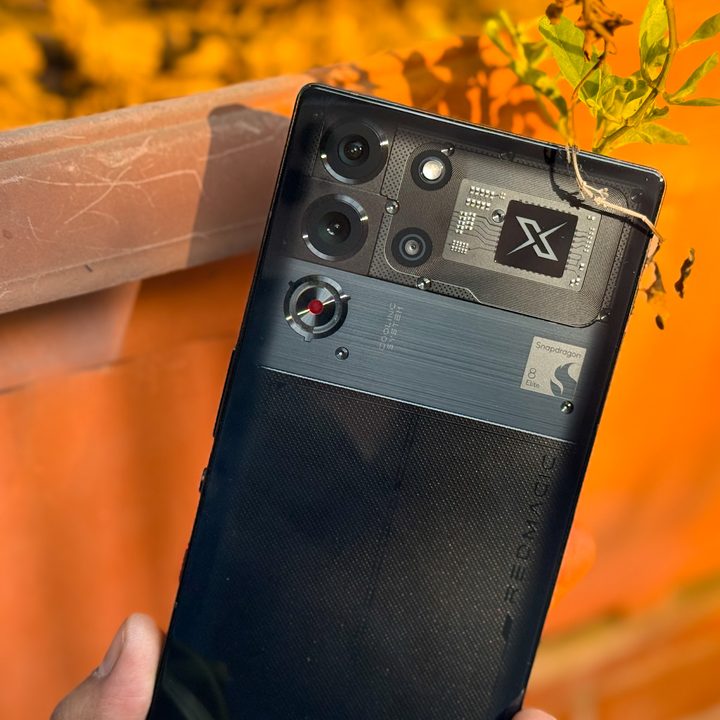
Angled macro view of cameras on the Red Magic 10 Pro.
Red Magic 10 Pro relies on a silicon-carbon battery north of 7,000 mAh capacity. Nadeem Sarwar / Digital Trends

The Realme GT 7 Pro also relies on a silicon carbon battery, and the same tech has allowed OnePlus to fit a 6,000mAh battery inside its latest flagship, without sacrificing its fast charging mojo across wired and wireless modes. The excellent iQoo 13 matched its OnePlus rival at an even lower asking price. Vivo was another Chinese brand that served a silicon-carbon battery on its camera-centric X200 Pro smartphone.

Rumors suggest 8,000mAh batteries are not too far off into the future. And if the likes of Realme and Xiaomi’s Redmi label are anything to go by, we may not have to pay a fortune to experience the benefits of this landmark innovation.

Nadeem Sarwar
Nadeem is the Managing Editor at Digital Trends.
Meta served ads containing AI-generated child sexual abuse content, continuing years of child safety failures
Meta's own ad library hosted child abuse imagery for nine months straight.
meta-logo

Meta's ad platform did something it has promised, repeatedly, never to allow again. According to a new investigation from Wired, Meta ran dozens of paid ads over the past nine months containing explicit AI-generated child sexual abuse imagery, some of which stayed live even after the company was directly confronted about them.

If this feels like a story you've read before, that's because you probably have. Just weeks before this latest report, a separate BBC investigation found Instagram running paid ads promoting child sexual abuse material in India, directing users to Telegram channels selling illegal content.

Read more
Apple’s iCloud Private Relay isn’t as private as you think
Your real IP address might be leaking, and passkeys are the snitch.
iCloud Private Relay

If you pay for iCloud+ and rely on Private Relay to hide your IP address while browsing, you might want to pay attention to this one. New research by security researchers Tommy Mysk and Talal Haj Bakry, first reported by 404 Media, reveals that Private Relay doesn't hide your IP address as well as Apple claims.

How does the leak actually happen?

Read more
This new technology could make spotting fake products easier for everyone
Your smartphone could soon tell you if the product you bought is fake
The new system combines three technologies into a single printable label.

Counterfeit goods are becoming increasingly sophisticated, forcing brands to rely on expensive authentication systems that often require specialized scanners or proprietary hardware. Researchers now believe a smartphone could do much of that work instead. A team has developed a new printing system that creates responsive anti-counterfeit labels that are more durable, easier to mass-produce, and can be verified using nothing more than a phone. The research was published in the International Journal of Materials and Product Technology.

At first glance, the technology looks like another incremental improvement in product security. In reality, it addresses one of the biggest limitations of anti-counterfeit systems today: accessibility. If authentication only works with expensive equipment, it becomes difficult to deploy at scale. By enabling smartphone-based verification, the technology could make counterfeit detection practical for manufacturers, retailers, and even consumers.

Read more