

LikeMind does not bury the lead when it comes to what it’s offering. It’s pretty much right in the name of the app. This is a social network for discovering people with similar interests, opinions, ideas, etc. It’s designed to help you find new people and socialize with them based on a commonality between the two of you, like if Facebook started linking you with people based on things that you “like.” Available this week for iOS, LikeMind is aiming to bring people nearby even closer by giving them a reason to get to know each other.
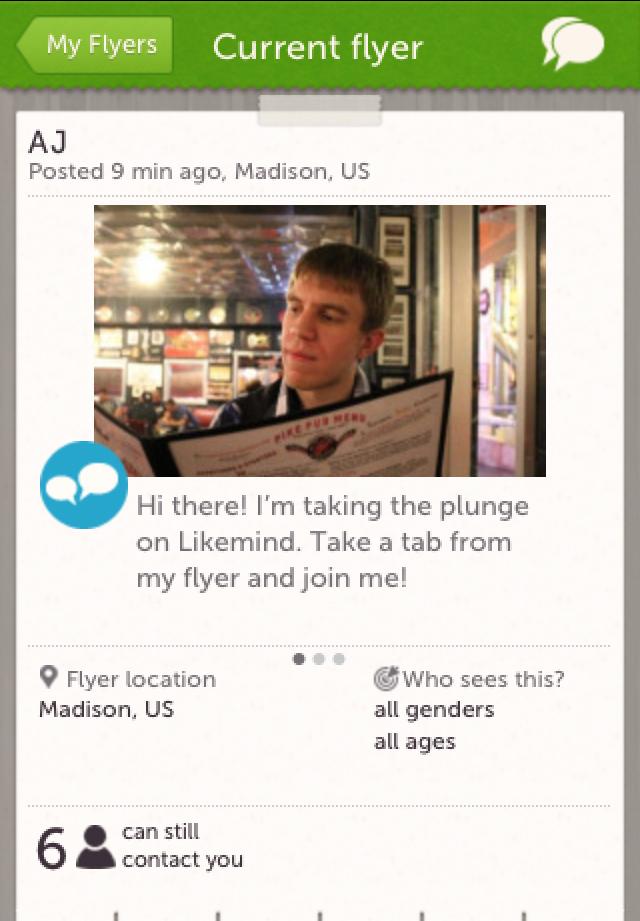 You can think of LikeMind as part social network and part Craigslist posting. The social networking is pretty much as you’d expect: You create a profile, put up some pictures, provide basic information about yourself (including your relationship status because “dating site” is always the best backup plan for any social network) to fill out said profile, and make it public for people who may stumble across you in their location-based feed of possible new friends.
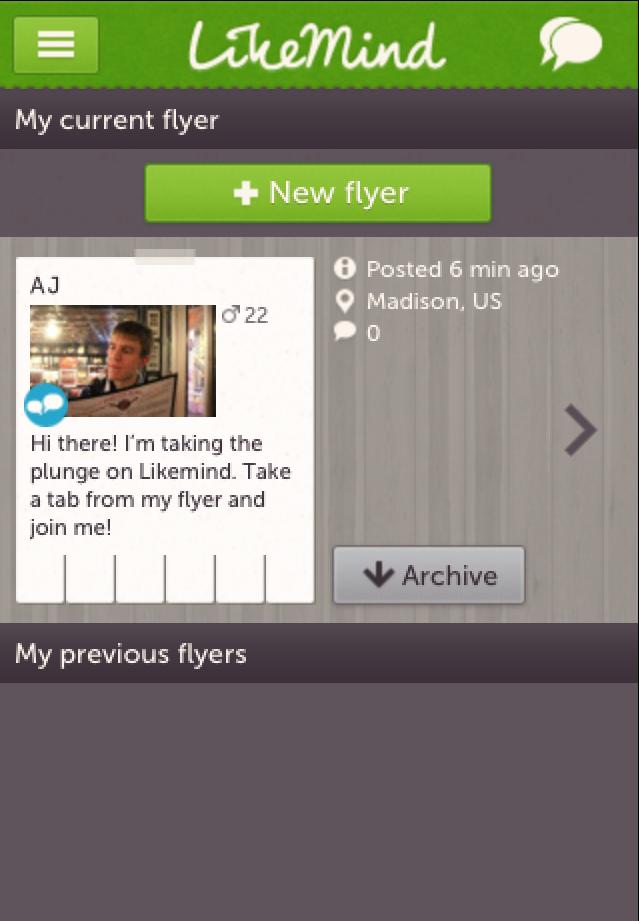
The Craigslist aspect is how you get people to notice you. Once you’ve created your profile, you pin a “flyer” on your neighborhood board. Obviously it’s a virtual board, so people from all over could find you if they did enough scrolling, but you get the idea. Your flyer consists of a blurb about you or what you’re looking for and “tabs” that people can pull to contact you. Tearing off a tab – limited to six so you’re never overwhelmed by contacts – from a flyer opens up the ability to chat with that person and you can only be contacted if you put up a flyer. Once all the tabs have been pulled, new conversations cannot commence until the poster reposts or creates a new flyer. The flyers are the driving force behind the network, encourage you to contact a person that has posted a flyer with something that interests you rather than browsing profiles – and probably just looking at pictures because you’re shallow.
 The problem with LikeMind at the moment, aside from the fact that we’re pretty sure it’s going to lead to the formation of a few new cults by just encouraging people to meet others with the exact same views and interests as them, is the fact that it’s in its infancy. Like any social network at its start, it’s sparsely populated and the users that are on it are bunched together. Though it’s designed to help you find people nearby with similar interests, you’ll be looking at people hundreds of miles away from you that share one thing: Using LikeMind.
It’s also worth noting that while you can get full functionality out of LikeMind without paying anything, taking advantage of premium features will require you to either buy LikeMind Points or earn them by inviting your friends to the platform. Features like flyer targeting, pinboard filtering, and image sharing in chats all unlock with the use of LikeMind Points. It’s a minor inconvenience more than anything, and 20 LikeMind Points – enough to unlock two of the three premium features – will cost you $3. Really, the worthwhileness of the in-app purchase depends on how much you value new friends. Let’s hope they are worth the $3.
As far as people discovery and location-based communication tools go, LikeMind isn’t cream of the crop because of its small population. That said, there are some pretty cool twists that have merit. The limited communication specifically seems like something that will go a long way in helping narrow down potential friends. Any female on a dating site is probably pleading for a similar feature to be installed. Despite fears of potentially insulating yourself with others that think like you rather than challenging yourself with new ideas and approaches, this app boils down to meeting new people and it’s always easier to start with some common ground with someone you don’t know. Just hope there’s some actually nearby you.
LikeMind is available for free from the iTunes App Store.


