  1. Home
  2. Mobile
  3. Legacy Archives

Moto X ‘unique’ bamboo backplate lands on Moto Maker

Add as a preferred source on Google

[Check out DT’s Moto X review here]

Motorola has finally unveiled its wooden back option for its Moto X handset, though its price tag is double what most people were expecting.

Recommended Videos

Leaked information over the summer from usually-reliable tipster Evleaks suggested the Google-owned company would launch the wooden backplate by the end of the year, so it got that part right. However, it also said it’d also come in four flavors – teak, ebony, rosewood, and bamboo – and at $50 apiece.

It’s turned out that we have one option, bamboo, and you’ll have to slap an extra $100 onto your order, leaving you with a $199 bill for a two-year contact.

Of course, it could be that teak, ebony, and rosewood are all on the way, but for now you’ll have to make do with bamboo if it’s wood you want on the back of your Moto X.moto-x-wood-back And take note – this is an online-only option that can be delivered in January at the earliest.
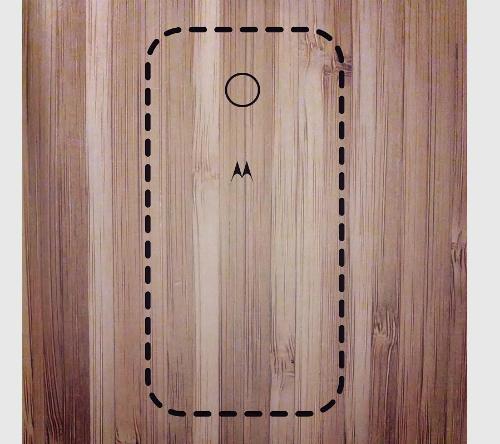
Motorola revealed the new backplate on Tuesday via its Twitter feed, a couple of days after teasing the new offering with a photo (right) of a piece of plywood with an outline of a Moto X and the message, “Put this DIY project on hold. Trust us.”

Following the announcement, Motorola CVP Lior Ron took to the company’s blog: “Since each back is made from real bamboo, no two devices will ever be the same – it’s truly a smartphone as unique as you are,” Ron wrote in a message to potential buyers.

The Moto X is Motorola’s first handset since Google acquired the company last year and is being marketed heavily on its vast array of customization options enabled through its Moto Maker site and the fact that it’s the first smartphone to be designed, engineered, and manufactured in the US.

Besides appealing to US-based consumers keen to support the economy by purchasing goods made on home soil, the move to base its operations at home also means faster shipping and more efficient control over supplies.

The Moto X comes with a 4.7-inch 1280 x 720 display, 10-megapixel rear camera and 2-megapixel front camera, 1.7GHz dual-core processor, and 2GB of RAM.

Trevor Mogg
Contributing Editor
Not so many moons ago, Trevor moved from one tea-loving island nation that drives on the left (Britain) to another (Japan)…
Snapchat Planets Meaning: Order, Rankings, and How Friend Solar System Works
Snapchat Planets turns your best friends list into a solar system, and yes, your orbit says a lot
Snapchat Planets being shown on the Snapchat app on iPhone.

Snapchat+ includes several exclusive features, but few have generated as much curiosity as Snapchat Planets. Part of the app's Friend Solar System, it transforms your Best Friends list into a planetary ranking, assigning each of your top eight friends a planet based on how often you interact.

From Mercury, which represents your closest friend, to Neptune, which represents your eighth closest, the system offers a quick visual snapshot of your interactions. But what do the different planets actually mean, and how does Snapchat decide who gets which one?

Read more
How to use WhatsApp Web
We'll show you how to use WhatsApp on your desktop or laptop
WhatsApp Web

As one of the most popular messaging services, you’ve already heard of WhatsApp. From its humble beginnings in 2009—two years before Apple introduced iMessage—to its acquisition by Facebook (now Meta) in 2014, WhatsApp has become the dominant messaging platform around the globe.

In recent years, it's grown even more potent with new features like video messages, self-destructing voice messages, the ability to edit sent messages, and more. We even finally got an WhatsApp iPad app in May 2025.

Read more
What is WhatsApp? How to use the app, tips, tricks, and more
From setting it up to mastering hidden features, here is your complete guide to WhatsApp.
WhatsApp app store listing open on iPhone

There's no shortage of messaging apps out there. The past decade has given us more options than we know what to do with, largely because smartphones demanded something better than plain old SMS.

Both the App Store and the Play Store are packed with apps that promise to revolutionize the way we communicate. Most of them didn't make it. The truth is, a messaging app is only as good as the number of people using it, and most apps never cross that threshold.

Read more