1. Home
  2. Phones
  3. Android
  4. Mobile
  5. News

Bendable smartphones: Panasonic's new flexible battery may pave the way

Add as a preferred source on Google

It’s said that one day we’ll enjoy flexible smartphones rather than the solid bricks we use today, but in order for that to happen, there are a number of tech breakthroughs that we’ll need to see. For example, we’ll have to figure out a way to make batteries bendable.

Panasonic thinks it has come up with the solution. While still far from a consumer-ready product, the company has built a battery that’s 0.55-millimeters thick and able to bend as much as 25mm and twist 25 degrees. No, it’s not the foldable battery some were expecting, but it’s certainly a step in the right direction.

Recommended Videos

Perhaps even more important than the fact that the battery can bend is that it can withstand bending while still charging and providing power — something that todays lithium-ion batteries cannot do.

While cool, the batteries have a long way to go before we’ll see them in our devices. Panasonic has only built batteries with between 17.5mAh and 60mAh capacities, so if they were to be implemented in a product today, they would really only be able to power extremely low-power smart textiles or smart cards. Still, Panasonic says that it intends to continue developing the tech, so perhaps one day we’ll see it inside a bendable smartphone.

“Panasonic’s new flexible battery can withstand bending and twisting beyond the Japanese Industrial Standards for identification cards,” said the company in a blog post. “When used in card devices such as smart cards and card keys that work on batteries, as well as body worn-devices and smart clothing, this battery can retain its characteristics even if the device is frequently bent or twisted.”

Panasonic isn’t the only company developing bendable tech — Samsung is thought to be prepping a commercially available flexible display at some point in 2017.

Christian de Looper
Christian de Looper is a long-time freelance writer who has covered every facet of the consumer tech and electric vehicle…
I was in love with my iPhone Air, until summer arrived
Turns out slim phones and scorching summers don't mix well.
iPhone Air in hand

When Apple unveiled the iPhone Air, I knew immediately it would be my next phone. I have always loved small phones, and I stretched my iPhone 13 mini for as long as possible. But it struggled to keep up with my usage, so I had to upgrade. 

Since Apple no longer makes a small iPhone, the slim iPhone seemed like the right choice at the time. And honestly, it worked out well. While the iPhone Air is not as easy to handle as an iPhone mini, it is one-handable thanks to its slim profile and lower weight. 

Read more
The regular iPhone 18 may miss out on two major Siri AI features
Standard iPhone 18 might not have enough RAM to run some AI features locally
Electronics, Mobile Phone, Phone

Apple is expected to debut the iPhone 18 Pro and iPhone 18 Pro Max this fall, possibly alongside its first foldable iPhone. The standard iPhone 18, however, is said to arrive later in spring 2027 with the iPhone 18e. While the lineup is expected to get more RAM, the upgrade may still fall short of what the standard and 18e models need for two advanced Siri AI features.

The issue is Apple’s AFM Core Advanced model. It powers Advanced Dictation Preview in iOS 27, along with Apple’s new expressive Siri voices. The model runs locally on supported devices, but it needs at least 12GB of RAM.

Read more
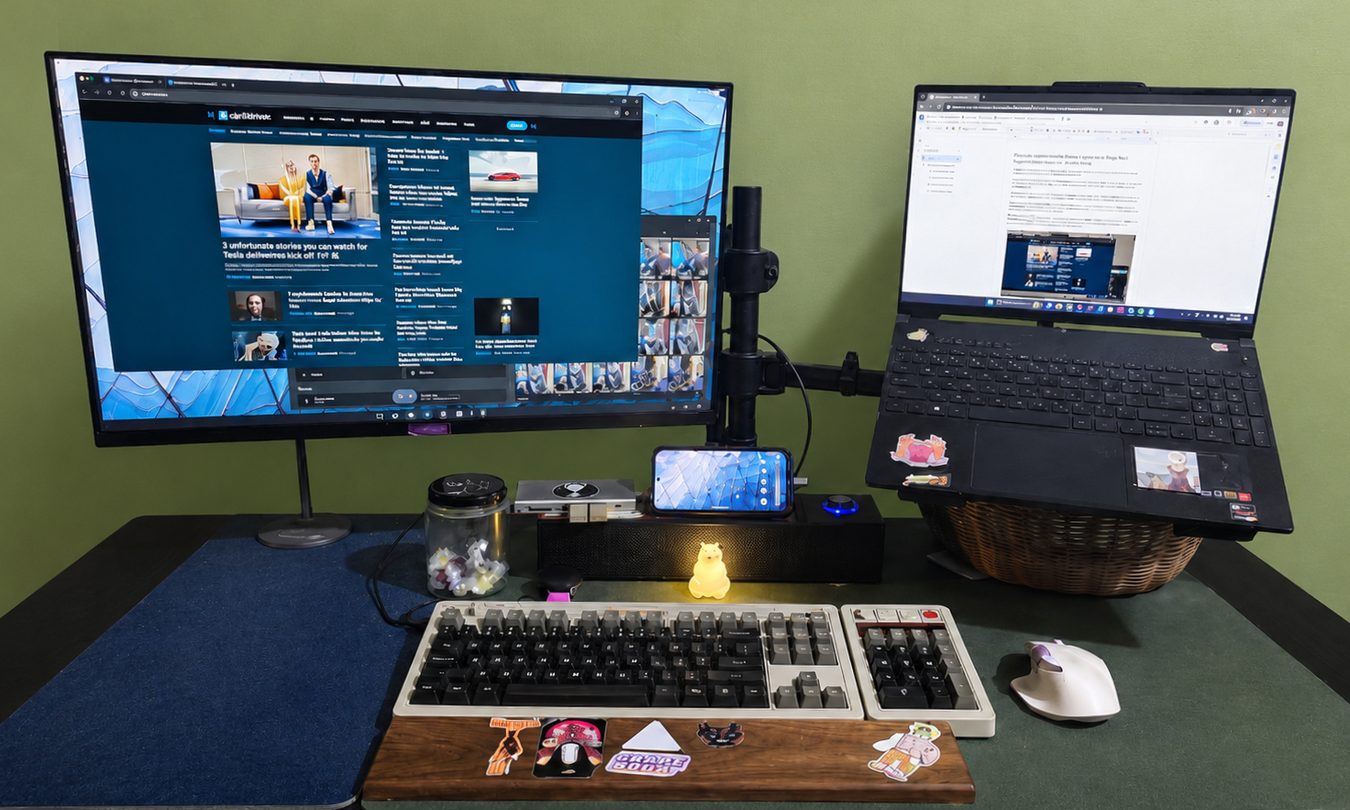
Android desktop mode made me miss my laptop in record time
I tried writing and publishing from Google’s phone-to-monitor setup, and the future of mobile computing immediately started sweating.
Computer, Electronics, Laptop

Android 17 desktop mode has a very simple pitch. Plug your phone into a monitor, add a keyboard and mouse, and watch the slab in your pocket pretend to be a computer. I wanted to give that pitch a fair shot, so I tried using it for an actual workday instead of a cute demo.

The goal was boring on purpose: write an article, edit it, build the page in WordPress, upload whatever needed uploading, and publish the thing without running back to my laptop like a coward.

Read more