
  1. Home
  2. Computing
  3. Mobile
  4. Legacy Archives

White House unveils five-year wireless broadband plan

Add as a preferred source on Google
Image used with permission by copyright holder

White House officials have unveiled details of President Obama’s National Wireless Initiative, first outlined last month during the president’s State of the Union address. According to the plan, 4G wireless broadband options would be available to 98 percent of the United States within five years via a series of public-private partnerships that will see the wireless industry building out infrastructure with legislative and other support from the federal government. The system would also include and interoperable nationwide public safety network for emergency responders and other public service personnel—and reduce the nation’s deficit by some $9.6 billion through monies collected through new spectrum auctions.

President Obama is expected to outline details of the plan today at an event in Marquette, Michigan, which will feature a distance-learning session powered by a 4G WiMax network at Northern Michigan University.

Recommended Videos

Part of the plan would authorize the Federal Communications Commission to reallocate and auction off some 500 MHz of spectrum space for the wireless industry during the next ten years, moving government agencies and private enterprises like remaining television broadcasters out of the spectrum space. Ideally, the FCC would conduct these as incentive auctions, whereby existing license holders in the spectrum space would give up their licenses in exchange for a cut of the sale price. Almost $11 billion of the money anticipated to be raised from the spectrum auctions would go to fund a public safety network—an interoperable, high-speed public safely network was one of the key proposals of the 9/11 Commission back in 2004.

The plan also calls for the federal government to make a one-time contribution of $5 billion to the FCC’s Universal Service Fund to subsidize build-out of wireless infrastructure to remote and rural areas where wireless providers otherwise wouldn’t see a business reason to put in service: companies receiving money from the Universal Service Fund to build in those areas would have to agree to build facilities that interoperate with public safety systems for emergency responders. An additional $3 billion raised from spectrum auctions would go towards a Wireless Innovation fund (WIN) to develop and test new mobile technology for use in the energy and health care industries, as well as education.

Policy makers have generally posited that development of a nationwide wireless broadband network that reaches the vast majority of Americans is critical to keeping the United States competitive in a wide variety of fields, not just computing, mobile technology, and the all important professional Facebook friending. By improving access to distance learning, remote work opportunities, and reliable communications, wireless broadband infrastructure can help reduce costs and improve responsiveness for a broad number of industries. However, the FCC’s current stance on mobile neutrality—enabling mobile operators to essentially block or favor any applications and services they like—may severely limit the utility of privately operated mobile networks—particularly in remote and rural areas served only by a single operator.

Geoff Duncan
Former Contributor
Geoff Duncan writes, programs, edits, plays music, and delights in making software misbehave. He's probably the only member…
Topics
Google Earth’s AI misadventure lasted only a day. It was a tale of dangerous ignorance.
Nuclear reactors, tanks, and historical destruction on a life-like satellite map? Yeah, that's bad.
Nano Banana AI image generator representation.

Technology behemoths are clearly not reading the room, or they are just moving faster than they should when it comes to AI deployment. Google has already stuffed its Gemini AI in every corner of its software stack, from Android to daily productivity tools like Gmail that are used by hundreds of millions of users every day. AI is everywhere. Not all of it is bad, mind you. But in a few places, it just feels forced.

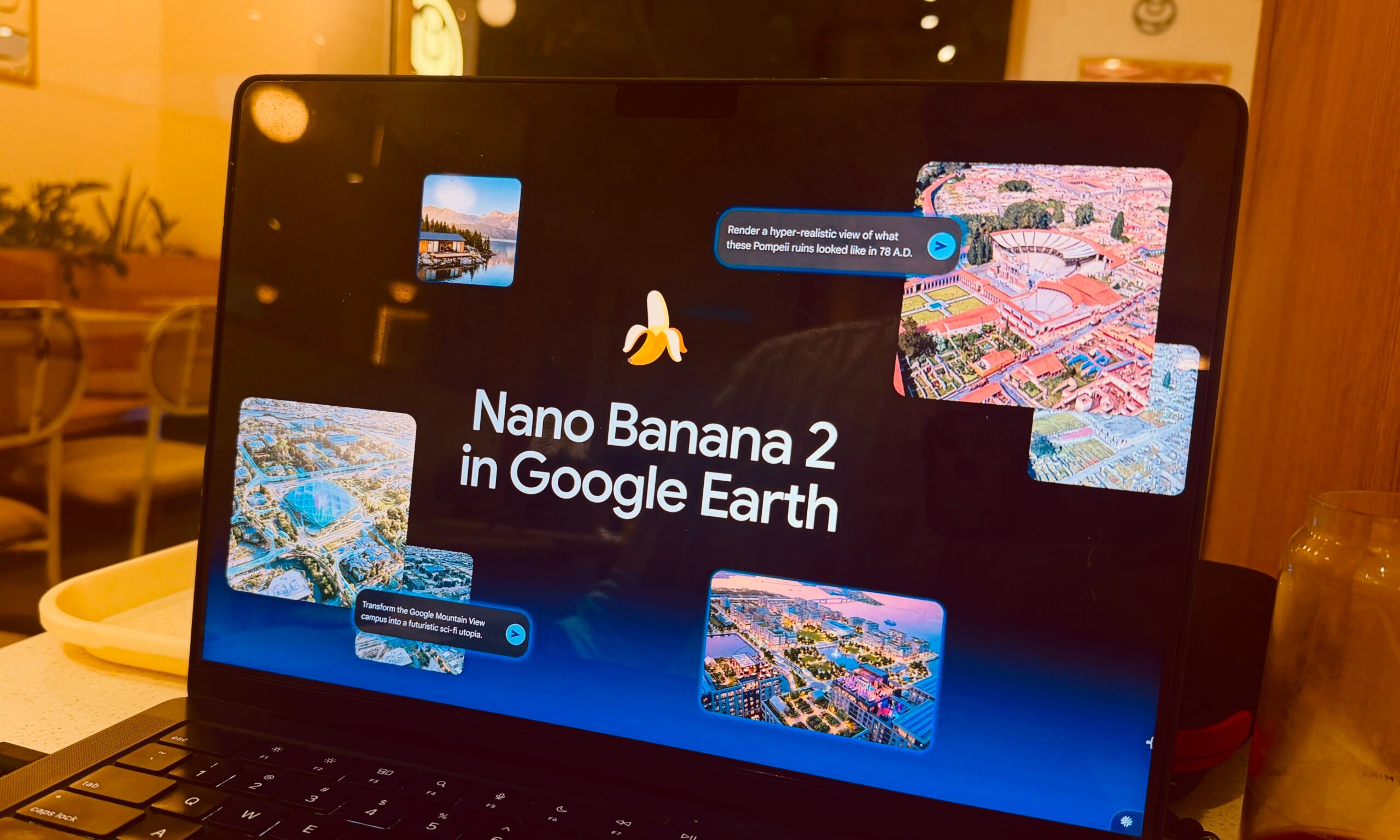
In its latest AI-fication experiment, the company targeted Google Earth. The idea was to let the audience use its Nano Banana 2 AI image generator and make images that can be placed on the map view. On paper, it's a cool idea. What would the Colosseum of Rome look like in your urban neighborhood? Yeah, fun stuff like that.

Read more
AMD is apparently gearing up to raise GPU prices right after Nvidia’s steep hike
AMD has reportedly told AIB partners about a price hike that goes into effect in. August.
AMD RX 7800

AMD is next in line to raise the asking price of its Radeon GPUs, merely days after the news of a similar hike coming for Nvidia graphics cards started making waves. As per ChannelGate on Weibo (h/t VideoCardz), AMD has informed its board partners that the price of GPU and memory bundles will go up by at least 10% in August.

Is a similar price hike coming for standalone graphics cards? I won't be surprised if that happens. The situation is so bad that AMD is planning to bring back graphics cards with 4GB of onboard memory. AMD just introduced the RX 9050 GPU, which costs $279. Notably, it's just $20 less than the RX 9060 XT that offers double the graphics memory.

Read more
Microsoft will make Windows work well with just 8GB RAM. We desperately need it
The dream of a reliable and affordable Windows laptop hinges on the next milestone at Microsoft.
Surface laptop on wooden table

The year 2026 has marked a huge course correction for Microsoft after years of frustrating users with plenty of confusing processes, unoptimized UI elements, and just the generous bloatware that can bring any Windows system to a crawl. Microsoft has finally shifted into a new phase. From fixing the right-click behavior to speeding up the Search system, the company has fixed plenty of papercuts.

The next major milestone is making Windows 11 run smoothly on Windows PCs with just 8GB of RAM. That directly means entry-level and budget laptops will at least get the basics right, even if that means sacrificing the on-device AI bells and whistles. Let's face it. The increasingly AI-first approach to computing on a Windows 11 machine is a little too taxing on the hardware at hand.

Read more