China’s ZTE isn’t exactly a household name in the United States, but it’s important to remember the company is the fourth-largest handset maker in the world, largely on the basis of inexpensive feature phones rolled out in China and other Asian markets, many of which feature dual-sim capabilities so users can easily switch between mobile operators. However, ZTE knows the feature phone market is fading in the face of smartphones—and plans to aggressively pursue the smartphone markets not just in China, but the United States as well.
“The United States and China will be key engines driving our smartphone sales,” said ZTE’s chief of handset strategy Lv Qianhao, in an interview with Reuters.
According to Reuters, in 2012 ZTE plans to ship double the number of smartphones it shipped in 2011. Overall, the company believes its handset shipments will grow by 30 to 40 percent a year—and it hit that ballpark for 2011, shipping 80 million devices, a third more units than it shipped in 2010. However, the company saw it’s profit margins shrink by just over three percent in the first half of 2011, thanks to competitive pressure from other low-cost feature phone makers like Huawei, Samsung, and the still-top-handset-maker, Nokia.
So ZTE’s competitive plan is to be aggressive in the smartphone market—and, like all handset makers, it has its eyes set on the high-end, high-margin segment of the market currently dominated by the Apple iPhone.
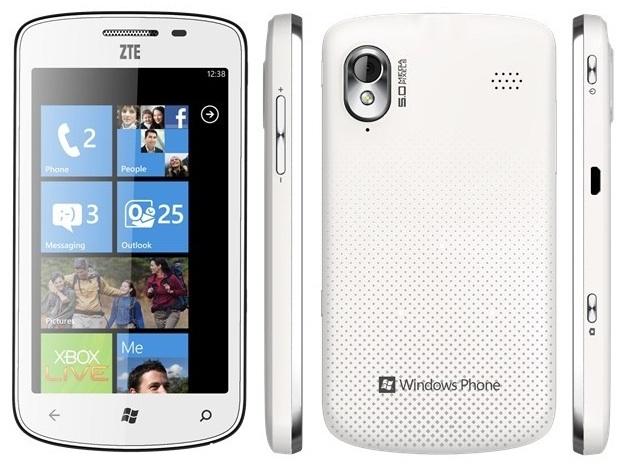
ZTE’s approach seems likely to be a combination of Android and Windows Phone. However, ZTE may have its work cut out for it. The company launched a Windows Phone handset in the U.S. during the second quarter of 2011 (and, like the rest of the Windows Phone ecosystem, almost no one noticed), and the company’s latest Windows Phone offering (the Tania) seems targeted at Asian and European markets—and generated at-best-lukewarm response last week at CES. Until now, ZTE’s U.S. offerings have been largely limited to free and low-cost phones (including Android devices) designed to fill out carriers entry-level, non-branded offerings.
However, the Wall Street Journal reported last month (subscription required) that ZTE is planning to launch 4G LTE-enabled handsets in the United States by mid-2012 at prices lower than the iPhone—and those devices could be running either Android or Windows Phone.
ZTE will find there’s no lack of competition in the high-end smartphone marketing the U.S.—Samsung and HTC seem to have a solid hold on the Android market, Motorola can’t be discounted, Nokia is starting to get serious about bringing Windows Phone devices to the world, and (of course) the Apple iPhone still seems unstoppable. But, in the Android and Windows Phone worlds, there seems to be a consistent race to the bottom, with device makers eager to offer low-cost handsets in an effort to make money by unit volume—and, of course, carriers love those devices because they sell service contracts. ZTE has always been very comfortable at the low end of the phone market—it may prove more agile there than other phone makers. While its strategy to “rise to the top” of the smartphone segment might run counter to conventional wisdom, it could give the company a way to shine—particularly if the cost-saving techniques its learned in emerging markets let it undercut other high-end device makers.