1. Home
  2. Space
  3. News

Rocket startup Astra fails to reach orbit with its Rocket 3

Add as a preferred source on Google

Rocket startup Astra had hoped to reach orbit for the first time with its Rocket 3 this weekend, but its launch at 6:35 p.m. ET (3:35 p.m. PT) on Saturday, August 28 suffered an engine problem and failed to reach orbit.

The rocket, designated LV0006, carried a test payload for the U.S. Space Force from Pad LP-3B at the Pacific Spaceport Complex-Alaska in Kodiak, and was intended to demonstrate Astra’s capability to launch payloads into orbit. This was the company’s third orbital launch attempt, following previous launches which also failed to reach orbit.

LV0006 during static testing in August 2021.
LV0006 during static testing in August 2021. Astra

With the LV0006 launch, the problem began almost immediately after takeoff. Less than a second after launch one of the five Delphin engines, all of which should have been firing, cut out. The rocket did make it off the launchpad and into the air, but it was moving too slowly and it tipped in the air before eventually righting itself and moving upward.

Recommended Videos

About two and a half minutes into the flight time, however, when the rocket was around 30 miles from the ground, the command came to shut down the engines and end the flight. The command was given because the rocket was off its trajectory, so after engine cutoff, it crashed into the ocean without causing any damage.

Astra did not say what had caused the engine to fail but it did say it was looking into the problem.

“We regret that we were unable to accomplish all mission objectives for the U.S. Space Force; however, we captured a tremendous amount of data from this test flight,” said Chris Kemp, Founder, Chairman and CEO of Astra in a statement. “We will incorporate learnings from this test into future launch vehicles, including LV0007, which is currently in production.”

The company also announced it is opening a mishap investigation to discover more about what went wrong with the launch, and that it will be working with the Federal Aviation Administration (FAA).

In a Q&A posted before the launch attempt, Kemp said he was keenly aware of the risks and difficulties of launching a rocket. “Whenever you make any changes to a system, you’re introducing the risk that you are wrong,” he said. “The thing you change could be your undoing. We’ve done a lot of testing and risk analysis. Some changes are only possible to validate through a flight, but our collective experience is that one should be very humble with rockets.”

Georgina Torbet
Georgina has been the space writer at Digital Trends space writer for six years, covering human space exploration, planetary…
Space is becoming Bezos and Musk’s next data center site, and we have every reason to worry
The AI boom is coming for the night sky
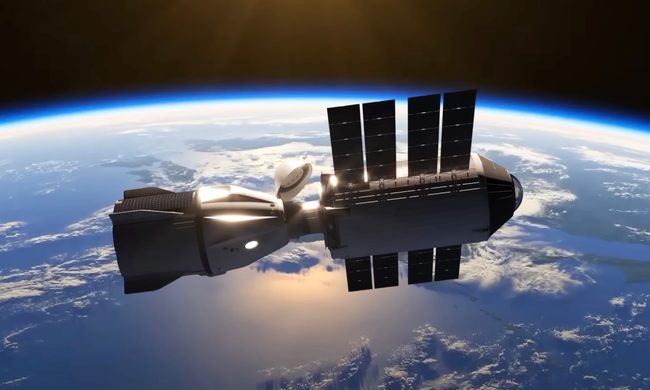
How Vast's space station will look in orbit.

AI data centers already consume vast amounts of electricity and water on Earth, so Silicon Valley has begun looking somewhere considerably more spacious... literally.

Elon Musk's SpaceX and Jeff Bezos' Blue Origin, along with several other companies, have proposed enormous constellations of satellites designed to operate as orbital data centers. However, environmental groups and former space officials are now warning that putting them into orbit at the proposed scale could have severe consequences for Earth's atmosphere and the night sky.

Read more
The first possible exomoon is here, and it makes our Moon look hilariously tiny
Scientists may have found the first exomoon, except this one is the size of Jupiter
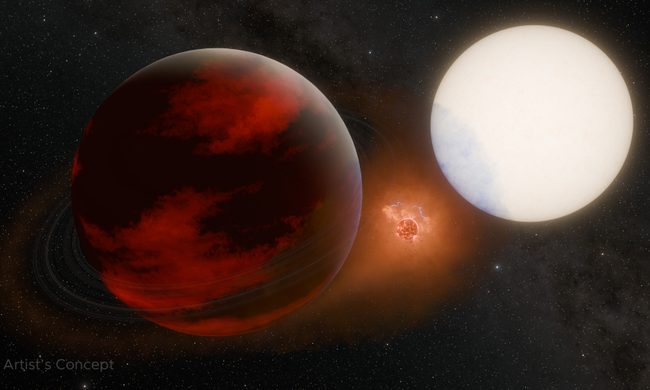
This artist’s concept depicts a potential volcanic moon between the exoplanet WASP-49 b, left, and its parent star. New evidence indicating that a massive sodium cloud observed near WASP-49 b is produced by neither the planet nor the star has prompted researchers to ask if its origin could be an exomoon.

We have already discovered more than 6,000 planets outside of our immediate neighborhood. Yet, finding a moon orbiting one of those distant worlds has proved considerably harder. Astronomers may finally have something close to the real deal, but this particular object stretches the word “moon” almost beyond recognition.

Using the European Southern Observatory’s Very Large Telescope in Chile, researchers detected strong evidence for a moon-like object in the CD-35 2722 system. Further observations are still necessary to confirm the discovery, but it could become the first confidently detected natural satellite outside our solar system. There is still one tiny complication though. This moon is apparently massive.

Read more
China’s answer to SpaceX’s reusable rockets literally catches boosters in a net
SpaceX catches boosters on legs. China just used a net.
Ammunition, Missile, Weapon

SpaceX's playbook for recovering a rocket booster generally involves legs, a precisely controlled vertical landing, and either a concrete pad or a drone ship. 

China just managed to pull off something similar, but in a slightly different way, and on July 10, it tested the method as well.

Read more