NASA and SpaceX might be the organizations whose launches you hear about most often, but they’re not the only ones in the business of launching rockets. The Indian space agency also often launches satellite missions, and there’s one such launch tonight: The PSLV-C51/Amazonia-1 mission, as highlighted by space.com.
The Indian Space Research Organisation (ISRO) will be launching a total of 19 satellites tonight U.S. time, including a Brazilian satellite to monitor the deforestation of the Amazon region. The launch will be streamed live, and we’ve got the details on how to watch.
How to watch the launch
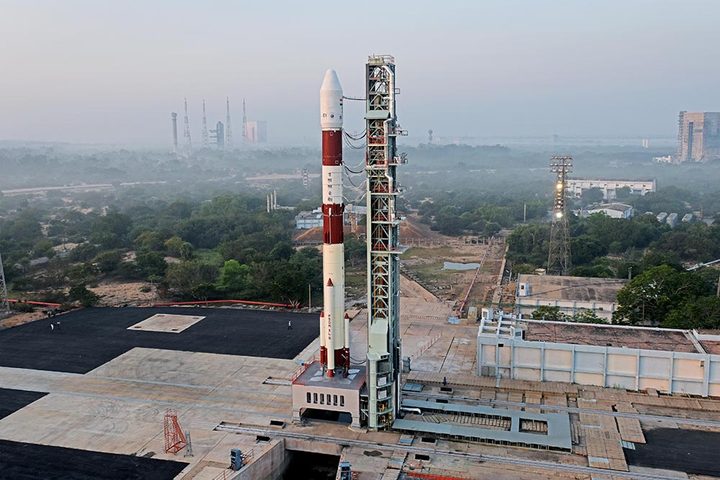
The launch is scheduled for 11:54 p.m. ET (8:54 p.m. PT) on Friday, February 27, with a Polar Satellite Launch Vehicle (PSLV) rocket set to launch from the Satish Dhawan Space Centre SHAR, in Sriharikota off the Bay of Bengal.
ISRO will livestream the launch on its YouTube channel, which you can watch either here or using the embedded video above. Coverage of the launch begins at 11:20 p.m. ET (8:20 p.m. PT).
You can expect to see final launch preparations, liftoff, separation of the heat shield, the separation of the four stages of the PSLV rocket, and the deploying of the various satellites.
What’s being launched
The primary satellite being launched during the mission is Amazonia-1, an optical Earth observation satellite that is being launched for Brazil’s National Institute for Space Research (INPE). This is INPE’s first designed, tested, and operated satellite, and will gather remote sensing data for monitoring deforestation in the Amazonian rain forest.
According to INPE, the satellite can generate images of any part of the world every five days using its wide-view optical imager — a camera that captures data in three visible light bands and one near-infrared band, and which can image areas 850km (528 miles) wide at 60 meters resolution.
In addition to monitoring deforestation in the Amazon, INPE says data from Amazonia-1 will also be used for monitoring coastal regions, water reservoirs, natural and cultivated forests, and environmental disasters.
As well as Amazonia-1, the launch will carry a further 18 “co-passenger” satellites including the Satusg Dhawan SAT nano-satellite for studying space weather, UNITYsat for providing radio relay services, and 12 SpaceBEE constellation satellites for Internet of Things company Swarm Technologies.