  1. Home
  2. Space
  3. News

NASA’s TESS has discovered 5,000 exoplanet candidates

Add as a preferred source on Google

NASA’s planet-hunting satellite TESS, or the Transiting Exoplanet Survey Satellite, has passed an impressive milestone, having identified 5,000 potential exoplanets. Launched in 2018, the hard-working telescope has been used by researchers from a variety of institutions to find tell-tale indications of planets outside our solar system.

Many of the objects TESS identifies are referred to as potential exoplanets, or TESS Objects of Interest (TOIs) because it requires multiple observations to confirm that a given signal is in fact an exoplanet. Currently, of the over 5,000 candidates discovered, 176 have been confirmed as exoplanets.
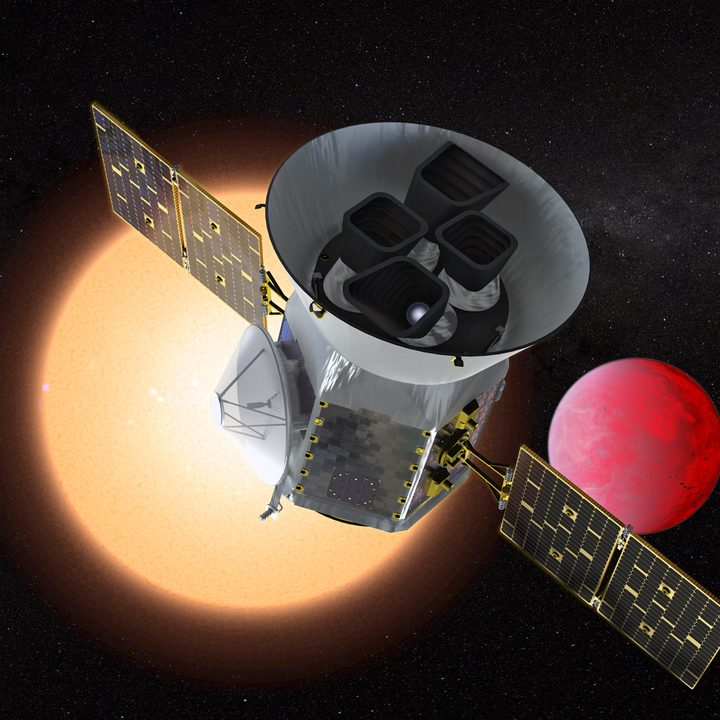
Illustration of the Transiting Exoplanet Survey Satellite (TESS) in front of a lava planet orbiting its host star. NASA/GSFC

The recent batch of planetary candidates which pushed TESS over the 5,000 mark was found as part of the Faint Star Search, led by Michelle Kunimoto of MIT. “This time last year, TESS had found just over 2,400 TOIs,” Kunimoto said in a statement. “Today, TESS has reached more than twice that number — a huge testament to the mission and all the teams scouring the data for new planets. I’m excited to see thousands more in the years to come!”

Recommended Videos

TESS has helped to discover a remarkable variety of exoplanets, from potentially habitable worlds to a planet where it shouldn’t be to planets right near to our solar system to a tiny, hellish planet where a year lasts eight hours.
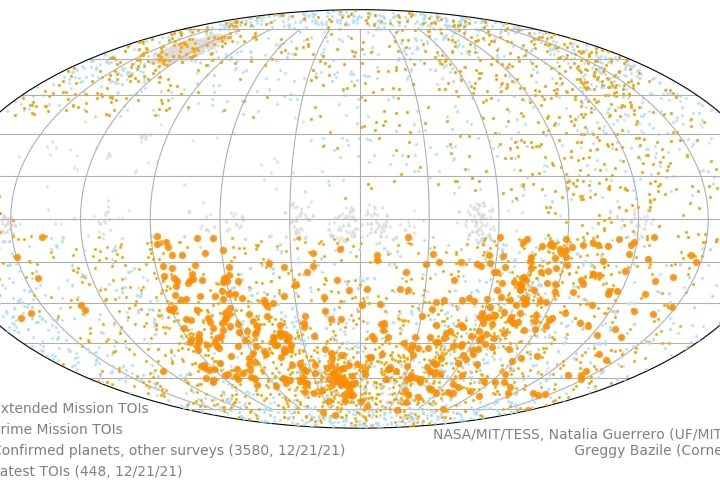
A map of the sky is now crowded with over 5,000 exoplanet candidates from NASA’s TESS mission.
A map of the sky is now crowded with over 5,000 exoplanet candidates from NASA’s TESS mission. The TESS Science Office at MIT released the most recent batch of TESS Objects of Interest (large orange points on the map) on Dec. 21, boosting the catalog to this 5,000-count milestone. NASA/MIT/TESS

TESS’s original mission ran from 2018 to 2020, but it was so successful it also had an extended mission from 2020 to 2022, so there is still time for it to discover yet more intriguing planets. “With data from the first year of the extended mission, we have found dozens of additional candidates to TOIs found during the prime mission,” said TOI manager Katharine Hesse. “I am excited to see how many multi-planet systems we can find during the rest of the extended mission and in upcoming years with TESS.”

Georgina Torbet
Georgina has been the space writer at Digital Trends space writer for six years, covering human space exploration, planetary…
Scientists warn Elon Musk’s orbital data centers could blind Earth’s biggest telescopes
A new ESO study suggests millions of satellites could make parts of the night sky effectively unusable for astronomy.
One hour of satellites over the northern Atacama Desert in Chile (October 2025)

The race to blanket Earth with satellite internet has unlocked faster connectivity for millions. But according to the European Southern Observatory (ESO), it could also make one of humanity's oldest hobbies, and one of its most important sciences, a whole lot harder. The organization warns that the rapid growth of satellite mega-constellations could severely disrupt observations made by some of the world's most powerful telescopes.

Astronomers say the night sky is reaching its limit

Read more
Amazon’s Starlink rival just crossed a major milestone, but don’t expect perfect internet just yet
Amazon finally showed up to the space internet party
Amazon Leo satellite layout across all launch vehicles

Amazon has taken a significant step toward launching its long-awaited satellite internet service. Following its latest rocket launch, the company now has 396 Project Kuiper satellites in low-Earth orbit, enough to begin offering continuous service across select regions. The milestone keeps Amazon on track for its previously announced goal of launching commercial service by mid-2026.

https://twitter.com/Weber44Chris/status/2072575499461963938?ref_src=twsrc%5Etfw%7Ctwcamp%5Etweetembed%7Ctwterm%5E2072575499461963938%7Ctwgr%5Ed727a1b853cbf519585e7bf2655943afb2f91bb8%7Ctwcon%5Es1_&ref_url=https%3A%2F%2Fwww.theverge.com%2Fscience%2F960563%2Famazon-leo-service-tipping-point

Read more
Amazon’s Starlink rival is set to launch satellite internet later this year
After launching nearly 400 satellites, Amazon says its Leo broadband service will go live later this year.
Atlas V launches 29 Amazon Leo satellites from Cape Canaveral, Florida

Amazon's long-awaited answer to SpaceX's Starlink is finally nearing liftoff. According to an exclusive report from Reuters, the company plans to begin offering its Leo satellite internet service later this year, after its latest rocket launch pushed the constellation to 394 satellites in orbit.

The pieces are finally falling into place for Project Kuiper

Read more